Sana-mania grips Japan as the country heads into a decisive lower house election, with Prime Minister Sanae Takaichi poised to deliver a landslide victory for the ruling Liberal Democratic Party.
After months of political uncertainty, Sana-mania grips Japan at a moment when voter enthusiasm, celebrity-style fandom, and electoral momentum have converged around the country’s first female leader.
Just eight months ago, the Liberal Democratic Party appeared politically wounded, struggling with scandal, internal division, and fading public trust after losing its parliamentary majority twice in fifteen months.
Factional infighting and lingering anger over illicit party financing left many observers predicting further decline for Japan’s long-dominant ruling party.

That narrative shifted dramatically following the leadership contest that elevated Sanae Takaichi to the premiership, surprising rivals and supporters alike.
Instead of opting for a familiar political heir, party powerbrokers gambled on Takaichi’s ultra-conservative credentials and unconventional personal appeal.
The decision has since reshaped Japan’s political atmosphere, with opinion polls now pointing toward a commanding parliamentary victory.
Analysts say Sana-mania grips Japan because Takaichi represents both continuity and rupture within the political establishment.
While firmly rooted in conservative ideology, she stands apart from the hereditary, male-dominated political elite that has long defined Japanese governance.
Her ascent has energized voters who previously felt alienated from politics, particularly younger demographics drawn to her communication style rather than her policy detail.
Takaichi’s rapid rise has also elevated Japan’s international profile, as she has met leaders from the United States, China, and South Korea within months of taking office.
An endorsement from Donald Trump and a planned White House visit further amplified her global visibility during a critical campaign period.
At home, however, the defining feature of her leadership has been the emergence of a personality-driven movement centered on her image, habits, and demeanor.
Supporters avidly track her fashion choices, favorite snacks, and even the pink pen she uses during parliamentary sessions.
Merchandise linked to the prime minister has reportedly sold out, while social media accounts dedicated to her daily routines attract massive engagement.
Observers describe the phenomenon as unprecedented in Japanese politics, where leaders traditionally project restraint rather than personal branding.
Despite ideological positions that clash with modern feminist activism, Takaichi’s gender alone has shifted perceptions of political possibility.
She openly opposes reforms such as allowing female imperial succession and insists married couples share a single surname, usually the husband’s.
Yet for many voters, symbolism matters as much as substance, particularly in a system long dominated by senior male politicians.
Political scientists argue her appeal lies in contrast rather than alignment with progressive ideals.
Her background, including a working-class upbringing and parents employed in public service and manufacturing, has become a recurring campaign theme.
During speeches, Takaichi frequently references everyday costs, from hair salon prices to commuting expenses, reinforcing a sense of relatability.
Unlike predecessors known for late-night socializing, she emphasizes early mornings, modest routines, and a disciplined lifestyle.
Supporters say her decisiveness and clarity resonate in an era marked by economic anxiety and geopolitical uncertainty.
Opinion surveys suggest the Liberal Democratic Party and its coalition partner could secure over 300 seats, enough for a two-thirds parliamentary majority.
Such an outcome would grant the government sweeping legislative control and sideline a fragmented opposition.
Read also: End of New START nuclear treaty raises fears of a new nuclear arms race as Russia pledges restraint
The Centrist Reform Alliance, meanwhile, is bracing for significant losses as it struggles to counter Takaichi’s media dominance.
Her social media reach dwarfs that of rival leaders, with millions of followers amplifying favorable narratives across platforms.
Critics warn that the absence of robust policy debate risks substituting popularity for accountability.
Even some undecided voters acknowledge admiration for Takaichi’s presentation while expressing concern over inflation and household costs.
Rising food prices and a volatile yen remain pressing issues that personality alone cannot resolve.
Takaichi has pledged to suspend consumption tax on food temporarily, though economists remain divided on its effectiveness.
The winter election itself introduces logistical risks, including weather conditions that could suppress turnout among younger voters.
Historically, youth participation in Japanese elections has lagged behind older demographics, raising questions about mobilization translating into ballots.
Still, campaign volunteers report strong enthusiasm at rallies, particularly among first-time voters.
For supporters, Sana-mania grips Japan because it signals a break from stagnant political norms.
For skeptics, it represents a test of whether charisma can sustain governance amid economic and security challenges.
China’s regional assertiveness and North Korea’s nuclear posture loom large over the next parliamentary term.
Takaichi’s leadership style suggests a willingness to confront these issues directly, even at diplomatic cost.
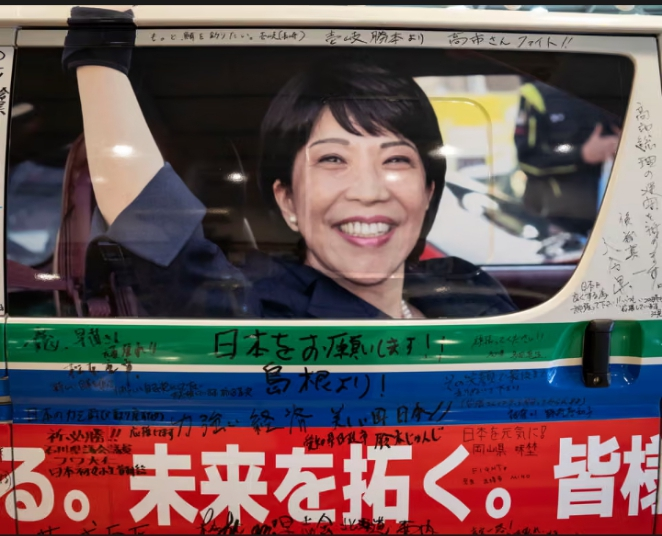
As election day approaches, the prime minister has framed the vote as a public verdict on her readiness to govern.
Polls indicate voters are prepared to answer affirmatively, delivering one of the most decisive mandates in recent Japanese history.
Whether Sana-mania grips Japan beyond election night may ultimately depend on policy outcomes rather than personal appeal.
For now, the movement has transformed a once-beleaguered ruling party into a confident electoral force.
About The Author