Russia vows responsible nuclear conduct as New START treaty expires, raising global arms control fears
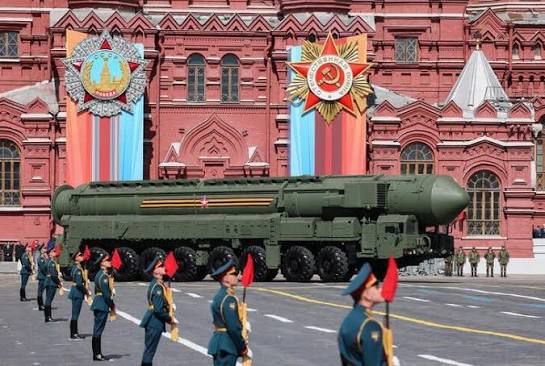
Russia has sought to reassure the international community that it will continue to behave as a responsible nuclear power despite the expiration of the New Strategic Arms Reduction Treaty (New START), the last remaining nuclear arms control agreement between Moscow and Washington.
The treaty officially lapsed this week, ending more than five decades of bilateral frameworks that limited the size, deployment, and verification of the world’s two largest nuclear arsenals. Arms control experts warn that the expiration could mark the beginning of a new and dangerous phase of strategic competition, with fewer constraints and diminished transparency between nuclear rivals.
Speaking to reporters in Moscow, Kremlin spokesperson Dmitry Peskov acknowledged that the treaty’s expiration was viewed negatively by Russia but insisted that Moscow would continue to prioritise strategic stability.
“The agreement has ceased to have effect,” Peskov said. “We regret this development. Nevertheless, the Russian Federation will maintain a responsible and attentive approach to nuclear weapons issues, guided first and foremost by its national interests.”
New START nuclear treaty expiry deepens uncertainty in global arms control
The New START nuclear treaty expiry represents a watershed moment in international security. First signed in Prague in 2010 by then U.S. President Barack Obama and Russian President Dmitry Medvedev, the treaty capped deployed strategic nuclear warheads at 1,550 for each side, a reduction of nearly 30 percent from earlier limits.
In addition to numerical ceilings, New START established a verification regime that allowed both countries to conduct on-site inspections and exchange detailed data on their nuclear forces.
These measures were widely credited with reducing the risk of miscalculation and providing predictability during periods of geopolitical tension
However, inspections were suspended during the COVID-19 pandemic and never resumed amid deteriorating U.S.-Russia relations following the war in Ukraine. With no successor agreement in place, analysts warn that both sides now face fewer incentives to restrain nuclear modernisation or expansion.
Russia has said it proposed a one-year voluntary extension of the treaty’s core provisions to allow time for negotiations on a replacement. According to Moscow, that proposal was never formally answered by U.S. President Donald Trump.
“What happens next depends on how events unfold,” Peskov said, adding that the issue was discussed during a recent phone call between Russian President Vladimir Putin and Chinese President Xi Jinping.
China and international community express concern
China joined a growing list of countries expressing regret over the New START nuclear treaty expiry, warning that the lapse could undermine the global arms control architecture.
“China regrets the expiration of the New START treaty, which is of great significance to maintaining global strategic stability,” Chinese Foreign Ministry spokesperson Lin Jian said.
“The international community is generally concerned that this will negatively affect the international nuclear arms control system and the global nuclear order.”
While U.S. President Trump has argued for a broader arms control deal that includes China, Beijing has repeatedly rejected calls to join trilateral negotiations. Chinese officials note that China’s nuclear arsenal remains far smaller than those of Russia and the United States.
According to estimates by the Stockholm International Peace Research Institute (SIPRI), China possesses at least 600 nuclear warheads, compared with roughly 4,000 each held by Russia and the United States. Lin reiterated that disparity as the key reason for China’s refusal to participate.
“China’s nuclear forces are not on the same level as those of the United States and Russia,” he said. “China will not participate in disarmament negotiations at this stage.”
Growing arsenals and NATO concerns
Despite its smaller stockpile, China’s nuclear arsenal is expanding faster than any other country’s. SIPRI estimates that Beijing has added approximately 100 new warheads annually since 2023, fuelling concerns among Western defence planners.
A NATO official, speaking on condition of anonymity, urged both Washington and Moscow to exercise restraint following the treaty’s expiration.
“We call on all nuclear-armed states to act responsibly and maintain global security,” the official said, adding that NATO would continue to take steps it considers necessary to ensure the credibility of its collective defence.
The official also pointed to ongoing nuclear modernisation efforts by both Russia and China, warning that the absence of formal limits increases the risk of escalation and misunderstanding.
What comes next?
The White House has said President Trump will determine the future direction of U.S. nuclear arms policy “on his own timeline,” leaving uncertainty about whether Washington will pursue a new bilateral treaty, seek a broader multilateral framework, or abandon formal arms control altogether.
For arms control advocates, the New START nuclear treaty expiry marks a troubling retreat from decades of diplomacy that helped prevent nuclear competition from spiralling out of control during the Cold War and beyond.
Without binding limits or inspections, experts warn that transparency will decline, suspicion will grow, and the risk of miscalculation will rise—at a time when global tensions are already high.
As the world enters this uncharted phase, Russia’s assurances of responsibility, China’s warnings, and NATO’s calls for restraint underline a shared concern: that the collapse of nuclear guardrails may have consequences far beyond Moscow and Washington.
About The Author