Moldova’s President Maia Sandu has warned that Russia’s frontline moving west could pose a growing threat to her country after a Russian strike hit a border crossing between Moldova and Ukraine, killing two people and forcing the checkpoint to close.
The warning came after overnight attacks near the Moldovan-Ukrainian frontier, raising fresh concerns in Chisinau about the wider regional consequences of Russia’s continuing war against Ukraine Sandu said the latest developments demonstrated why Moldova must strengthen its air surveillance and defensive capabilities alongside European partners.
The Moldovan leader also appealed for greater international assistance for Ukraine, arguing that Moscow’s military campaign cannot be allowed to continue without consequences. Her comments came only a day after Moldova reported a drone incursion into its airspace, adding another layer of concern for a country that has repeatedly warned about the spillover effects of the war next door.
Border Crossing Hit In Overnight Attack
The attack targeted the Starokozache border crossing, a key checkpoint on the Moldova-Ukraine frontier located roughly 500 kilometres south of Kyiv. Ukraine’s State Border Guard Service said the strike resulted in the deaths of two people, while three others were injured and 16 people were evacuated from the area.
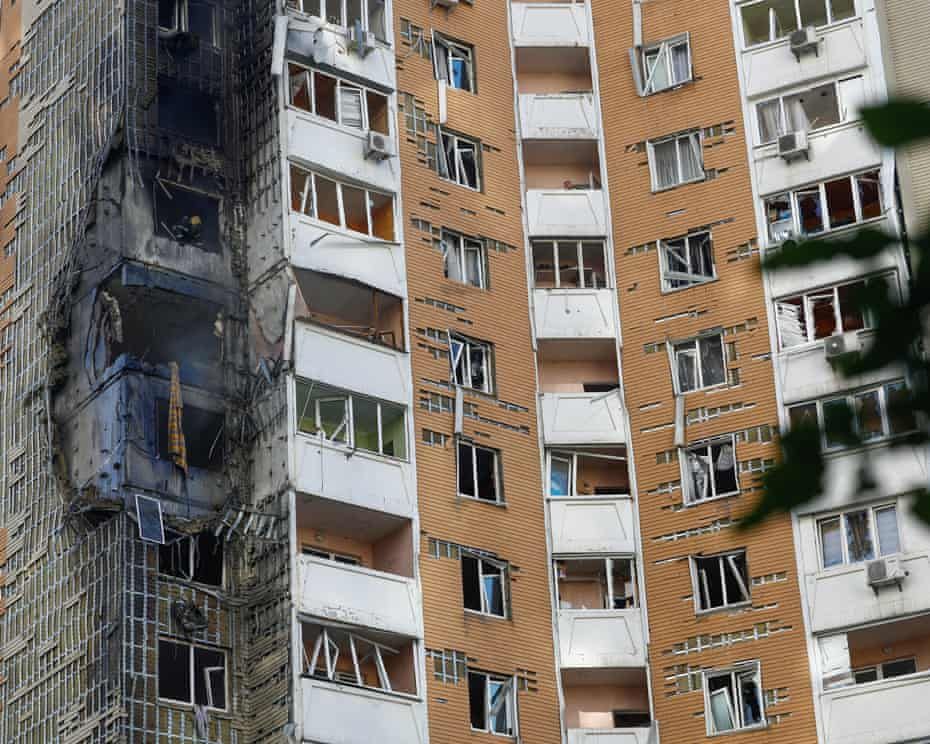
The incident forced authorities to shut the crossing as emergency teams responded to the damage. The location of the attack was particularly significant because it occurred directly along an international border, demonstrating how Russia’s military operations are affecting infrastructure and communities beyond Ukraine’s immediate battlefield.
Sandu reacted strongly to the incident, condemning what she described as attacks connected to the continuing war and expressing solidarity with those affected. She also reiterated Moldova’s determination to strengthen its own security capabilities while working with European partners.
“Russia’s frontline is moving further west,” Sandu warned, highlighting her concern that the geographical impact of the conflict could gradually extend closer to Moldovan territory.
Moldova Raises Airspace And Security Concerns
The latest strike followed a separate incident involving an alleged drone incursion into Moldovan airspace. Although such incidents have occurred previously during Russia’s war in Ukraine, their recurrence has intensified concerns about Moldova’s ability to monitor and protect its airspace.
Sandu said Moldova would continue improving its air surveillance and defence systems, while simultaneously urging international partners to provide Ukraine with additional air-defence equipment. Her position reflects the Moldovan government’s view that strengthening Ukraine’s ability to intercept Russian missiles and drones is also important for protecting neighbouring states.
The Russia Ukraine war has repeatedly produced security challenges for countries bordering the conflict zone. Missile debris, drones and other military-related incidents have previously raised alarms across neighbouring countries, making airspace monitoring an increasingly important part of regional security planning.
For Moldova, the issue is especially sensitive because the country has a long border with Ukraine and remains geographically close to the wider Black Sea security environment. The government in Chisinau has also sought closer cooperation with European institutions as it attempts to strengthen national resilience.
Zelenskyy Demands Stronger International Response
The strike on the border crossing came as Ukrainian President Volodymyr Zelenskyy criticised what he described as an insufficient international response to Russian attacks on Ukraine.
Zelenskyy said the latest wave of Russian missile and drone attacks showed that Moscow must face stronger consequences. He called for effective sanctions and additional support for Ukraine, arguing that the conflict should be stopped before it expands further.
“A response is needed,” Zelenskyy said, warning that Russia should not enter the winter believing it could continue its missile and drone campaign without facing consequences.
The Ukrainian president said countries capable of helping Ukraine already understand what assistance is required. His comments placed renewed pressure on Western governments to increase military and political support as Russian attacks continue to strike multiple Ukrainian cities and strategic locations.
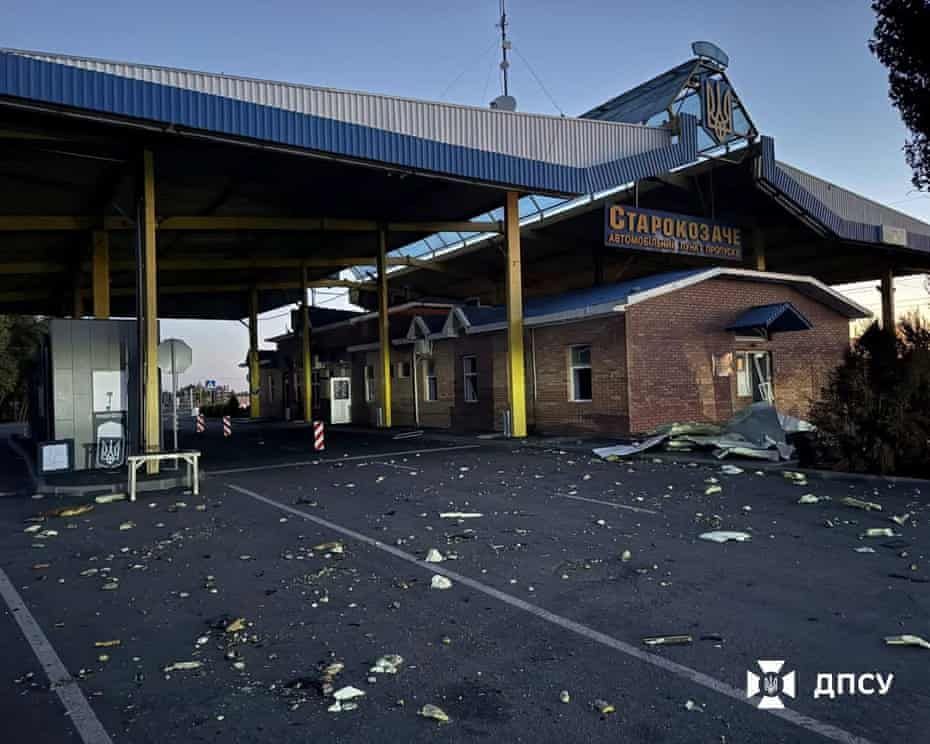
Beyond the Starokozache crossing, attacks were reported in Kyiv, Dnipro, Mykolaiv, Kharkiv, Zaporizhzhia and Zhytomyr. A Russian drone also struck an apartment building in Kyiv, where four people were reported injured.
The continuing attacks underline the scale of the challenge facing Ukrainian air defences, while neighbouring countries such as Moldova remain concerned that drones or other military activity could cross their borders.
Russia Reports Strikes On Ukrainian Targets
While Ukraine and Moldova highlighted the damage caused by Russian attacks, Russia’s defence ministry presented its own account of the overnight military operations.
Russian authorities said Russian forces had struck a Ukrainian cargo vessel in the Black Sea that was allegedly transporting military equipment toward Odesa. Russian news agencies also reported that a warehouse in Kyiv belonging to a company involved in drone production had been targeted.
The competing accounts reflect the continuing information battle surrounding the conflict, with both sides presenting military operations as responses to opposing threats. Russia has continued to deny responsibility for some incidents attributed to it, including a separate drone incident at Leipzig airport in Germany.
The situation nevertheless remains a major concern across Europe, particularly as governments assess whether the war is entering a more dangerous phase. Moldova’s latest warning that Russia’s frontline moving west reflects fears that the consequences of the conflict may increasingly affect countries that are not directly involved in the fighting.
Germany Faces Its Own Russia Dispute
The conflict also featured prominently in Germany’s political debate, where Chancellor Friedrich Merz faced criticism from Alternative for Germany co-leader Alice Weidel during a Bundestag debate.
Weidel argued that the result of the recent Saxony-Anhalt election showed voters wanted a fundamental change in government policy. She criticised the coalition’s approach to migration, energy and relations with Russia while accusing the government of promoting what she called “war propaganda.”
Merz rejected those accusations and insisted Germany would continue supporting Ukraine because, in his words, Ukraine was defending Germany’s freedom as well.
The chancellor also attacked the AfD’s immigration proposals, particularly its support for “remigration”. Merz argued that implementing such policies would have severe consequences for Germany’s workforce, warning that large sections of essential services depend on workers with immigrant backgrounds.
The exchange demonstrates how the war in Ukraine has become intertwined with domestic political debates across Europe. Questions over sanctions, military assistance, energy supplies and migration are increasingly shaping national elections and political divisions.
Leipzig Drone Attack Adds To European Security Fears
Merz separately addressed last month’s attempted drone attack at Leipzig airport, claiming that the operation had been prepared in Russia over an extended period and specifically targeted Germany.
According to the German chancellor, major damage and potential loss of life were avoided only by chance. Russia has rejected involvement in the Leipzig incident.
The allegation adds to a growing European debate about the possibility of covert operations, drone attacks and other forms of hostile activity connected to the broader confrontation between Russia and Western countries.
Germany is not alone in reassessing its security posture. Moldova’s concerns about its airspace and border infrastructure demonstrate how countries outside the immediate battlefield are also having to prepare for risks created by the conflict.
Europe Watches A Widening Security Crisis
The latest developments have unfolded against a broader atmosphere of anxiety across Europe. A study based on thousands of interviews in several European countries found that many citizens wanted a stronger, more united and independent Europe but doubted whether such a goal could realistically be achieved.
The research found widespread concern about war, economic pressure and Europe’s ability to act independently in a rapidly changing international environment. A large majority of respondents also believed Europe was not handling its major challenges effectively.
Those findings provide important context for Sandu’s warning. Moldova is seeking closer cooperation with European partners precisely as the continent confronts questions about defence, sovereignty and its ability to respond collectively to external threats.
Read also: Maldives Chagos Islands sovereignty dispute reopens talks with UK
For Chisinau, the immediate priority is preventing the war in Ukraine from creating a direct security crisis inside Moldova. The strike at Starokozache, coupled with the reported drone incursion, has reinforced the argument that the country needs stronger surveillance, air defence and international security cooperation.
Sandu’s warning that Russia’s frontline moving west should therefore be viewed not simply as a description of the battlefield, but as a broader alert about the risks facing countries surrounding Ukraine.
With the war continuing and Russian attacks reaching areas close to international borders, Moldova is making clear that it does not intend to wait until the conflict reaches closer to its territory before strengthening its defences.
The latest border attack has consequently become another reminder that the consequences of the Russia Ukraine war extend far beyond the battlefield. As Ukraine continues requesting stronger international support, Moldova is simultaneously pressing its European partners to help protect the region from a conflict whose security implications are increasingly difficult to contain.
About The Author