A Russian drone attack kills 4 in Kharkiv, Ukrainian authorities confirmed on Tuesday, once again underscoring the human cost of a war that shows little sign of easing despite renewed diplomatic efforts and international pressure for de-escalation.
The attack struck the outskirts of Kharkiv, Ukraine’s second-largest city, located just 30 kilometres from the Russian border.
The city has been a frequent target throughout the conflict due to its strategic position and proximity to Russian territory.
Kharkiv regional governor Oleh Syniehubov said at least four people were killed in the strike, while six others sustained injuries of varying severity.
Emergency services worked through the night to search damaged buildings and provide medical assistance to the wounded.
Local officials said the drones struck civilian-linked infrastructure, triggering fires and causing structural damage.
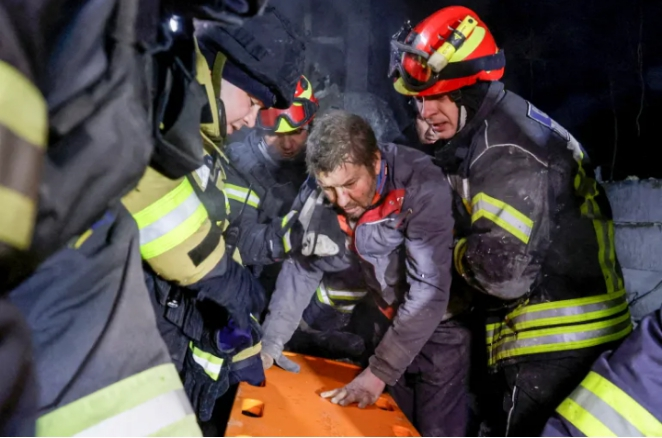
Images released by emergency responders showed debris scattered across streets and damaged facilities, highlighting the continuing vulnerability of urban areas as the conflict drags into another year.
Kharkiv mayor Ihor Terekhov said one of the long-range drones hit a medical facility for children, causing a fire and forcing evacuations.
While no children were reported killed at the site, the incident has renewed concerns over the safety of healthcare facilities, which international law protects during armed conflict.
Firefighters were able to bring the blaze under control, but the building sustained significant damage.
Residents described waking to loud explosions and the sound of air defence systems attempting to intercept incoming drones.
Many said the frequency of attacks has increased in recent weeks, leaving civilians exhausted and anxious as winter conditions further complicate daily life.
Beyond Kharkiv, the overnight assault was part of a broader wave of Russian strikes across multiple regions of Ukraine.
The country’s national grid operator, Ukrenergo, announced emergency power cuts in Kyiv after infrastructure was damaged during the attacks.
Officials did not disclose the full extent of the damage, but said the measures were necessary to stabilise the electricity system and prevent wider outages.
Kyiv’s military administration reported that the capital came under a short but intense missile barrage overnight.
Tymur Tkachenko, head of the city’s military administration, said air defence systems were activated to repel the attack.
Witnesses reported hearing multiple explosions, though there was no immediate confirmation of casualties in the capital.
Ukraine’s air force later said Russia launched 293 drones and 18 missiles during the overnight operation.
Air defence units intercepted 240 drones and seven missiles, according to official figures.
Despite the high interception rate, the sheer volume of weapons launched meant that some strikes still reached their targets, causing damage to infrastructure and civilian facilities.
The scale of the assault reflects a broader Ukraine war escalation, with Moscow increasingly relying on drones and missile strikes to pressure Ukrainian cities and energy systems.
Analysts say such tactics aim to weaken civilian morale and strain Ukraine’s air defence capabilities, particularly during winter when energy demand is high.
The latest Kharkiv drone strike came just hours after the United States accused Russia of significantly escalating the conflict.
During an emergency meeting of the United Nations Security Council, Washington described Moscow’s actions as “dangerous and inexplicable,” warning that continued attacks could expand and intensify the war.
Tammy Bruce, the US deputy ambassador to the United Nations, said Russia’s recent actions undermined international efforts to bring the conflict closer to an end.
She urged both sides to pursue de-escalation, but emphasised that Russia’s conduct on the battlefield contradicted diplomatic messaging about peace.
“At a moment of tremendous potential, both sides should be seeking ways to reduce tensions,” Bruce told the council, adding that continued strikes on civilian areas risked further destabilising the region.
The United States expressed particular concern over Russia’s recent use of advanced missile systems, including a nuclear-capable Oreshnik ballistic missile launched in a previous strike.
While Moscow insists such weapons are legitimate military tools, Washington and its allies argue their use increases the risk of wider confrontation.
Ukraine called for the Security Council meeting following a series of mass attacks last week, during which hundreds of drones and dozens of missiles were launched across the country.
Ukrainian officials said those strikes caused extensive damage and resulted in a significant number of civilian casualties.
Russia has defended its campaign by claiming it targets military and energy-related infrastructure linked to Ukraine’s war effort.
The Kremlin has repeatedly accused Kyiv of using civilian facilities for military purposes, an assertion Ukrainian authorities deny.
Moscow’s Ministry of Defence said the Oreshnik missile used in a recent attack targeted an aircraft repair facility in Lviv, near the Polish border, and claimed the site was disabled.
Russia said the strike was a response to an alleged Ukrainian drone attack on a residence associated with President Vladimir Putin, a claim Kyiv has denied and the United States has dismissed as inaccurate.
Despite the intensifying military activity, international mediators have continued efforts to revive Russia Ukraine peace talks.
Recent meetings involving Ukraine and its Western allies explored proposals aimed at providing long-term security guarantees for Kyiv in the event of a ceasefire.
One proposal involved France and the United Kingdom deploying troops to Ukraine as part of a security arrangement following any agreement to halt fighting.
Russia rejected the idea, warning that any foreign troops sent to Ukraine would be considered legitimate military targets.
Ukraine, for its part, insists that any peace deal must include credible guarantees to prevent future attacks. President Volodymyr Zelenskyy has repeatedly said that past agreements failed because they lacked enforcement mechanisms capable of deterring renewed aggression.
Read also: BBC seeks dismissal of $10bn Trump lawsuit over Panorama ‘fight like hell’ clip
As diplomatic efforts continue, civilians remain caught in the middle of the conflict. Human rights groups have warned that sustained attacks on urban centres increase the risk of civilian casualties and long-term humanitarian consequences.
In Kharkiv, residents say the repeated strikes have taken a psychological toll. Many families now spend nights in shelters or underground metro stations, while others have fled the city altogether.
Those who remain say they are determined to endure but fear that attacks could intensify further.
International observers warn that without a meaningful breakthrough in negotiations, the war could continue along its current trajectory, marked by cycles of escalation and retaliation.
The latest developments reinforce concerns that peace remains elusive despite public statements from global leaders calling for an end to the fighting.
As the Russian drone attack kills 4 in Kharkiv, the incident serves as another stark reminder of the ongoing human cost of the conflict and the challenges facing efforts to bring lasting peace to Ukraine.
About The Author