Sudanese medics have accused the paramilitary Rapid Support Forces of horrific crimes, alleging the RSF is concealing genocide in Darfur by burning, burying, and erasing civilian evidence.
The Sudan Doctors Network described RSF actions as a calculated attempt to “obliterate human existence” in el-Fasher, turning streets into death zones littered with unburied, mutilated corpses.
Medical workers claimed the group’s effort to hide atrocities exposes its fear of international justice, stating, “Genocide cannot be washed away with gasoline, nor buried under sand.”
Eyewitnesses fleeing el-Fasher recounted convoys of trucks loaded with blackened bodies, dumped into shallow pits while armed RSF men threatened anyone attempting to film the crimes.
“They are burning the truth,” said one doctor who escaped the city. “What they fear most is evidence of what they’ve done to our people.”
Reports indicate that RSF units stormed hospitals, abducted wounded patients, and executed medical staff accused of aiding the Sudanese army — furthering their campaign of ethnic extermination.
The RSF concealing genocide in Darfur accusation comes after the group’s violent takeover of el-Fasher on October 26, which left the city smoldering and thousands unaccounted for.
International observers estimate more than 10,000 civilians were massacred within days, their bodies left to rot under the desert sun before being collected for hasty, hidden burials.
Satellite images released by independent analysts reveal new mass graves outside el-Fasher, confirming eyewitness claims despite RSF’s tight communication blackout and restriction of humanitarian access.
“The level of cruelty is beyond comprehension,” said an aid worker. “They’re not just killing — they’re ensuring no one can ever count the dead.”
Local sources say entire neighborhoods, mainly belonging to the Zaghawa ethnic group, were systematically wiped out, their homes torched and their inhabitants hunted down by RSF patrols.
Residents who tried to flee were chased through the desert, with children dying from dehydration and gunfire. Survivors spoke of vultures circling freshly dug graves.
“They are erasing us,” said Fatima Idris, who lost her brother and husband. “Every blackened body they burn is another proof of their fear of the world.”
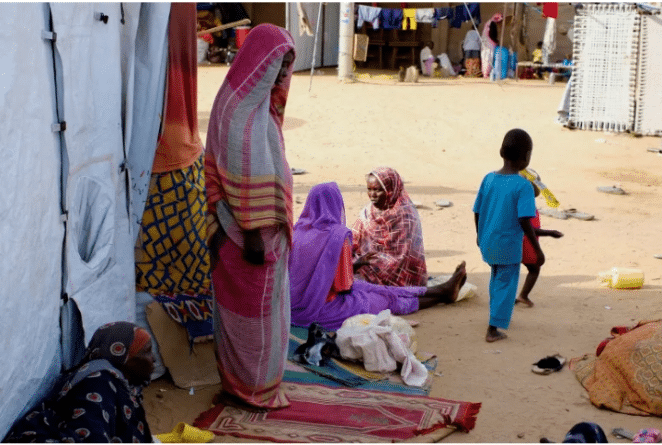
The International Organization for Migration reported that 82,000 of el-Fasher’s 260,000 residents have fled since the takeover, though many are missing, presumed dead.
According to displaced families in Al Dabbah, the journey north is another battlefield — men shot on sight, women kidnapped, and children dying of starvation along the route.
“They shoot at anyone who walks,” said one survivor. “We travel with corpses; sometimes, the road smells of burned flesh carried by the wind.”
Allegations that the RSF concealing genocide in Darfur is part of a deliberate ethnic cleansing campaign are growing stronger as new testimonies surface daily from traumatized escapees.
Humanitarian organizations, including Doctors Without Borders, said RSF fighters targeted civilians based on skin color, calling it “a racist war disguised as political rebellion.”
Sylvain Penicaud of MSF described survivors as “hunted like animals” and warned that atrocities continue under a total blackout, with no access for journalists or relief teams.
“What’s happening in Darfur now is extermination in real time,” Penicaud said. “The RSF kills the living and burns the proof of their existence afterward.”
The paramilitary force, commanded by Mohamed Hamdan Dagalo — known as Hemedti — evolved from the Janjaweed militias accused of genocide two decades earlier in Darfur.
From 2003 to 2008, similar tactics were used — systematic mass killings, scorched earth campaigns, and mass displacement, claiming at least 300,000 lives and uprooting millions.
“The same pattern repeats itself,” said political analyst Osman Suleiman. “Only the name changed — the Janjaweed became RSF, but their purpose remains destruction and dominance.”
Despite mounting evidence, the RSF continues to deny accusations, calling them “enemy propaganda,” even as horrifying videos circulate showing fighters boasting beside piles of corpses.
Witnesses identified RSF fighters mocking victims in the videos, kicking bodies and chanting slogans celebrating “cleansing the land,” which many saw as proof of genocidal intent.
Social media platforms have struggled to contain the spread of such footage, some too graphic to view, but they remain vital evidence of atrocities being committed.
The RSF concealing genocide in Darfur through digital censorship is also becoming apparent, as the group cuts off communication networks and monitors survivors’ online testimonies.
Residents say internet services vanish whenever large-scale operations occur, preventing evidence sharing or real-time documentation of killings and burials in mass graves.
“Every time we hear silence, it means they are killing again,” said a Sudanese journalist in exile. “Darkness is their weapon as much as guns.”
International condemnation has been fierce but ineffective. The United Nations warned of “unimaginable atrocities,” yet failed to secure access for investigators into el-Fasher.
Western governments issued routine statements of concern, but activists denounce them as hollow, arguing that political hesitation is granting RSF impunity for crimes against humanity.
“Words mean nothing when people are burning,” said a Darfur rights advocate. “Every delay adds another grave, another mother left screaming into the sand.”
Inside Sudan, the army has vowed revenge but remains stretched thin after multiple defeats, while civilians pay the ultimate price for a power struggle rooted in ethnic hatred.
The situation underscores the collapse of Sudan’s state structure — no rule of law, no accountability, only the rule of the gun and the cruelty of vengeance.
Analysts argue that the RSF concealing genocide in Darfur is not just about hiding bodies, but erasing an entire ethnic memory through destruction, silence, and terror.
“Destroying evidence is part of their psychological warfare,” said historian Mariam Bakhit. “They want the victims forgotten so the killers can rewrite history.”
The United States and European Union have discussed sanctions, but humanitarian experts say such measures will not stop mass killings unless backed by coordinated military pressure.
As famine spreads and disease follows the displaced, fears grow that Darfur could descend into a wasteland of corpses, erased identities, and unmarked graves.

“Without intervention, Darfur will vanish,” warned a UN field worker. “The RSF isn’t hiding genocide — it’s perfecting it.”
Every day that global silence persists, the flames consuming Sudan burn higher, while beneath the ashes lie countless stories that may never be told again.
Until justice comes, the sand of Darfur will continue to swallow its dead — evidence of a genocide the world was warned about but chose to ignore.
About The Author