Airlines cancel 3,300 US flights, leaving millions stranded and anxiety rising nationwide, as government shutdown enters its 40th day, threatening a Thanksgiving travel nightmare.
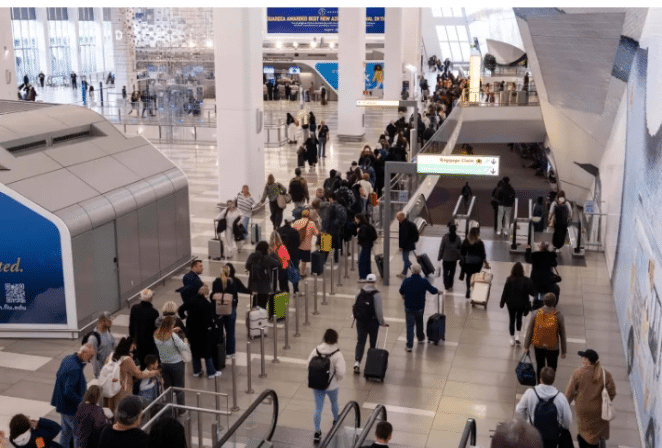
Passengers faced endless lines at major airports, including LaGuardia and Atlanta, where frustration mingled with fear, highlighting the human toll of bureaucratic paralysis and halted paychecks.
Federal Aviation Administration phased reductions forced carriers to slash flights gradually, 4 percent Friday, escalating to 10 percent by next week, signaling serious disruption for holiday travelers.
Thirteen thousand air traffic controllers deemed “essential” remain unpaid, some refusing shifts, citing exhaustion and financial strain, demonstrating the federal workforce caught between loyalty and survival.
Sunday alone saw more than 3,300 cancellations, following Saturday’s 1,500 and Friday’s 1,000, as FlightAware data revealed a domino effect across 40 major US airports nationwide.
US Secretary of Transportation Sean Duffy warned air travel could “slow to a trickle,” injecting panic into an already jittery public desperate to see families.
“This doesn’t get better; it gets worse,” Duffy told newsmen, underscoring the grim reality that without immediate pay, the Thanksgiving travel crush might collapse entirely.
Historically, the holiday period sees record travel, with 80 million Americans flying in 2024, and 3.09 million screened at airports on the Sunday after Thanksgiving alone.
Economists warn that cancelled flights and operational slowdowns ripple through the economy, reducing tourism spending, straining hotels, restaurants, and ground transportation, while investor confidence wobbles amid uncertainty.
Amid chaos, US senators struck a compromise deal to fund government operations through January, raising cautious hope, though approval from both chambers and the President is still required.
Richard Aboulafia, managing director at AeroDynamic Advisory, said disruptions may ease once controllers receive pay, but political motives may have inflated restrictions, leaving analysts suspicious of official explanations.
“The decision to restrict capacity may seem justified if data supports it,” Aboulafia said, “but the FAA hasn’t released evidence, leaving industry insiders wary of arbitrary political pressure.”
Flight cancellations expose vulnerability in the US air travel system, where decades of underinvestment in staffing and technology combine with political brinkmanship to produce massive, public-facing consequences.
Airlines report mounting losses as travelers cancel trips or defer bookings, creating a paradox of surging stock prices in some carriers amid declining operational revenue and rising uncertainty.
The FAA’s phased plan instructs airlines to reduce domestic flights progressively, 6 percent Monday, 8 percent Thursday, 10 percent Friday, demonstrating caution but also signaling a potentially paralyzing escalation.
Meanwhile, exhausted air traffic controllers struggle with unpaid shifts, raising moral and safety concerns as their refusal to work grows, intensifying the public perception of government dysfunction.
Airports brace for peak travel days, implementing contingency staffing and scrambling to accommodate passengers, but experts warn the system may buckle, leaving travelers trapped with few options or refunds.
Travel industry leaders decry the shutdown’s economic toll, arguing that lost revenue, operational disruption, and reputational damage could linger even after the government reopens, harming airlines long-term.
Passengers vent frustration online and in terminals, documenting hours-long lines, delayed baggage, and missed connections, demonstrating the tangible human costs of political deadlock and bureaucratic inertia.
Some airlines offer partial refunds or rebooking, yet consumer confidence remains fragile, with many hesitant to commit to travel until government funding stabilizes, reflecting broader uncertainty.
Airports rely on TSA agents and air traffic control, both affected by shutdown, revealing the fragility of systems deemed essential, which buckle when financial security is threatened.
While senators’ compromise gives hope, timing is critical; any delay in presidential signature could extend travel chaos into peak Thanksgiving week, compounding losses for travelers and carriers alike.
The fragility of US air travel infrastructure is exposed when political impasses intersect with essential service provision, demonstrating how quickly disruption can escalate into national crises.
Economists note that shutdown-induced flight reductions may reduce GDP contributions from tourism, hospitality, and transportation, while unemployment pressures grow in affected sectors, deepening public unease.
Travelers desperate for certainty weigh alternative options like trains, buses, or driving, but limited capacity and high costs highlight how cancellation ripple effects extend beyond airports.
Airlines face operational challenges beyond cancellations: crew scheduling, maintenance, and slot allocations all suffer, threatening both efficiency and profitability, forcing executives to balance safety with revenue preservation.
Industry analysts suggest arbitrary flight restrictions may be leveraged politically to pressure lawmakers, leaving carriers and passengers as unwilling pawns in a high-stakes federal chess game.
Public anxiety is palpable; families planning reunions confront uncertainty, and businesses anticipating conference travel must adapt, demonstrating the wide-ranging societal impact of administrative gridlock on daily life.
FAA officials insist safety dictates flight reductions, yet lack of transparency fuels suspicion, as citizens question whether precaution or political theater drives air travel disruption nationwide.
Some carriers report stock gains despite cancellations, revealing a paradox: investors bet on post-shutdown recovery while operational realities paint a grimmer picture of delayed travel and lost revenue.
Experts warn that even after funding is restored, residual effects will persist, including disrupted schedules, exhausted personnel, and shaken consumer confidence, prolonging the crisis’s shadow beyond immediate resolution.
Passenger complaints highlight inconsistent information, delayed alerts, and missed connections, underscoring a systemic communication breakdown between federal agencies, airlines, and travelers struggling to plan under uncertainty.
The broader economic fallout may extend to regional airports heavily reliant on holiday travel, which could face revenue shortfalls, forcing local authorities and businesses to absorb losses or restructure operations.
Airlines grapple with public relations challenges, seeking to reassure travelers, maintain loyalty programs, and manage cancellations, while simultaneously preparing for potential increases in demand once shutdown ends.
A fragile optimism emerges from the Senate deal, signaling a possible end to shutdown-induced travel disruption, though uncertainty remains over implementation, presidential approval, and lingering logistical bottlenecks.
Some travelers view the deal as a lifeline, cautiously optimistic that flights will resume, while others remain skeptical, fearing a repeat scenario in future political impasses, reflecting deep erosion of public trust.
This unprecedented disruption tests US infrastructure, revealing the delicate balance between operational capacity, workforce morale, and governmental stability, highlighting risks to national mobility during extended political crises.
As airlines cancel thousands of flights, the human, economic, and political stakes converge, illustrating the fragility of essential services in the face of bureaucratic deadlock and fiscal uncertainty.
Passengers, employees, and industry leaders brace for continued volatility, recognizing that temporary funding deals may resolve immediate threats but cannot prevent long-term vulnerability to systemic shocks.
Even after flights resume, analysts warn of lingering inefficiencies, backlog of passengers, and strained resources, leaving airlines and travelers to contend with residual consequences from weeks of political stalemate.
Travel disruption has become a symbol of government dysfunction, reminding Americans that even essential national services are not immune to partisan gridlock, with consequences reaching far beyond airports themselves.
Airlines cancel 3,300 US flights, but the fragile Senate deal offers a glimpse of hope, balancing despair and optimism, as citizens await stable governance and safe skies for the holiday season.
About The Author