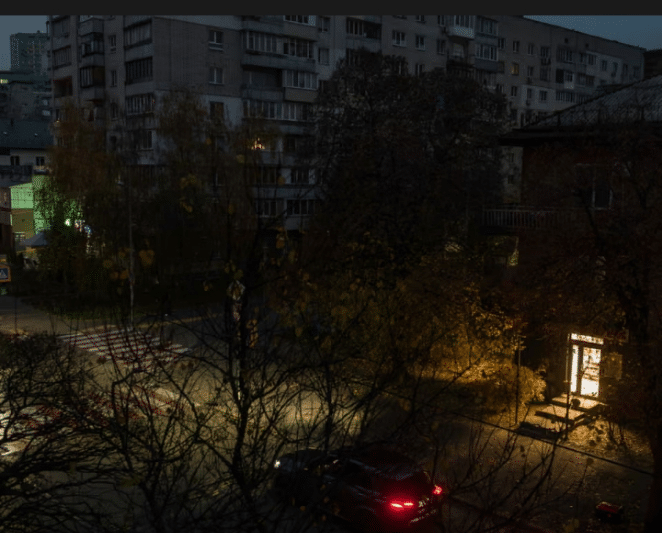
The UN Rights Office has sounded a grave alarm over escalating atrocities in Sudan’s El-Fasher, describing the situation as “catastrophic and beyond human comprehension.”
According to the UN Rights Office, civilians trapped in the war-torn city are suffering unimaginable violence following the Rapid Support Forces (RSF) takeover in late October.
UN Human Rights Representative Li Fung said, “El-Fasher has become a city of grief and terror. Civilians endure atrocities that defy description and humanity itself.”
Eyewitnesses recount horrific massacres, entire families vanishing overnight, and systematic sexual violence targeting women and girls. Hospitals and schools have become death traps rather than sanctuaries.
Li Fung added, “The UN Rights Office has documented accounts of civilians being executed in their homes, children abducted, and the wounded denied access to medical care.”
Before the RSF’s occupation, El-Fasher had around 260,000 residents. Today, the once-bustling capital of North Darfur lies in ruins, with neighborhoods reduced to ash.
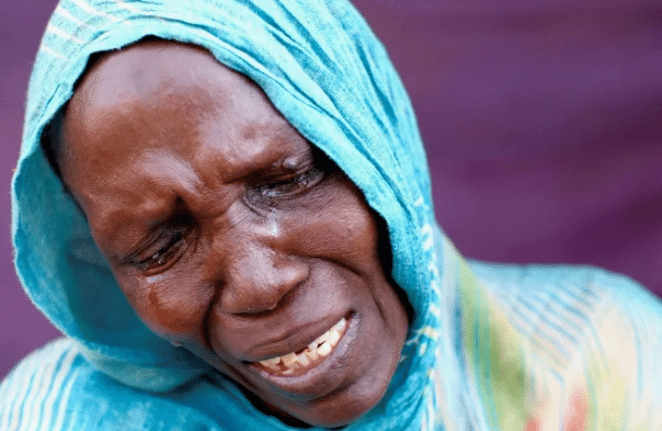
Volker Turk, the UN High Commissioner for Human Rights, said the UN Rights Office was “deeply alarmed by ethnically driven massacres that could amount to war crimes or crimes against humanity.”
Satellite imagery analyzed by Yale University’s Humanitarian Research Lab confirms mass killings in Sudan’s El-Fasher, showing apparent mass graves and pools of blood in bombed-out streets.
Adam Rojal, spokesperson for Sudan’s IDPs and Refugee Camps aid group, said, “Over 16,000 displaced people have arrived in Tawila with nothing but the clothes on their backs.”
Aid agencies warn of famine-like conditions. “Some families survive on one meal daily,” said Mathilde Vu from the Norwegian Refugee Council. “Children cry all night from hunger.”
Doctors Without Borders (MSF) described “extremely high malnutrition levels among adults and children,” while many wounded civilians die untreated due to destroyed medical facilities.
The UN Rights Office estimates that at least 82,000 people have fled El-Fasher, seeking refuge in nearby towns like Tawila, Kebkabiya, Melit, and Kutum.
Humanitarian access remains dangerously limited. “Our convoys face RSF checkpoints, looting, and ambushes,” said an MSF coordinator. “We are watching a slow-motion genocide unfold.”
The violence in Darfur has now spilled into neighboring Kordofan, where a drone strike in El-Obeid killed at least 40 civilians and injured dozens more.
A Sudanese military official confirmed that two Chinese-made drones were intercepted. “The RSF is expanding its frontlines,” he warned. “No part of Sudan is safe anymore.”
El-Obeid, a key trading hub linking Darfur to Khartoum, faces total collapse. The RSF’s capture of nearby Bara triggered another 36,000 civilians to flee within days.
Local resident Ahmed Suleiman said, “Every night we hear drones overhead and explosions in the distance. We no longer know who to trust or where to hide.”
As the UN Rights Office continues to warn of atrocities, global condemnation grows louder. Yet, tangible international action remains elusive amid a deepening humanitarian catastrophe.
Volker Turk stated, “The world cannot remain silent as civilians are exterminated in their homes. Impunity must end before Sudan’s soul is lost forever.”
Diplomatic mediators—known as the Quad, comprising the US, Saudi Arabia, Egypt, and the UAE—have proposed a three-month humanitarian ceasefire followed by a political transition.
The RSF initially agreed to the proposal, but renewed clashes in Khartoum and Atbara quickly shattered any hopes for peace or a lasting truce.
“Promises of peace mean nothing when gunfire still fills the sky,” said Halima Musa, a teacher displaced from El-Fasher. “We need safety, not speeches.”
The fall of El-Fasher marked a devastating military and symbolic loss for Sudan’s army. With all five Darfur capitals under RSF control, the nation stands divided.
Darfur Governor Minni Arko Minnawi warned, “Any ceasefire that fails to remove RSF forces will formalize Sudan’s partition and permanently fracture our nation.”
Political analysts say the war has reignited long-buried ethnic divisions. “What we see now mirrors the genocide of 2003,” said Khartoum analyst Abdelkarim Idris.
In Al-Dabbah, survivors describe the unthinkable. “My son and brother were killed,” said Mariam Ibrahim tearfully. “I buried them both myself. There is no one left.”
Humanitarian workers compare the suffering to Rwanda. “This is genocide by starvation and bullets,” said a UN field officer. “People are being erased while the world debates.”
The UN Rights Office has called for urgent investigations, demanding that perpetrators face trial before the International Criminal Court for crimes against humanity.
International condemnation has intensified, but concrete action remains limited. The African Union and Arab League issued statements, while the UN Security Council debates new sanctions.
US Secretary of State Antony Blinken said, “The atrocities in El-Fasher must stop immediately. Accountability is not optional—it’s a moral obligation for the global community.”
Yet inside Sudan, the situation worsens. Communication networks are down, blocking journalists and investigators from verifying widespread atrocities or contacting trapped civilians.
“They want to hide their crimes,” said human rights activist Salma El Nour. “But the truth will surface; every grave tells a story of suffering.”
Aid groups report convoys attacked en route to Darfur. “We’re pleading for humanitarian corridors,” said NRC’s Vu. “If access isn’t granted soon, thousands will die.”
Children remain the most vulnerable. “Many arriving in Tawila are orphans,” said Vu. “They’ve lost everything and are cared for by strangers with barely enough to survive.”
UNICEF warns of cholera and measles outbreaks due to overcrowding and poor sanitation. “Children who should be learning are fighting for clean water,” said UNICEF’s Samira Khalid.
The UN Rights Office stresses that Sudan’s war threatens regional stability. Neighboring Chad and South Sudan now host thousands of refugees, straining limited resources and heightening border tensions.
“This conflict is no longer Sudan’s alone,” said analyst Reem Hassan. “If unchecked, it will ignite a wider Sahel crisis and destabilize the Horn of Africa.”
Human Rights Watch Director Kenneth Roth urged urgent UN intervention. “We cannot repeat Darfur’s mistakes,” he said. “The scale of violence demands immediate global peacekeeping presence.”
Volker Turk reiterated that the UN Rights Office will continue monitoring violations despite mounting risks. “We owe the Sudanese people our vigilance and our voices,” he declared.
“The suffering is immense, yet the global response remains timid,” Turk continued. “We must act decisively, or we will have blood on our collective conscience.”
The Sudan conflict, which began in April 2023, has already claimed more than 40,000 lives, according to the World Health Organization—though the true toll is likely far higher.
Bodies are buried in shallow graves across Darfur’s sands. “They deserve names, not numbers,” said an aid worker in Kutum. “Human dignity shouldn’t be a luxury.”

Despite despair, resilience persists among survivors. “We’ve lost everything but hope,” said activist Fatima Musa. “If the world stands with us, Sudan can still rebuild.”
The UN Rights Office insists time is running out to prevent full-scale collapse. “Without global unity and justice, Sudan’s people will remain trapped in endless suffering,” Turk warned.
About The Author