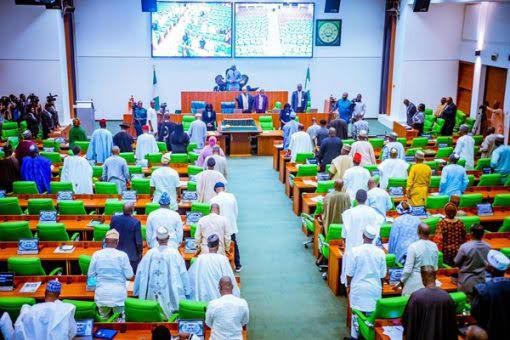
Nigeria’s lawmakers have stepped into the growing controversy surrounding the Eba Island oil well dispute as the House of Representatives ordered a comprehensive investigation into the territorial ownership of the oil-bearing island currently contested by Ogun and Ondo states.
The directive followed the adoption of a motion during plenary calling for legislative intervention to clarify the geographical and administrative status of Eba Island, where a recently approved oil well has heightened tensions between the two neighbouring states.
The motion was presented by Joseph Adegbesan, a lawmaker representing the Odigbo/Ile-Oluji/Okeigbo Federal Constituency in Ondo State. He urged the House to urgently investigate the matter to prevent potential political friction and safeguard national economic interests.
Reps probe Eba Island oil well dispute between Ogun and Ondo
During the debate, Adegbesan reminded lawmakers that the responsibility for defining and maintaining state boundaries lies with the National Boundary Commission.
He explained that Eba Island is geographically located between the Oluwa River and the Alape River within Ogun Waterside Local Government Area in Ogun State.
However, the situation has become complicated due to the existence of two separate locations sharing similar names. While one is Eba Island in Ogun State, the other is an inland Eba community located in Ilaje Local Government Area of Ondo State.
According to the lawmaker, the similarity in names has contributed to public confusion and competing territorial claims.
Adegbesan noted that the Independent National Electoral Commission had historically recognised Eba Island as part of Ogun State, citing the establishment of polling units and the conduct of elections there under the Makun/Irokun Ward of Ogun Waterside.
He added that prior to approving oil exploration activities, the Nigerian National Petroleum Company Limited and the Nigerian Upstream Petroleum Regulatory Commission had verified the coordinates of the oil well.
According to him, the approval for commercial drilling was eventually granted by Bola Tinubu in his capacity as President and Commander-in-Chief of the Armed Forces of Nigeria.
Rising tensions over oil exploration
The discovery and approval of commercial drilling in the area have significantly raised the stakes in the Eba Island oil well dispute, as both Ogun and Ondo states seek control over the oil-bearing territory.
Oil-producing areas in Nigeria are entitled to derivation revenue from petroleum resources extracted within their boundaries. As a result, the confirmation of oil deposits in Eba Island has heightened economic and political interest in the territory.
Adegbesan warned that recent claims suggesting that the island belongs to Ondo State could escalate tensions if left unresolved.
He also raised concerns about reports that some groups had allegedly issued threats in connection with the oil exploration activities.
According to him, such developments could pose risks to national security and potentially disrupt energy infrastructure in the region.
“We are disturbed that reports of threats issued by certain groups regarding the oil exploration activities pose potential risks to national security and economic infrastructure,” he said during the plenary session.
Lawmakers demand thorough investigation
Following deliberations, the House mandated its Committees on Special Duties and Petroleum Resources (Upstream) to carry out a detailed investigation into the dispute.
The probe will examine geospatial coordinates, official boundary records and all relevant documentation to determine the legal status of the island.
The committees have been given four weeks to present their findings and recommendations to the House for further legislative action.
The plenary session during which the motion was adopted was presided over by the Deputy Speaker, Benjamin Kalu.
Lawmakers stressed that resolving the Eba Island oil well dispute is necessary to prevent unnecessary conflict between the two states and ensure stability in the oil-producing region.
Economic stakes in the dispute
Observers say the controversy reflects broader challenges associated with boundary demarcation in Nigeria’s coastal and riverine areas.
Natural features such as rivers, creeks and shifting waterways often complicate the demarcation of administrative boundaries between states.
With the discovery of hydrocarbon resources, these ambiguities can quickly evolve into high-stakes disputes involving economic and political interests.
For states, securing ownership of an oil-producing area could translate into increased derivation revenue, which forms a significant component of fiscal allocations to oil-producing regions.
Analysts warn that unresolved disputes of this nature may discourage investment in exploration activities if investors fear regulatory or political uncertainty.
Calls for clarity and peaceful resolution
The intervention by the House of Representatives is widely viewed as an attempt to establish clarity and prevent the dispute from escalating.
Stakeholders believe that a transparent investigation backed by official boundary documentation will help resolve the issue and provide certainty for both governments and investors.
As the committees begin their work, attention will remain focused on the outcome of the probe and its implications for resource ownership, state revenue and intergovernmental relations.
Ultimately, lawmakers say addressing the Eba Island oil well dispute through institutional mechanisms will help protect national economic interests while maintaining peaceful relations between neighbouring states.
About The Author