

Peter Mandelson resigns from Lords after Epstein email leak scandal, bringing an abrupt and controversial end to his time in the House of Lords as pressure mounts over leaked emails linking the former Labour minister to the late financier and convicted sex offender Jeffrey Epstein.
The resignation, confirmed by the speaker of the House of Lords, follows revelations that Mandelson allegedly shared confidential UK government communications with Epstein while serving as business secretary during the global financial crisis, a development that has shaken Westminster and triggered police scrutiny.
Mandelson’s departure comes amid mounting political outrage after the release of a cache of emails by the US Department of Justice that appear to show sensitive government briefings being forwarded to Epstein.
These communications reportedly included information about financial policy, proposed asset sales and early indications of bailout measures during one of the most volatile periods in modern economic history.
The disclosure has raised serious questions about national security, ministerial conduct and the safeguarding of market-sensitive information at the highest levels of government.
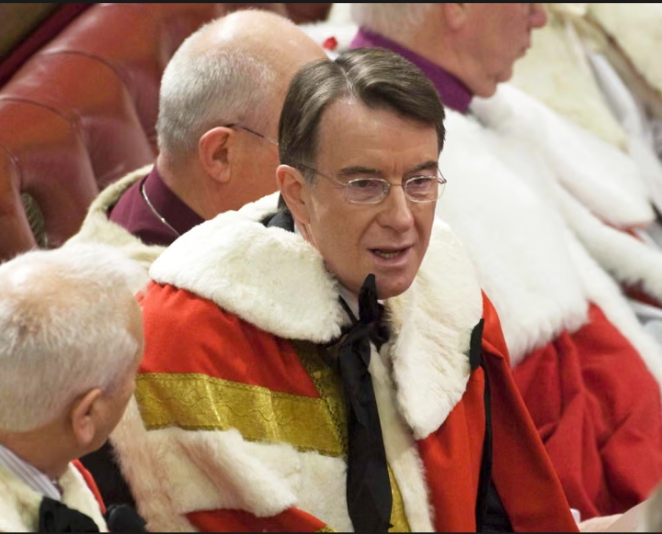
Prime minister Keir Starmer confirmed that a dossier relating to the leaked emails had been passed to the Metropolitan Police, describing the situation as deeply disturbing. Addressing cabinet colleagues, Starmer said Mandelson had “let his country down” and made clear that the government was examining every available option to ensure accountability.
While Mandelson’s resignation removes him from the House of Lords, his peerage remains intact, highlighting what Starmer described as an outdated and inadequate system for disciplining members of the upper chamber.
The scandal has reignited debate over the inability to swiftly strip peers of their titles, a process that currently requires primary legislation.
Downing Street sources indicated that draft legislation was being prepared to reform the rules governing peerage removal, arguing that public trust in politics depends on meaningful consequences for serious misconduct.
Starmer reportedly told ministers it was incomprehensible that peers could remain titled despite behaviour that would end careers in any other profession.
According to the documents disclosed, emails sent by Mandelson to Epstein allegedly contained confidential briefings intended for the prime minister, including details of a potential £20bn programme of government asset sales.
Other messages reportedly referenced sensitive discussions on bankers’ bonuses, early confirmation of a €500bn European bailout package and communications involving senior banking executives. Officials believe the material could have had significant market implications if misused.
The Cabinet Office has launched an internal investigation into how such information was handled and whether existing safeguards were breached. Initial assessments suggest the emails contained highly sensitive economic intelligence relating to the 2008 financial crisis and the measures taken by the UK and European governments to stabilise the global economy.
Investigators are now examining whether any laws were broken and whether further disclosures may emerge.
Compounding the political fallout are allegations of financial links between Epstein and Mandelson or individuals connected to him.
Justice Department records appear to show payments made by Epstein into accounts believed to benefit Mandelson during his time as a Labour MP.
Separate disclosures indicate that Epstein also sent money to Mandelson’s partner, now husband, Reinaldo Avila da Silva, to support educational expenses. While the full context of these payments remains under scrutiny, their existence has intensified calls for transparency.
Senior Labour figures have sought to distance the current government from Mandelson’s actions, stressing that the alleged conduct took place more than a decade ago.
Health secretary Wes Streeting described Mandelson’s association with Epstein as a “betrayal on many levels” but said there was no indication that Starmer or the Cabinet Office were aware of the alleged leaks before the emails became public. He argued that the prime minister’s swift response demonstrated leadership and a commitment to restoring trust.
Mandelson’s resignation has also prompted renewed scrutiny of his previous appointment as UK ambassador to the United States, with MPs demanding greater clarity over what vetting was conducted prior to that role.
Questions have been raised about whether sufficient inquiries were made into his past associations and whether warning signs were overlooked.
Downing Street has so far declined to comment on specific vetting processes, citing the ongoing investigation.
The Metropolitan Police confirmed they are assessing the material provided by the government to determine whether a criminal investigation is warranted. Legal experts note that any inquiry would need to establish intent, knowledge and potential harm arising from the disclosure of confidential information.
While no charges have been brought, the prospect of a police investigation adds a further layer of gravity to a scandal already dominating the political agenda.
Beyond the immediate legal and political consequences, the episode has wider implications for public confidence in the political system. Polling consistently shows low trust in politicians, and critics argue that cases involving secrecy, privilege and lack of accountability only deepen cynicism. Starmer has acknowledged this risk, warning that failure to act decisively could further erode faith in democratic institutions.
The House of Lords itself has come under renewed criticism as an institution perceived as resistant to reform. Campaigners argue that the inability to remove titles swiftly undermines the credibility of the chamber and fuels perceptions of elitism. Calls for broader reform, including changes to appointments and disciplinary powers, have gained momentum in the wake of Mandelson’s resignation.
For Mandelson, once one of Labour’s most influential strategists and a central figure in the New Labour era, the fall from grace is dramatic. Long regarded as a skilled political operator with deep international connections, he now faces a legacy overshadowed by controversy.

While he has yet to make a detailed public statement addressing the full range of allegations, his resignation marks a decisive moment in a scandal that shows little sign of fading.
As investigations continue, the government faces pressure to deliver both accountability and reform. Whether through legislative change, criminal proceedings or institutional overhaul, the handling of the Mandelson case is likely to shape debates about ethics, power and responsibility in British politics for years to come.
For now, Peter Mandelson resigns from Lords after Epstein email leak scandal stands as one of the most serious political crises confronting the current administration.
Read more here: Starmer urges Mandelson to resign from Lords over Epstein links as government orders urgent review


