Nigeria’s non-oil export sector recorded a historic milestone in 2025, with export earnings climbing to $6.1 billion, representing an 11.5 per cent increase from the $5.46 billion achieved in 2024.
The development marks the highest value ever recorded for formally documented non-oil trade since the establishment of the Nigerian Export Promotion Council (NEPC), reinforcing the sector’s growing importance to the nation’s economic diversification agenda.
The Executive Director and Chief Executive Officer of NEPC, Mrs. Nonye Ayeni, disclosed the figures during a press briefing in Abuja while presenting the council’s 2025–2026 non-oil export performance outlook.
She described the achievement as a watershed moment that reflects sustained reforms, improved coordination among stakeholders, and rising global demand for Nigerian export products outside crude oil.
According to Ayeni, the latest figures confirm that Nigeria has surpassed its own previous records for non-oil exports for two consecutive years, underscoring the resilience and increasing competitiveness of the sector.
“This performance is historic. Nigeria has once again beaten its own non-oil export record. The ‘Double Your Export’ mantra is not just a slogan; it is delivering tangible results,” she said.
Non-Oil Export Growth Signals Structural Shift in Nigeria’s Economy
Ayeni noted that the impressive non-oil export growth is evidence of a gradual but significant structural shift away from Nigeria’s long-standing dependence on crude oil revenues.
She explained that government-backed export expansion strategies, improved regulatory frameworks, and stronger private sector participation have helped unlock new opportunities across agriculture, manufacturing, and solid minerals.
Beyond export value, the volume of non-oil export also recorded a notable increase. Total exports reached 8.02 million metric tonnes in 2025, up from 7.29 million metric tonnes in the previous year—representing a 10 per cent rise.
She said the growth in both value and volume demonstrates deeper market penetration, better logistics coordination, and increased export activity across multiple value chains.
“This growth shows that Nigerian exporters are scaling up, improving product quality, and gaining stronger access to international markets,” Ayeni said.
In a key indicator of diversification, Nigeria exported 281 different non-oil products in 2025.
These spanned agricultural commodities, processed and semi-processed goods, industrial inputs, and solid minerals, highlighting steady progress in value addition and reduced reliance on raw commodity exports.
Products such as cocoa beans, cocoa butter, sesame seeds, cashew, ginger, hibiscus, leather products, and mineral-based exports featured prominently in Nigeria’s non-oil export basket.
Ayeni emphasized that expanding product diversity remains central to the council’s long-term strategy, noting that deeper processing and manufacturing would further enhance export earnings and job creation.
Europe, South America Drive Demand for Nigeria’s Non-Oil Export
Data released by the NEPC showed that Nigeria’s non-oil export reached 120 countries in 2025, reflecting wider global acceptance of Nigerian products.
The Netherlands emerged as Nigeria’s top export destination by value, accounting for 17.53 per cent of total non-oil exports. This was followed by Brazil with 10.35 per cent, while India ranked third at 7.63 per cent
Exports to the Netherlands grew by 32.46 per cent, driven largely by increased shipments of cocoa beans, cocoa butter, sesame seeds, and allied agricultural products. Exports to Brazil also rose by 19.07 per cent, further strengthening Nigeria’s trade ties with South America.
“These figures show that Nigerian products are gaining trust and relevance in both traditional and emerging markets,” Ayeni noted.
Informal Trade Still Masks True Size of Non-Oil Export
Despite the strong performance, the NEPC boss cautioned that the reported figures do not fully capture Nigeria’s actual non-oil export potential, as a significant volume of trade still occurs informally across land borders.
She revealed that the council is working closely with the National Bureau of Statistics (NBS) and the Central Bank of Nigeria (CBN) to mainstream informal trade into official export data.
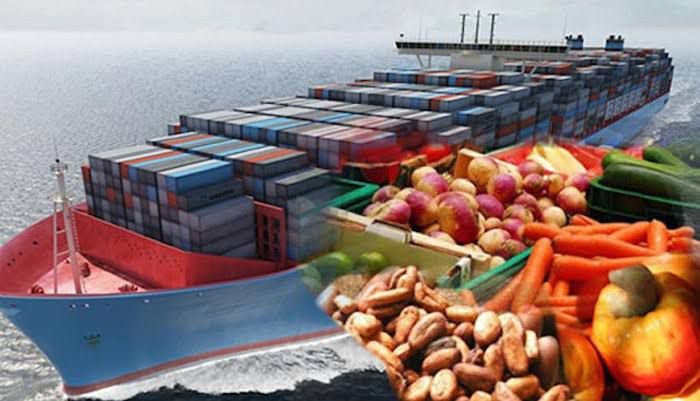
“A lot of exports still go out informally. Capturing this trade will significantly boost Nigeria’s recorded non-oil export figures and improve policy planning,” she said.
Looking ahead, Ayeni reaffirmed NEPC’s commitment to recalibrating and strengthening its strategies to achieve even higher non-oil export earnings in the coming years.
She said the council will intensify exporter education, improve access to finance, promote value-added production, and strengthen quality control systems.
Industry analysts believe that sustained growth in the non-oil export sector could help stabilise Nigeria’s foreign exchange inflows, reduce pressure on the naira, and support inclusive economic growth.
As Nigeria continues to face volatility in global oil markets, the record-breaking performance of the non-oil export sector in 2025 is increasingly seen as a critical pillar for long-term economic resilience and sustainable development.
About The Author