

The Nigeria Labour Congress has warned that worsening economic hardship and insecurity are pushing millions of Nigerians deeper into poverty, intensifying pressure on President Bola Tinubu’s administration as inflation, food prices and public frustration continue to rise.
In a strongly worded Eid-el-Kabir message released on Wednesday, the labour union accused political leaders of pursuing economic policies that have weakened household purchasing power while failing to adequately address growing insecurity across Africa’s largest economy.
The criticism comes at a sensitive moment for Nigeria’s economy, where inflation remains elevated, the naira has experienced prolonged volatility and millions of households continue to struggle with rising transportation, food and energy costs following major economic reforms introduced since 2023.
For many Nigerians, the economy has become not only a question of inflation and prices, but a broader test of confidence in the government’s ability to deliver stability, security and basic living conditions.
The statement, signed by NLC President Joe Ajaero, said Nigerian workers and low-income households were “bleeding under the weight of neoliberal policies” that have increased hardship while disproportionately affecting vulnerable citizens.
“As we mark Eid-el-Kabir, a festival of sacrifice and obedience, the NLC reminds all Nigerians that this celebration should be different,” the union said. “The working class and the poor majority are bleeding under the weight of neoliberal policies.”
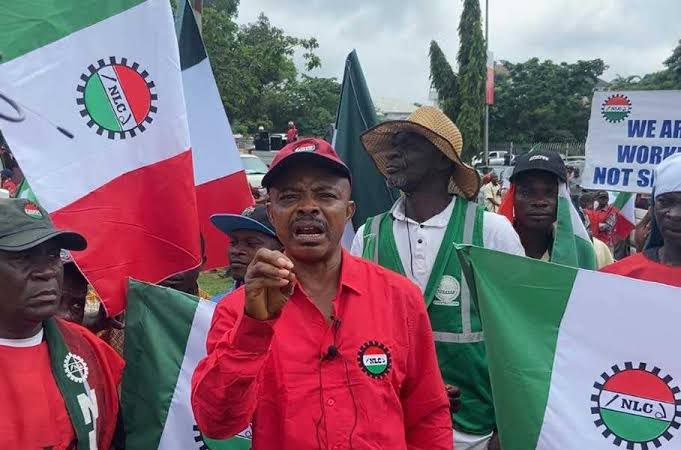
Nigeria’s economy hardship deepens amid inflation crisis
Nigeria has faced persistent economic pressure since the removal of petrol subsidies and the liberalisation of the foreign exchange market, reforms the government says are necessary to stabilise public finances, attract investment and restore long-term growth.
While international financial institutions including the International Monetary Fund and the World Bank have broadly supported the reforms, the measures have also contributed to sharp increases in fuel prices, transportation costs and food inflation.
Annual inflation has remained one of the central pressures on household spending, with food costs emerging as one of the biggest sources of public anxiety in both urban and rural communities.
Petrol prices among Nigeria’s most politically sensitive economic indicators have more than doubled since subsidy removal, increasing operating costs for businesses and raising transport fares nationwide.
Analysts say the effects have spread across the wider economy because higher fuel and logistics costs directly influence food distribution, electricity expenses and manufacturing prices.
For Nigeria’s economy, inflation is no longer only a macroeconomic statistic, it has become a daily measure of household survival and public confidence in economic management.
The labour union said governance should prioritise citizens’ welfare through affordable healthcare, education, employment opportunities and improved living conditions rather than policies perceived as favouring fiscal adjustment over social protection.
“This season demands that our leaders search for themselves and decide to work for a Nigeria that will work for the majority and not for the few who occupy high public offices,” the NLC said.
NLC attacks reforms over rising poverty and insecurity
Beyond economic hardship, the labour union said worsening insecurity had further deepened social distress across the country.
Nigeria continues to face multiple security challenges, including kidnappings, armed banditry, communal violence, separatist tensions and attacks by insurgent groups in parts of the north-east.
The NLC said the persistence of insecurity reflected broader governance failures and declining public confidence in state institutions.
“The worsening insecurity that now threatens the existence of our nation, from banditry to kidnapping, from herdsmen bloodshed to urban violence, is a direct indictment of our governance model,” the statement said.
Political analysts say insecurity and inflation are increasingly converging into a broader national frustration that could shape public sentiment ahead of the 2027 elections.
The union also criticised what it described as unequal sacrifice within the political system, arguing that ordinary Nigerians were bearing the burden of reforms while public officials continued to maintain high levels of government spending.
Analysts caution that economic reforms often become politically vulnerable when citizens do not immediately experience improvements in living standards, especially in economies facing weak social safety nets and persistent unemployment.
Several economists have warned that prolonged inflation combined with insecurity could weaken consumer confidence, reduce private-sector expansion and increase social tensions if growth does not translate into visible improvements in household welfare.
Read Also: CBN Naira Intervention Lifts Currency as Nigeria Tightens FX Liquidity
Oyo school abduction: Makinde assures families of safe return of kidnapped pupils
Labour warns of political consequences ahead of 2027
The NLC’s message also carried increasingly political undertones ahead of the next election cycle.
The union signalled that workers, unemployed youths and low-income households may become a more organised political force if economic hardship persists.
“We are entering a phase where every vote must be a weapon against hunger, insecurity, and exploitation,” the NLC said.
The labour body accused political leaders of demanding sacrifices from citizens while failing to demonstrate accountability and restraint in governance.
It added that Nigerian workers would remember “promises not kept, the brutalisation of peaceful protesters, and the deliberate impoverishment of workers under the guise of policy hard choices.”
Labour unions have historically played influential roles during periods of economic tension in Nigeria, particularly during disputes involving fuel prices, wages and austerity measures.
Analysts say the tone of the latest statement reflects growing frustration among organised labour groups over the pace and social impact of current reforms.
The comments may also increase pressure on policymakers to accelerate targeted welfare programmes, food support initiatives and employment measures aimed at cushioning the effects of inflation on lower-income households.
Analysts say economic frustration is reshaping public sentiment
Economists say Nigeria’s current economic environment reflects a difficult balancing act between stabilisation reforms and short-term social pain.
While policymakers argue that subsidy removal and exchange-rate reforms are necessary to rebuild investor confidence and reduce fiscal distortions, critics say the pace of hardship has intensified faster than income growth.
Analysts at several Lagos-based investment and policy advisory firms have noted that inflationary pressure, rising living costs and weak purchasing power remain among the biggest risks to social stability and consumer demand.
Some economists also warn that insecurity itself has become an economic variable, affecting agricultural output, transportation costs, investor confidence and internal trade routes.
The combination of insecurity and inflation has increasingly become one of the defining political and economic narratives shaping public discourse in Nigeria.
For millions of Nigerians, the issue is no longer whether reforms are economically necessary, but whether the benefits will arrive quickly enough to offset worsening living conditions.
Investors monitor social stability risks amid reforms
Investors and international financial institutions are also closely monitoring how Nigeria manages the social consequences of its reforms.
While Nigeria has attracted renewed interest from some foreign investors following monetary tightening and exchange-rate adjustments, analysts say prolonged public dissatisfaction could complicate reform implementation.
Political stability, inflation trends and social cohesion remain important variables for foreign portfolio investors evaluating frontier markets.
Several emerging-market economies undergoing similar reforms — including Egypt, Pakistan and Argentina — have also faced periods of public tension linked to subsidy cuts, inflation spikes and currency weakness.
Analysts say Nigeria’s ability to maintain reform momentum while reducing hardship will likely influence broader investor sentiment toward the country over the coming years.
The NLC urged Nigerians to use the Eid-el-Kabir period not only for religious reflection, but also for “political education, grassroots organising, and the building of a united front of the oppressed.”
Its comments underscore how economic pressure and insecurity are increasingly intersecting with political mobilisation in Africa’s largest democracy.
As inflation, insecurity and unemployment continue to weigh on public sentiment, the coming months may test both the resilience of Nigeria’s reforms and the public’s tolerance for continued economic pain.
Read more @ireport247news
About The Author


