

Nigeria’s currency posted one of its strongest periods of relative stability in recent months after the Central Bank of Nigeria intensified liquidity tightening measures through aggressive Open Market Operations, helping the naira appreciate against the United States dollar and easing volatility across the foreign exchange market.
The naira strengthened by 1.42 per cent in April to close at an average exchange rate of N1,361.51/$, compared with N1,381.18/$ recorded in March, according to market data reviewed by analysts and financial institutions.

The gains came as the Central Bank of Nigeria injected N9.71tn into the financial system through OMO bills in April, a sharp increase from the N7.62tn issued in March, as policymakers moved to mop up excess liquidity and stabilise the currency market.
The latest intervention reflects growing pressure on the monetary authorities to defend the naira, curb inflationary risks and restore investor confidence after months of severe exchange-rate instability that rattled businesses, households and foreign investors.
For Nigeria’s economy, the naira has become both a symbol of reform credibility and a daily measure of public confidence in the government’s economic management.
Energy import costs, food prices, transportation expenses and household inflation remain closely tied to currency movements, making exchange-rate stability one of the country’s most politically sensitive economic issues.
CBN Naira Intervention Driven by N9.71tn OMO Bills
The CBN’s aggressive use of Open Market Operations became the dominant driver behind the naira’s improved performance during the month.
OMO bills are used by central banks to absorb excess liquidity from the banking system by selling high-yield short-term securities to investors, thereby reducing speculative pressure on foreign exchange demand.
By issuing N9.71tn worth of OMO bills in April, the CBN effectively tightened naira liquidity conditions, making it more expensive to speculate against the currency while simultaneously increasing the attractiveness of naira-denominated assets.
Nigeria’s external reserves stood at roughly $48.8bn in May, according to Central Bank data, while stop rates on one-year OMO bills traded above 30 per cent in recent auctions, among the highest nominal yields across frontier markets.
Analysts said elevated yields continued attracting foreign portfolio inflows into Nigerian fixed-income assets despite lingering inflation concerns.
Market participants said the strategy has helped slow panic demand for dollars that previously intensified volatility in both official and unofficial currency markets.
Analysts at Cordros Capital said the central bank’s sustained liquidity tightening was beginning to improve FX market confidence, particularly among offshore investors searching for high-yield frontier-market opportunities.
“The combination of elevated OMO yields and tighter liquidity conditions has reduced speculative activity while improving investor appetite for Nigerian fixed-income instruments,” the firm noted in a recent market commentary.
Economists at Standard Chartered and JP Morgan have also previously argued that sustained monetary discipline and FX reforms could improve Nigeria’s medium-term investment outlook if policy consistency is maintained.
Analysts at Goldman Sachs said tighter monetary conditions across several frontier markets were increasingly supporting local currencies against speculative pressure, although they warned that external financing conditions remained fragile.
Naira Stability Improves as FX Market Volatility Eases
The foreign exchange market also recorded a notable decline in volatility during April.
The naira traded within a narrower range of N1,341/$ to N1,389/$ during the month, compared with the wider fluctuation band of N1,345/$ to N1,425/$ recorded in March.
Currency traders said the moderation in volatility suggested that speculative attacks on the naira had weakened significantly compared with earlier periods of market panic.
The narrowing spread between official and parallel-market exchange rates also reduced arbitrage opportunities that previously distorted FX pricing and encouraged speculative demand for dollars.
Foreign exchange dealers noted that reduced volatility has improved price discovery in the official market, allowing businesses to plan transactions with greater predictability.
Daily turnover on Nigeria’s official FX market has also improved in recent months as liquidity conditions stabilised, according to traders and market data.
One Lagos-based FX trader said the market had become “far less disorderly” compared with conditions seen earlier in the year when sudden swings in exchange rates disrupted corporate planning and import financing.
“There is still pressure in the system, but volatility has reduced materially. Traders are no longer pricing in extreme panic movements every week,” the trader said.
Nigeria is attempting to rebuild investor credibility after years of multiple exchange-rate regimes, FX shortages and policy uncertainty.
Nigeria’s currency reforms mirror broader efforts by several emerging-market economies, including Egypt, Pakistan and Argentina, to stabilise local currencies against persistent dollar strength, inflationary pressures and volatile capital flows.
Foreign Investors Respond to Higher Nigerian Yields
Higher OMO yields and tighter liquidity conditions have also improved Nigeria’s attractiveness to foreign portfolio investors seeking high returns in frontier markets.
Nigeria’s headline inflation rate remained above 30 per cent in April, meaning investors continued to weigh whether elevated fixed-income yields were sufficiently compensating for inflation risk and currency volatility.
Analysts said Nigeria’s elevated interest-rate environment is increasingly encouraging carry-trade positioning, where foreign investors borrow cheaply in lower-yield markets and invest in higher-yield Nigerian assets.
“We are seeing cautious re-entry into Nigerian local debt from offshore accounts, particularly short-duration positioning,” said a Lagos-based treasury executive at an international bank who asked not to be named because they were not authorised to speak publicly.
Investment analysts noted that foreign participation in Nigeria’s fixed-income market improved modestly during April as exchange-rate conditions became more predictable.
According to market estimates, Nigeria remains one of the highest-yielding frontier markets globally after the CBN maintained elevated interest rates to combat inflation and currency weakness.
However, economists cautioned that relying heavily on short-term foreign portfolio inflows carries risks because such investments can quickly reverse during periods of global uncertainty.
A senior economist at Renaissance Capital said Nigeria’s recent currency stability remains highly dependent on maintaining investor confidence.
“High yields are attracting capital flows, but sustaining confidence will depend on continued policy credibility, reserve adequacy and inflation management,” the economist said.
Investors are also monitoring how currency stability could influence inflation expectations, sovereign debt pricing and broader capital-market sentiment in Africa’s largest economy.
Parallel Market Gap Narrows as Arbitrage Pressure Weakens
One of the most significant developments in recent months has been the narrowing gap between Nigeria’s official and parallel-market exchange rates.
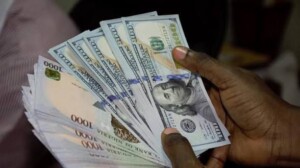
Currency dealers said the gap between the official and parallel-market exchange rates narrowed significantly compared with levels seen earlier in the year, when unofficial market quotes traded more than N200 above official pricing.
The convergence has reduced arbitrage incentives that previously encouraged speculative trading and distorted pricing across the economy.
Economists said the shrinking gap signals improving confidence in official FX pricing mechanisms, although risks remain elevated because of persistent structural imbalances in Nigeria’s dollar supply.
Fuel imports, external debt obligations and manufacturing-sector demand continue to generate strong pressure on foreign exchange reserves.
Fuel imports remain a major source of foreign exchange demand in Nigeria, meaning the outcome of ongoing reforms could also influence pressure on the naira and broader inflation trends.
Import-dependent businesses remain vulnerable to any renewed deterioration in exchange-rate stability, particularly if global oil prices weaken or external reserves come under pressure.
Inflation Risks Continue to Threaten Stability
Despite recent gains, inflation remains one of the biggest threats to sustained naira stability.
Nigeria continues to face elevated food inflation, transportation costs and energy-price pressures that have weakened household purchasing power and increased pressure on policymakers.
Economists at the World Bank and International Monetary Fund have repeatedly cautioned that exchange-rate stability in import-dependent economies can quickly reverse if structural reforms fail to improve export competitiveness and investor confidence.
Analysts warn that tighter liquidity conditions alone may not guarantee long-term exchange-rate stability if inflation continues rising faster than wage growth and productivity.
Economists at International Monetary Fund have repeatedly stressed that monetary tightening must be accompanied by structural reforms capable of improving productivity, export competitiveness and investor confidence.
Analysts also warn that deregulated FX markets can still become distorted if infrastructure bottlenecks, regulatory uncertainty and weak market confidence undermine effective competition.
The country’s dependence on crude oil exports for dollar earnings remains another major vulnerability.
A prolonged decline in global oil prices could significantly weaken Nigeria’s FX inflows and reverse recent currency gains.
Global Markets and Oil Prices Remain Critical
External conditions remain central to the naira’s outlook.
Nigeria’s FX stability continues to depend heavily on oil-export earnings because crude sales account for the majority of the country’s foreign exchange inflows.
Any disruption in global oil markets, weaker crude prices or reduced production volumes could quickly pressure reserves and increase demand for dollars.
Global investors are also closely monitoring monetary policy signals from the US Federal Reserve because higher US interest rates often reduce investor appetite for frontier-market assets.
Stronger US Treasury yields can trigger capital outflows from emerging and frontier markets as investors shift toward safer dollar-denominated assets.
Financial institutions including Fitch Ratings and Moody’s have repeatedly identified FX stability as one of the most important indicators influencing Nigeria’s sovereign credit outlook.

Can the CBN Sustain Naira Stability Amid Inflation Risks?
While April’s gains have improved market sentiment, analysts remain cautious about the sustainability of the naira’s recovery.
Economists said the current stability largely reflects aggressive monetary tightening rather than a fundamental transformation in Nigeria’s FX supply structure.
Analysts caution that maintaining long-term stability will require:
- stronger crude oil production,
- improved export earnings,
- rising foreign reserves,
- lower inflation,
- improved investor confidence,
- deeper structural reforms.
There are also concerns that excessively tight liquidity conditions could weaken private-sector borrowing and slow economic activity.
For investors, the naira’s recent stability is no longer simply a currency story — it is increasingly being viewed as a test of whether Nigeria can sustain market reforms without triggering deeper inflationary and social pressures.
Some market participants fear that elevated interest rates may increase debt-servicing pressures for businesses already struggling with inflation and weak consumer demand.
Analysts said the durability of the naira’s recovery would depend on whether reforms improve dollar liquidity beyond temporary monetary tightening.
For now, however, the central bank’s aggressive liquidity intervention appears to have bought policymakers valuable time in their effort to restore confidence in the currency market.
Read more @ireport247news
About The Author


