Nigeria needs to grow 12% annual growth to reach $1tn
Nigeria must record sustained annual economic growth of between 10 and 12 per cent over the next decade to realise its $1tn gross domestic product ambition, the Minister of State for Finance, Dr. Doris Uzoka-Anite, has said.
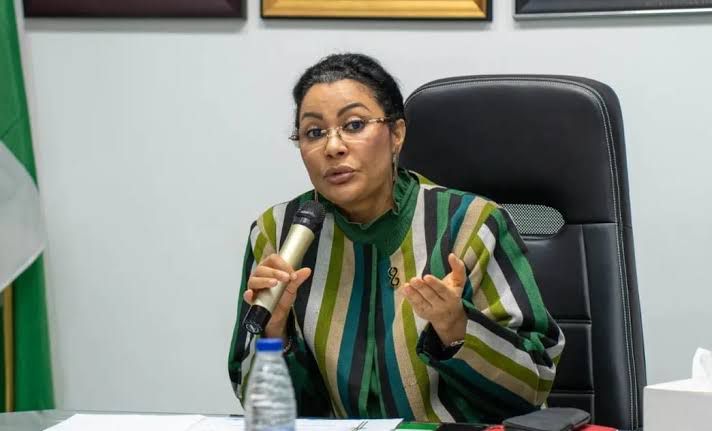
Speaking at the 2026 Annual General Meeting of the Finance Correspondents Association of Nigeria in Abuja, the minister stressed that the target set by President Bola Tinubu is achievable but requires disciplined implementation of structural reforms and accelerated capital mobilisation.
Uzoka-Anite, who was represented by the Assistant Director of Information and Public Relations at the Federal Ministry of Finance, Mrs. Uloma Amadi, explained that Nigeria’s current GDP stands at approximately $375bn, underscoring the scale of expansion required to triple the size of the economy within a decade.
According to her, “Nigeria needs to grow 12% annual growth to reach $1tn,” noting that the benchmark represents a measurable economic destination rather than a political slogan.
She emphasised that the administration is prioritising reforms designed to stabilise macroeconomic fundamentals and unlock private-sector-led growth.
Structural Reforms and Fiscal Reset
The minister recalled that when the current administration assumed office in 2023, the economy faced what she described as “structural distortions,” including fuel subsidy payments exceeding N5tn annually and a multiple exchange rate regime that weakened investor confidence and encouraged arbitrage.
She noted that decisive policy adjustments, including subsidy removal and exchange rate unification, were aimed at restoring fiscal credibility and improving transparency in public finance management.
Uzoka-Anite also highlighted recent external validation of Nigeria’s economic direction, pointing to the decision by S&P Global Ratings to revise Nigeria’s outlook to positive while affirming its B-/B sovereign credit ratings in January 2026.
The review, she said, reflected improvements in fiscal, monetary and external sector indicators.
A key feature of the government’s new fiscal approach is the separation of investment expenditure from recurrent spending within the national budget framework. The minister explained that this restructuring compels policymakers to evaluate public spending based on measurable capital formation and long-term asset creation.
“For the first time, investment expenditure is being treated as a distinct pillar of public finance. The focus is not only on how much is spent, but on what value is created,” she stated.
Disinflation and Growth Acceleration Strategy
Central to the administration’s roadmap is the Disinflation and Growth Acceleration Strategy, jointly developed by the Ministry of Finance and the Central Bank of Nigeria. The framework comprises nine implementation pillars aimed at delivering non-inflationary growth exceeding seven per cent by 2027.
The pillars include development finance instruments to mobilise capital, sector-specific acceleration in agriculture, energy, manufacturing, technology and creative industries, as well as a nationwide energy expansion plan covering oil, gas, solar and hydro resources.
Digital infrastructure expansion, including broadband penetration and AI-ready data centres, forms another component of the reform agenda. The strategy also incorporates a large-scale human capital development initiative targeting more than 10 million young Nigerians annually through technical and vocational programmes.
In addition, the Federal Government is scaling up its Consumer Credit Platform to expand structured financing for housing, education, healthcare and household consumption, with the objective of deepening domestic demand without exacerbating inflationary pressures.
Domestic Value Addition and Trade Integration
Uzoka-Anite expressed concern that Nigeria currently imports nearly 70 per cent of the raw materials used in industrial production, limiting control over production costs and supply chains.
She cited the Dangote Refinery as a model of domestic value addition capable of strengthening foreign exchange stability, boosting employment and expanding tax revenues.
On Nigeria’s global economic positioning, the minister referenced the country’s removal from the Financial Action Task Force grey list in 2025 as evidence of strengthened anti-money laundering and counter-terrorism financing frameworks.
She further disclosed that Nigeria had submitted its ECOWAS Tariff Offer under the African Continental Free Trade Area agreement, establishing zero duties on 90 per cent of goods traded within Africa, a move expected to enhance regional competitiveness and export diversification.
Mortgage Reform and Infrastructure Financing
In a related development, the Ministry of Finance Incorporated unveiled a N1tn private-sector-driven programme to transform the housing finance ecosystem. The National Coordinator of the Ministry of Finance Real Estate Investment Fund, Sani Yakubu, revealed that N75bn has already been deployed following the successful raising of an initial N250bn tranche.
The scheme offers mortgages at 9.75 per cent interest for up to 20 years with a 10 per cent equity contribution, aiming to bridge the housing supply deficit and improve affordability. Participating institutions include Sterling Bank, Stanbic IBTC Bank and Infinity Mortgage Bank.
Yakubu explained that the programme addresses off-take risks by providing mortgage guarantees, thereby enhancing developer bankability and unlocking stalled residential projects nationwide.
Meanwhile, the Nigeria Sovereign Investment Authority outlined the scale of infrastructure financing required to support the $1tn ambition.
Representing the Managing Director of the Nigeria Sovereign Investment Authority, the Vice President of the Nigeria Infrastructure Fund, Abraham Durosawo, estimated that Nigeria would require annual infrastructure investments of between $100bn and $150bn to close existing deficits.
He stressed that achieving the growth threshold implicit in the declaration that Nigeria needs to grow 12% annually to reach $1tn will demand coordinated financing mechanisms, including tax credit schemes, public-private partnerships and state-level interventions.
A Decade of Economic Discipline
Analysts at the forum agreed that while the growth trajectory required is ambitious, it is not unattainable if reform momentum is sustained and investor confidence continues to improve.
For policymakers, the pathway to a $1tn economy hinges on macroeconomic stability, capital formation, productivity gains and institutional reform.
As the minister concluded, Nigeria needs to grow 12% annually to reach $1tn — a benchmark that now frames the country’s medium-term economic strategy and its bid for structural transformation over the coming decade.
About The Author