

Nigeria’s oil and gas sector recorded a major turnaround in 2025, attracting $18.2bn in fresh investments following the approval of 28 new oil field development plans, a milestone that signals renewed investor confidence after years of stagnation in the upstream industry.
The Minister of State for Petroleum Resources (Oil), Senator Heineken Lokpobiri, disclosed this on Tuesday in Abuja during his ministerial address at the opening ceremony of the 9th Nigeria International Energy Summit (NIES) 2026, describing the achievement as evidence that Nigeria has re-emerged as a leading destination for oil and gas investments in Africa.
According to Lokpobiri, the newly approved projects carry a combined production potential of about 1.4 billion barrels of crude oil, positioning the country for stronger output growth and improved fiscal stability in the coming years.
Nigeria secures $18.2bn oil investments with 28 new field plans
Speaking before a high-level audience that included policymakers, industry leaders, and Gambian President Adama Barrow, the minister said Nigeria accounted for four of the seven major Final Investment Decisions (FIDs) announced across Africa between 2024 and 2025.
He stressed that the progress did not occur by chance but was the result of deliberate policy reforms, regulatory clarity, and improved governance structures aimed at restoring confidence in Nigeria’s oil and gas sector.
“In 2025 alone, 28 new field development plans worth $18.2bn were signed, with the potential of 1.4 billion barrels of oil. Between 2024 and 2025, four of the seven major FIDs across Africa were taken in Nigeria,” Lokpobiri said.
“These are facts, not rhetoric. They show that Nigeria is once again a serious destination for long-term energy investments, with a climate that supports the free movement of capital.”
Reforms reverse years of upstream stagnation
Lokpobiri recalled that when the current administration assumed office, Nigeria’s upstream petroleum sector was facing severe challenges, including declining production, prolonged project delays, capital flight, and waning investor interest.
Despite Nigeria’s vast hydrocarbon reserves and diverse geology spanning deepwater, shallow-water, and onshore acreages, the absence of clear fiscal and regulatory frameworks had stalled major investments for over a decade.
“What makes Nigeria different today is not just resource abundance, but the transformation of our legal, regulatory, financial, and structural environment,” the minister said.
He attributed the renewed momentum to the full implementation of the Petroleum Industry Act (PIA), which introduced predictable fiscal terms, clearer licensing procedures, and stronger regulatory oversight.
According to him, these reforms have significantly reduced uncertainty for investors, enabling long-delayed projects to reach final approval stages.
Cost-efficiency measures boost investor confidence
Beyond regulatory reforms, the government also moved to address high operating costs that had made Nigeria less competitive compared to peer oil-producing jurisdictions.
Lokpobiri pointed to the Upstream Petroleum Operations (Cost Efficiency Incentives) Order 2025, which introduced tax credits and incentives aimed at lowering unit production costs for operators.
He explained that the measures helped improve project economics, particularly in mature and marginal fields, making Nigeria more attractive to both international oil companies and indigenous producers.
Crude oil production rebounds under Project One Million Barrels
One of the most significant outcomes of the reforms, according to the minister, has been the rebound in crude oil production following the launch of Project One Million Barrels in October 2024.
Within a year, Nigeria’s daily crude output reportedly rose to between 1.7 million and 1.83 million barrels per day, representing an increase of about 20 per cent compared to previous levels.
“In July 2025 alone, production increased by roughly 300,000 barrels per day,” Lokpobiri said, adding that the number of active drilling rigs climbed from just 14 in 2023 to over 60 by early 2026.
“These figures show that idle assets are being reactivated and existing fields optimised. The reforms are delivering tangible results,” he said.
Indigenous operators gain stronger foothold
The minister also highlighted the successful completion of long-delayed asset divestments by international oil companies, which transferred several onshore and shallow-water assets to Nigerian firms.
According to him, the divestments were concluded in record time and contributed about 200,000 barrels per day to national output, further strengthening local participation in the industry.
Industry stakeholders say the shift marks a structural change in Nigeria’s oil sector, with indigenous producers and independent operators now accounting for more than 50 per cent of national crude production.
Persistent challenges in oil services sector
Despite the progress, Lokpobiri acknowledged that challenges remain, particularly in the oil and gas services segment.
He criticised what he described as a misinterpretation of the Nigerian Oil and Gas Industry Content Development Act, which he said had encouraged the emergence of “briefcase” engineering, procurement, and construction (EPC) firms at the expense of experienced international contractors and capable indigenous companies.
The minister warned that unless addressed, these structural weaknesses could limit the sector’s ability to execute complex projects efficiently and at competitive costs.
Looking beyond Nigeria, Lokpobiri described Africa’s annual $120bn hydrocarbon import bill as a missed opportunity for the continent, urging stronger support for the African Energy Bank, which is headquartered in Nigeria.
“If we do not mobilise our own resources to solve Africa’s energy problems, our challenges will only worsen as our population grows,” he said.
“The responsibility is ours.”
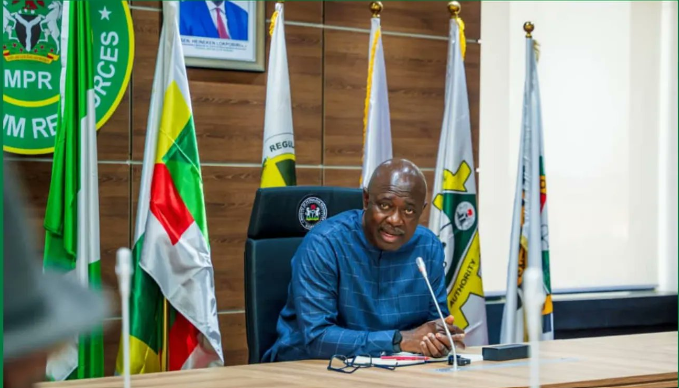
At the summit, the Independent Petroleum Producers Group (IPPG) also called for further reforms to sustain momentum in Nigeria’s oil and gas sector.
Delivering a keynote address, IPPG Chairman and Aradel Holdings CEO, Adegbite Falade, said the global energy landscape was being reshaped by geopolitical tensions, shifting alliances, and growing energy insecurity.
Falade urged the government to reduce bureaucracy, streamline industry fees, and improve access to long-term financing to keep Nigerian operators competitive.
“Our sector still operates at significantly higher costs compared to other jurisdictions,” he said. “Access to affordable, long-term capital remains critical if we are to unlock the full potential of our resources.”
Outlook: optimism tempered with caution
Stakeholders at the Nigeria International Energy Summit agreed that Nigeria’s oil and gas sector is on a recovery path, driven by policy clarity, regulatory reforms, and renewed investments.
However, analysts caution that sustaining growth will require consistent implementation of reforms, stronger collaboration between government and industry players, and continued efforts to improve security, infrastructure, and financing.
If these conditions are met, experts say Nigeria could consolidate its position as a regional energy hub while leveraging oil revenues to support economic diversification and domestic energy access.
About The Author