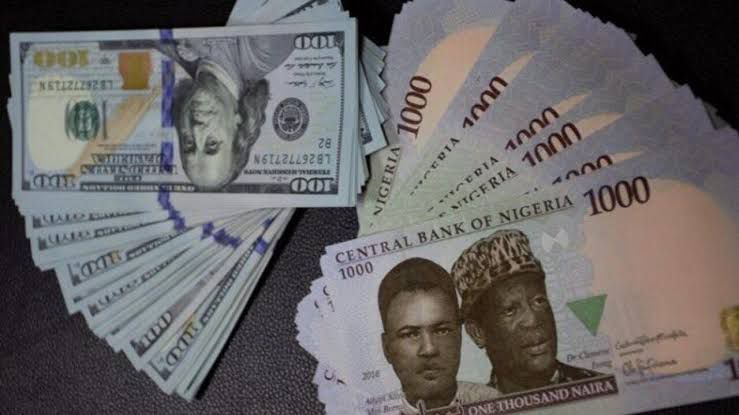
Nigeria’s currency recorded fresh pressure in the informal foreign exchange market on Thursday after losing significant value against the United States dollar in a single trading session.
Market data gathered from currency traders and online monitoring platforms showed that the naira weakened sharply in the parallel market, reflecting renewed demand for the greenback among importers and other foreign exchange users.
The development highlights the persistent volatility in Nigeria’s currency market despite recent policy measures aimed at stabilising the exchange rate and improving dollar liquidity in the economy.
Naira loses N25 in single-day slide in black market
The naira loses N25 in single-day slide in black market development occurred on Thursday when the local currency fell to about N1,420 per dollar across major parallel market hubs.
Traders quoted the naira between N1,410 and N1,420 against the United States dollar during the day’s trading, indicating a notable decline compared with the previous day’s rate of around N1,395 per dollar.
The sharp movement represents an approximate 1.8 per cent depreciation within a single trading session in the informal market.
The slide has also slightly widened the gap between the official exchange rate and the parallel market rate, a key indicator analysts use to measure pressure in Nigeria’s foreign exchange ecosystem.
At the official market, the naira also recorded a marginal depreciation against the dollar, though the movement was relatively mild compared with the black market.
Data from the Nigerian Foreign Exchange Market showed the currency closing at around N1,387.09 per dollar, compared with N1,384.29 recorded in the previous session.
The slight decline reflects ongoing adjustments in the foreign exchange market as traders respond to supply dynamics and policy signals from the country’s monetary authorities.
Financial analysts said the naira loses N25 in single-day slide in black market partly reflects renewed dollar demand from businesses and individuals seeking foreign currency for imports, travel, and offshore payments.
Demand pressure often rises in Nigeria’s parallel market when official supply channels are limited or when traders anticipate future volatility.
Market participants also pointed to recent intervention activity by the Central Bank of Nigeria as a factor shaping currency movements.
According to traders, the apex bank has been purchasing dollars from the market in recent weeks after the naira experienced a period of rapid appreciation.
One trader familiar with market activity explained that the intervention appears designed to prevent excessive strengthening of the naira, which could encourage speculative trading or distort pricing dynamics.
“CBN is mopping up dollars because the currency was appreciating too quickly,” the trader said.
Analysts note that central bank interventions are commonly used to maintain stability in emerging market currencies, particularly in economies heavily dependent on foreign exchange inflows from exports and remittances.
Nigeria’s currency had previously recorded notable gains in both the official and parallel markets earlier this year as reforms in the foreign exchange system improved liquidity and attracted renewed investor confidence.
However, experts warn that exchange rate stability remains fragile due to structural factors such as high import demand, inflationary pressures, and fluctuating global capital flows.
Market observers say the naira loses N25 in single-day slide in black market episode illustrates the delicate balance authorities must maintain while managing exchange rate reforms.
The widening spread between official and informal market rates also remains a critical metric for policymakers because large disparities often encourage arbitrage and speculative trading.
Despite the latest depreciation, analysts believe the naira’s broader outlook will depend largely on the Central Bank’s policy direction and the country’s ability to attract foreign currency inflows.
In particular, sustained growth in oil exports, diaspora remittances, and foreign investment will play a major role in strengthening Nigeria’s external reserves and improving supply in the foreign exchange market.
Financial market analysts from the Financial Markets Dealers Association said that even with recent interventions aimed at moderating appreciation, the naira still recorded overall gains across official and parallel markets in February.
According to the association, the Central Bank’s late-month purchases of foreign currency were primarily aimed at stabilising market expectations rather than reversing the appreciation trend.
Economists say maintaining currency stability remains crucial for controlling inflation and restoring investor confidence in Nigeria’s economy.
A volatile exchange rate often drives up the cost of imports, increases production expenses for businesses, and ultimately raises consumer prices.
For households and companies alike, movements in the currency market can therefore have direct implications for purchasing power and operational costs.
While the naira loses N25 in single-day slide in black market signals renewed pressure in the parallel market, analysts say sustained policy consistency and improved foreign exchange inflows could help stabilise the currency in the coming months.
About The Author