

The shifting endgame of power in Iraq has once again drawn global attention as Muqtada al-Sadr repositions himself within the unpredictable realm of Iraqi politics.
Analysts suggest his latest maneuvers reveal a deliberate attempt to reshape Iraq’s post-war political hierarchy while avoiding the pitfalls that weakened past alliances.
At the core of this endgame of power lies a struggle between populism and pragmatism. Muqtada al-Sadr, long known for mobilizing the urban poor and challenging Western influence, is recalibrating his message to navigate Iraq’s turbulent political landscape. His balancing act, analysts note, now depends on whether his movement can sustain relevance without formally controlling the government.
Observers view this endgame of power as a chessboard of competing loyalties. Muqtada al-Sadr has repeatedly withdrawn from parliament, only to reemerge when the balance of influence demanded his return. This cyclical withdrawal and re-entry strategy has kept his followers loyal while frustrating both allies and rivals.

“This is not retreat,” says one Baghdad-based analyst. “It is part of a longer vision — a calculated endgame of power designed to outlast fragile coalitions.” The phrase echoes across political circles, reflecting a perception that Muqtada al-Sadr operates within a strategy invisible to many of his contemporaries.
The Iraq elections of recent years illustrate the tension at the heart of his movement. After securing a decisive plurality, Muqtada al-Sadr faced obstruction from the Shia Coordination Framework, a bloc determined to prevent him from monopolizing power. The subsequent political deadlock underscored how Iraq’s fragile democracy can paralyze itself under the weight of competing ambitions.
Yet within this deadlock, Muqtada al-Sadr found opportunity. His withdrawal from parliament was not the end of influence but a redefinition of it — another layer of his endgame of power. By stepping back, he positioned himself as the moral opposition to the entrenched elite, reinforcing his narrative as both insider and outsider.
The Patriotic Shia Current, his loosely aligned political network, has since evolved into a mechanism for pressure rather than governance. Analysts argue this development fits seamlessly into the broader endgame of power, where visibility and influence matter more than holding formal office.
Through religious authority, street credibility, and strategic restraint, Muqtada al-Sadr continues to shape national debates without assuming full responsibility for policy failures.
“It’s a paradox,” said a regional observer based in Najaf. “He dominates discourse but avoids accountability. That’s how the endgame of power works — by redefining victory as endurance.”
The sectarian undercurrents of Iraqi politics make this strategy particularly potent. The Shia Coordination Framework, backed by Iranian-aligned factions, has struggled to maintain legitimacy amid growing public disillusionment.
In contrast, Muqtada al-Sadr positions himself as the authentic voice of Iraqi nationalism — an identity that transcends sectarian boundaries while appealing to disenchanted voters.
This dual identity is central to his endgame of power. By invoking nationalist pride while retaining clerical authority, Muqtada al-Sadr sustains a brand distinct from both technocrats and militants. He presents himself as a reformist within tradition — a cleric who resists corruption yet understands power’s practical demands.
His movement’s influence stretches far beyond electoral cycles. In the aftermath of every Iraq election, Muqtada al-Sadr’s decisions can trigger street protests, government reshuffles, or even policy reversals.
The pattern reinforces the view that his endgame of power relies less on institutional control and more on the capacity to disrupt at will.
Despite criticism from rival factions, few underestimate his reach. “He can paralyze Baghdad with one sermon,” a political scientist remarked. “That’s not politics as usual — that’s the endgame of power playing out in real time.”
The Shia Coordination Framework continues to interpret his unpredictability as political brinkmanship, but others describe it as deliberate ambiguity — a means to maintain leverage in an environment of constant volatility. By keeping rivals uncertain, Muqtada al-Sadr ensures that the next Iraq election cannot proceed without factoring in his potential return.
This fluid positioning reflects an instinct for survival learned over decades of conflict. Having inherited both a revered lineage and a volatile base, Muqtada al-Sadr treats politics as an evolving arena where principles must bend without breaking. His endgame of power thus lies not in immediate triumph but in sustained relevance — the ability to endure while others falter.
Western diplomats often misread this resilience. Many once expected him to fade amid factional infighting, but his strategic withdrawals have repeatedly defied that assumption. Each absence reinforces the mystique surrounding his endgame of power, suggesting a leader who governs through timing rather than presence.
Within the broader dynamics of Iraqi politics, this approach has created both admiration and resentment. Reform-minded youth view Muqtada al-Sadr as an imperfect but necessary counterweight to Iranian influence, while traditional elites accuse him of opportunism. Yet both camps acknowledge that his endgame of power continues to set the tempo of political life.
As Iraq prepares for another electoral cycle, questions persist about whether his Patriotic Shia Current will translate influence into durable policy. Some within the movement advocate a full return to parliament, while others prefer maintaining a distance to preserve moral authority. Either path forms part of a careful calculation — the next act in the unfolding endgame of power.
For Iraq’s voters, the implications are profound. Decades of instability have produced fatigue with slogans and sectarian rhetoric, yet Muqtada al-Sadr’s message still resonates.
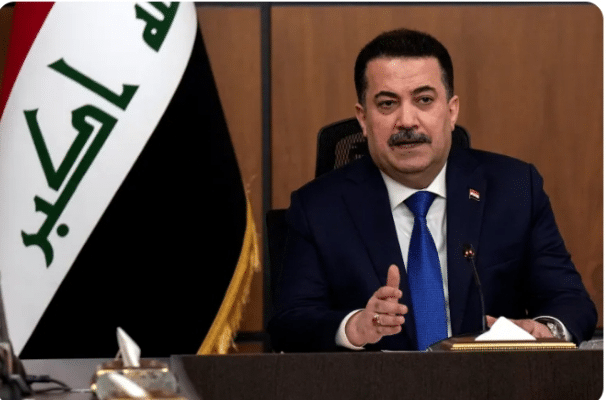
His populist calls for accountability and sovereignty capture frustrations that other factions have ignored. Whether this translates into concrete reform or continued stalemate remains uncertain.
Analysts warn that Iraq’s institutional fragility may prolong this cycle of protest and paralysis. The Shia Coordination Framework, despite controlling government posts, lacks the street legitimacy Muqtada al-Sadr commands. Conversely, his reluctance to govern directly leaves structural problems unresolved — a contradiction at the heart of his endgame of power.
“The danger,” said one senior official, “is that everyone is playing defense. No one wants to lose position, so Iraq keeps revolving around the same personalities.” The remark underscores how personal ambition and national recovery remain entangled within Iraq’s evolving endgame of power.
Ultimately, the story of Muqtada al-Sadr illustrates a paradox of leadership in transitional democracies. His influence thrives in uncertainty, and his endgame of power depends on preserving that uncertainty. Each maneuver — withdrawal, protest, reconciliation — is calibrated to remind Iraqis that real authority does not always reside in office.
As regional and international powers recalibrate their expectations, one truth endures: Iraqi politics cannot be understood without decoding Muqtada al-Sadr’s strategy. Whether it leads to renewal or repetition, his endgame of power continues to define Iraq’s uneasy path toward stability.
About The Author


