

Hamas has returned the remains of two more Israeli captives, while accusing Prime Minister Benjamin Netanyahu’s government of Israel violating ceasefire terms under the ongoing truce.
The Gaza ceasefire deal was designed to halt violence and facilitate a comprehensive hostage exchange, but both sides are now trading blame amid deepening mistrust and slow humanitarian progress.
Israel’s prime minister’s office confirmed receipt of two bodies through the Red Cross, saying efforts continue “until the last hostage is returned,” even as tensions grow.
One of the recovered remains was identified as Ronen Tomi Engel, a 54-year-old killed during the October 7 2023 Hamas assault whose body had been taken to Gaza.
Military officials said forensic tests were ongoing to identify the second set of remains, adding that “families have been informed and mourning is under way.”
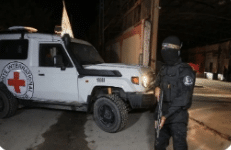
Under the Gaza ceasefire deal, Hamas agreed to return all Israeli captives—alive or deceased—within 72 hours in exchange for prisoners and bodies held by Israel.
The process, however, has been slower than expected, as Hamas blames Israel violating ceasefire commitments by maintaining military operations and restricting access to devastated areas of Gaza.
“The recovery teams are struggling under rubble, without bulldozers or heavy machinery,” said Al Jazeera’s Hani Mahmoud, describing the near-impossible conditions facing search crews in Gaza City.
He added that “Palestinian civil defence lacks even basic cranes or trucks, making recovery of bodies dangerously slow,” underscoring the human cost of the ongoing stalemate.
Hamas officials have repeatedly accused Israel violating ceasefire obligations by delaying the release of Palestinian detainees and withholding humanitarian corridors for medical teams and supplies.
Netanyahu, on the other hand, insists that Hamas “must fulfil every aspect of the truce” before Israel makes further concessions, citing the incomplete return of captives’ remains.
The hostage exchange element of the agreement—seen as critical to easing two years of conflict—has now become a political test for both the Israeli cabinet and Hamas leadership.
Analysts suggest that domestic pressure on Netanyahu’s coalition is intensifying, with opposition lawmakers accusing him of prioritising political survival over the ceasefire’s humanitarian aims.
Hamas meanwhile faces growing internal discontent, as Gaza residents endure worsening conditions despite promises that the Gaza ceasefire deal would allow aid and reconstruction to flow.
Al Jazeera’s Hamdah Salhut, reporting from Amman due to Israeli restrictions, said Netanyahu “has long known recovery of captives’ bodies would be a complex, prolonged operation.”
She noted that “only when all remains are returned will Israel consider opening the Rafah crossing or expanding humanitarian corridors,” linking progress directly to ceasefire compliance.
That stance has angered aid groups, who argue Israel violating ceasefire clauses by conditioning humanitarian access on political demands rather than immediate civilian need.
On Saturday, UNRWA warned that its warehouses in Jordan and Egypt are full but trucks remain blocked, depriving Gaza of desperately needed humanitarian aid supplies.
“We must be allowed to get all this aid into Gaza without delay,” UNRWA said, stressing that food stocks could sustain the enclave for only three months.
In Khan Younis, hospital staff received the bodies of fifteen Palestinians returned by Israel, bringing total repatriations to 135 since the truce began, health officials reported.
Despite these exchanges, Palestinian authorities accuse Israel violating ceasefire norms through ongoing airstrikes and delays in reopening border crossings essential for relief and medical evacuations.
Late Friday, an Israeli strike killed eleven members of one family, including seven children, in what rights groups labelled the deadliest truce breach since the agreement’s start.
Hamas condemned the attack as “further proof of Israel violating ceasefire commitments,” while Israeli officials described it as a targeted counter-terrorism operation based on “real-time intelligence.”
The Rafah crossing, Gaza’s main lifeline to Egypt, remains a focal point of dispute; Netanyahu vowed it would stay shut until all Israeli bodies are returned.
That decision effectively ties civilian movement and humanitarian aid access to political leverage, reinforcing perceptions that Israel violating ceasefire has become a recurring diplomatic impasse.
Regional mediators from Qatar and Egypt have urged restraint, warning that renewed hostilities could unravel the fragile Gaza ceasefire deal within days if violations persist.
“The ceasefire is barely holding,” said a Doha-based diplomat. “Each accusation of Israel violating ceasefire obligations pushes both sides closer to renewed confrontation.”
Observers argue that both Hamas and Israel are attempting to frame the narrative in their favour, knowing international opinion will shape post-war reconstruction and accountability.
For families of hostages and prisoners, politics offers little comfort. “We just want them back, alive or dead,” said Yael Engel, widow of Ronen Tomi Engel.
She added tearfully, “Every day of delay feels like another wound. We supported the truce hoping it would end this nightmare of uncertainty.”
Human rights monitors have documented several incidents suggesting Israel violating ceasefire through limited but deadly operations inside Gaza, even as official statements claim adherence to the truce.
The Israeli military contends such actions are “defensive responses” to Hamas provocations, but aid agencies insist they worsen the humanitarian collapse the Gaza ceasefire deal sought to stop.
In Washington, State Department officials expressed concern over renewed fighting, urging both sides to “act with restraint and fully honour their commitments under the ceasefire framework.”
Yet American analysts acknowledge Israel’s strategic calculus may prioritise deterrence over diplomacy, reinforcing the cycle of accusation around Israel violating ceasefire conditions.
Meanwhile, Palestinian civilians continue to bear the brunt of displacement, with hundreds seeking shelter in schools and hospitals lacking medicine and consistent power supply.
Economists estimate Gaza’s reconstruction could take a decade if humanitarian aid remains bottlenecked and the Rafah crossing stays intermittently closed under Israeli security pretexts.
As night falls on Gaza, recovery teams dig with bare hands for missing persons, symbolising both despair and defiance amid relentless claims of Israel violating ceasefire pledges.
International humanitarian organisations warn that failure to uphold the Gaza ceasefire deal could trigger famine-like conditions and permanently erode public faith in negotiated truces.
Qatar, which helped broker the truce, has reportedly threatened to withdraw mediation efforts if continued reports of Israel violating ceasefire are verified by UN monitors.

Analysts caution that without accountability mechanisms, ceasefires risk becoming political theatre rather than genuine steps toward conflict resolution and mutual recognition.
For now, the bodies of captives keep crossing checkpoints under flag-draped coffins, silent witnesses to promises repeatedly broken in the name of national security.
The question remains whether this fragile Gaza ceasefire deal can survive amid mounting distrust, or if renewed bloodshed will again define Israel-Palestine relations for another generation.
About The Author


