


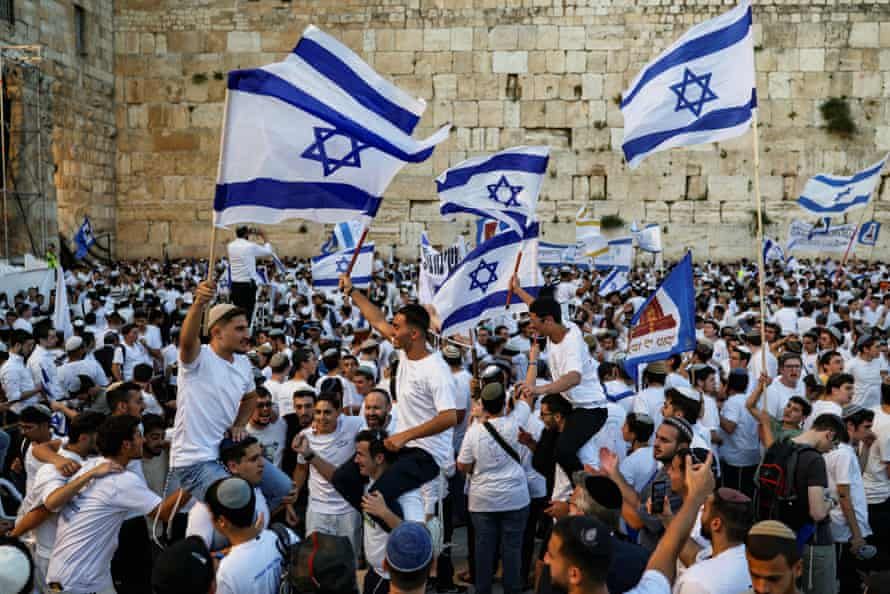
The Jerusalem Day march descended into tension and confrontation on Thursday as Israeli nationalists moved through Jerusalem’s Old City chanting anti-Arab slogans during the annual event marking Israel’s capture of East Jerusalem in 1967.
Thousands of marchers carrying Israeli flags passed through the Muslim quarter under heavy police presence as security forces attempted to prevent clashes. The annual procession, which commemorates what Israel views as the reunification of Jerusalem following the Six-Day War, has become increasingly contentious due to rising participation from far-right groups.
Witnesses reported chants including “death to Arabs”, “may your villages burn” and “Gaza is a graveyard” as tensions escalated in several parts of the Old City.
Jerusalem Day March Triggers Tensions in Old City
Many Palestinian residents and shop owners closed businesses ahead of the march, anticipating unrest in the densely populated Muslim quarter.
Despite security efforts, scuffles broke out between Palestinian residents and far-right Jewish marchers, with objects thrown before police intervened to separate both sides.
“I’ve come to show all the world that this is our city. This is the Holy Land,” said 19-year-old marcher Ariel Amichai. “God gave us this country and this city.”
When asked about the message to Palestinians, he added: “That they must leave. This is our country.”
The march drew participants from across Israel, including settlers from the occupied West Bank, with buses transporting groups into Jerusalem for the annual event.
Ben-Gvir Raises Flag at al-Aqsa Compound
Tensions intensified further when Israeli National Security Minister Itamar Ben-Gvir raised an Israeli flag at the al-Aqsa mosque compound, known to Jews as the Temple Mount.
Ben-Gvir was seen participating in nationalist celebrations at the sensitive site while supporters chanted religious-nationalist slogans.
His actions drew renewed attention to long-standing concerns over the fragile status quo governing the compound, which is one of the most sensitive religious sites in the region.
Critics have repeatedly accused Ben-Gvir of escalating tensions through provocative visits and public displays at the site.
Activists and Residents Caught in Rising Tensions
Members of the Israeli activist group Standing Together deployed volunteers across parts of the Old City in an attempt to protect Palestinian residents during the march.
Organisers said hundreds of volunteers in purple vests were stationed across key areas to reduce the risk of violence.
“We wanted to really cover each and every corner of the city to make sure that we prevent attacks against Palestinians,” said organiser Suf Patishi.
“Yes, it is dangerous to us, but nothing like the danger to the Palestinians that are living here,” he added.
Some ultra-Orthodox Jewish participants also criticised the behaviour of nationalist marchers.
“I’ve become appalled by the violent behaviour of people in my community,” said one religious participant identified only as David. “This is a desecration of God’s name.”
East Jerusalem Remains a Flashpoint
The Jerusalem Day march continues to reflect deep divisions over the future of Jerusalem, particularly in East Jerusalem, which Palestinians claim as the capital of a future independent state.
The annual event is viewed by many Palestinians as a demonstration of Israeli control over contested parts of the city, while supporters describe it as a celebration of Jerusalem’s reunification.
The latest unrest comes amid broader regional tensions and ongoing international concern over instability in Jerusalem and the wider Israeli-Palestinian conflict.
Read also: Trump-Xi China talks resume after Taiwan warning, Boeing deal
The Jerusalem Day march once again highlighted the deep political and religious divisions surrounding Jerusalem.
While Israeli nationalists celebrated the event as a historic affirmation of Israeli sovereignty, Palestinians and rights groups described it as provocative and inflammatory, underscoring the fragility of peace in one of the world’s most contested cities.
About The Author
