A Palestinian returnee in Khan Younis has pitched a tent atop an unexploded Israeli bomb, highlighting the ongoing humanitarian crisis in Gaza. Families returning after the October 10 ceasefire face destroyed homes and dangerous remnants of conflict.
Since the ceasefire, tens of thousands of displaced residents have begun returning north, yet neighborhoods remain in rubble. Streets are blocked, infrastructure destroyed, and unexploded ordnance makes everyday life highly perilous for civilians.
Ayman Qadourah, a father of four, described the daily risks: “Every day we step outside, we risk our lives. One wrong move near these explosive devices could destroy our homes and kill everyone nearby.”
His temporary shelter rests atop a decommissioned Israeli armored vehicle, a remnant of what locals call an “explosive robot.” “It used to demolish entire blocks,” Qadourah said. “Now, ironically, it’s the only thing keeping my family safe.”
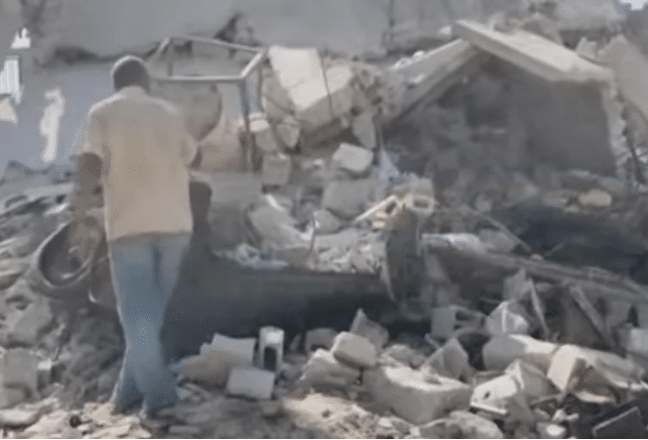
Remotely operated explosive robots deployed by Israel caused massive damage across Khan Younis and other urban areas. Streets remain impassable, and families return to neighborhoods littered with debris and live explosives.
Qadourah recalled F-16 strikes near his property: “A crater three meters deep appeared between my house and my neighbor’s. Two more missiles struck the rear of my home, leaving rubble and hazards everywhere.”
Children wear clothes pulled from rubble, often causing rashes and abscesses. Qadourah explained, “Despite the dangers, we have nowhere else to go. Survival leaves no choice but to stay among the wreckage.”
Luke David Irving, head of the UN Mine Action Service, warned, “The danger from unexploded ordnance across Gaza is incredibly high. Hundreds of devices remain, and the full scale is unknown. Civilians remain at constant risk.”
UNOSAT satellite analysis indicates over 42,000 buildings were damaged in Khan Younis alone. Across the Gaza Strip, over 227,000 housing units were affected, leaving hundreds of thousands without safe, permanent homes.
Families often cover explosives with sand or debris to reduce the risk of accidental detonation. Qadourah said, “We do what we can to protect our children, but it’s never fully safe. Living here is like walking on a ticking bomb every day.”
Humanitarian agencies have delivered tents, food, hygiene kits, and fuel since the ceasefire, but Israel’s restrictions prevent the 600 trucks per day target from being met. “Aid helps, but it isn’t enough,” Qadourah said.
Rebuilding is slow due to destroyed infrastructure, including roads, electricity, and water networks. Families struggle to access schools, clinics, and basic services, and the danger of unexploded ordnance exacerbates every aspect of daily life.
Qadourah described how his children attempt to attend school. “Sometimes I must prevent them from going because the roads are dangerous and there are bombs nearby. Education is essential, but safety comes first.”
The explosive-laden robots carry bombs capable of leveling entire blocks. UN agencies continue to clear some areas, but thousands of devices remain, forcing residents to improvise with makeshift shelters over dangerous remnants of conflict.
Local communities express frustration over slow recovery. Many residents have returned to their neighborhoods despite hazards. Qadourah said, “We stay because this is our land. Leaving would mean surrendering everything we have lost to the bombs.”
The overcrowding in displacement camps worsens the crisis. Families who cannot return home share small spaces, increasing disease risk. Qadourah said, “We live in cramped conditions, and children fall ill often. Still, we hope for a better future.”
Health workers report widespread infections caused by contaminated clothing, rubble, and lack of clean water. Qadourah said, “Skin infections and abscesses are common among my children. There is little access to healthcare in these conditions.”
Permanent housing solutions are urgently needed. Temporary shelters over explosives are not a viable long-term strategy and leave families exposed to extreme risk from the remaining unexploded devices.
Aid restrictions continue to hinder reconstruction. Israel controls border crossings tightly, slowing the delivery of building materials, fuel, and food. Qadourah said, “We need help to rebuild, not just temporary tents and rations.”
Even after the ceasefire, explosive remnants prevent safe habitation. Qadourah said, “Every step could be deadly. Still, we must return home. Abandoning our neighborhoods is not an option for anyone in our community.”
Post-ceasefire conditions reveal the gap between political agreements and the reality on the ground. Explosive devices, destroyed infrastructure, and lack of aid prevent a meaningful recovery.
Qadourah emphasized, “We live with constant fear. Every noise, every movement could trigger an explosion. Yet leaving is not possible. Our homes, memories, and land keep us here.”
Humanitarian officials warn that clearance of explosives will take years. Even with UN support, the scale of ordnance and destroyed buildings slows reconstruction, leaving residents exposed to continued danger.
Families like Qadourah’s rely heavily on international attention. “We need sustained aid, not just food and tents, but help rebuilding safe homes. Without this, survival is temporary and precarious,” he said.
The explosive robots used by Israel are a persistent reminder of conflict. Qadourah said, “These machines once leveled entire blocks. Now, they ironically keep my family alive as a makeshift shelter.”
Southern Gaza, particularly Khan Younis, remains heavily affected. Destroyed roads, contaminated land, and insufficient aid create ongoing humanitarian challenges for families attempting to rebuild their lives.
Qadourah’s story reflects resilience amid destruction. Despite living atop unexploded bombs, he continues daily life, hoping for a future where children can play safely and neighborhoods can be rebuilt.
The UN emphasizes that clearance of explosives, unrestricted aid flow, and permanent housing solutions are crucial. Without intervention, temporary shelters over bombs will remain a tragic norm in Gaza.
“People need more than tents. We need security, stability, and the chance to rebuild,” Qadourah said. “Otherwise, survival is only a day-by-day struggle against danger.”
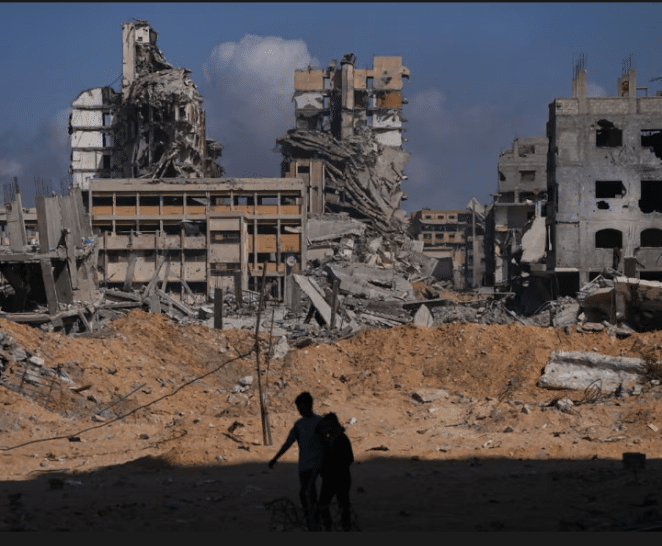
The human cost of the conflict is evident. Families face health risks, destroyed homes, and psychological trauma, highlighting the urgent need for international support and rapid humanitarian action in Gaza.
About The Author