Israel says ready to attack Iran for ‘third time if necessary’ as the region slides back into open conflict just weeks after a fragile truce.
On Thursday, Israel’s defence minister Israel Katz warned at a military ceremony that “the army is ready and on alert for a resumption of fighting, in order to regain air superiority and strike again … in Iran, to eliminate threats, including a third time if necessary. If we have to go back, we will go back, with even greater force.”
The statement came hours after Donald Trump declared the June ceasefire “over” and after 48 hours of the most intense US-Iran strikes since the deal was signed. Dozens of missiles and drones were fired, with Iran targeting US-linked bases across the Gulf while the US hit sites inside Iran, including near Bushehr. A US defense official told AFP the Iranian launches “were intercepted or failed to cause major damage” and that there were “no US injuries.”
With funerals for Iran’s former supreme leader Ali Khamenei underway in Mashhad and shipping through the Strait of Hormuz disrupted, diplomats are scrambling to prevent a wider war.

US Iran ceasefire collapse triggers regional strikes
The memorandum of understanding signed on 17 June was meant to extend a pause in hostilities and create space for negotiations. It lasted barely three weeks.
How the escalation unfolded
Trump said the truce ended after Iran attacked three tankers in the Strait of Hormuz. Within hours, the US launched airstrikes against Iran. Tehran responded by firing missiles at what it called US bases in Bahrain, Kuwait, Qatar and Jordan.
Iran’s Islamic Revolutionary Guard Corps said it launched “10 ballistic missiles” at Jordan’s Muwaffaq Salti airbase, which is also used by US forces. Jordan’s military said it intercepted eight missiles with “no reports of casualties or material damage.”
In Iran, the health ministry reported 14 people killed and 78 injured in the recent wave of US attacks. “Of the injured, 47 remain hospitalised,” said Hossein Kermanpour, head of public relations for Iran’s ministry of health.
Trump’s warning and oil market reaction
“This is in retribution for yesterday’s bombing of ships by Iran. If it happens again, it will get much worse!” Trump wrote on Truth Social. Despite the rhetoric, he also posted that the fighting would not lead to “long-term” military action, adding to uncertainty.
Markets reacted immediately. Brent crude fell 0.7% to $77.45 but remains well above last week’s $71.80. The S+P 500 rose 0.2% as traders waited to see if the conflict would spread. Analysts warn that a full closure of the Strait of Hormuz could worsen inflation and force central banks to raise rates again.

Iran missiles Jordan Bahrain and Gulf bases targeted
Iran’s retaliation marked the first time in this round that missiles reached multiple Gulf states in one night. Sirens sounded in Bahrain, home to the US Navy’s Fifth Fleet.
Jordan drawn into the conflict
Jordanian government spokesperson Mohammed al-Momani said air raid sirens were activated “following reports of the kingdom’s airspace being breached by missiles launched from Iran.” Petra news agency confirmed the interceptions.
Iran warned: “If the US terrorist army repeats its aggression, other US bases in the region will not be safe from our heavy fire.”
Diplomatic calls to prevent escalation
Iran’s foreign minister Abbas Araghchi held phone calls with his Omani and Turkish counterparts to discuss “latest developments in the region, particularly in the strait of Hormuz.” A ministry statement said all parties “stressed the need to use diplomatic channels to prevent escalation.”
Strait of Hormuz disruption threatens global trade
The IRGC navy said US attacks and intervention in redirecting shipping were “disrupting the strategic waterway’s gradual reopening and jeopardising the interests of countries benefiting from it.”
Shipping capacity under pressure
According to the IRGC, transit capacity under Iran’s supervision had recovered to about 50% of prewar levels over the past two weeks, but only for vessels with permits using Iran-designated routes.
The risk to oil flows is immediate. The US average price for a gallon of regular gasoline climbed to $3.85 on Thursday, up 68 cents from a year earlier, according to AAA. Any prolonged closure of Hormuz, through which about 20% of the world’s oil passes, would hit consumers worldwide.
Ali Khamenei funeral Mashhad draws massive crowds
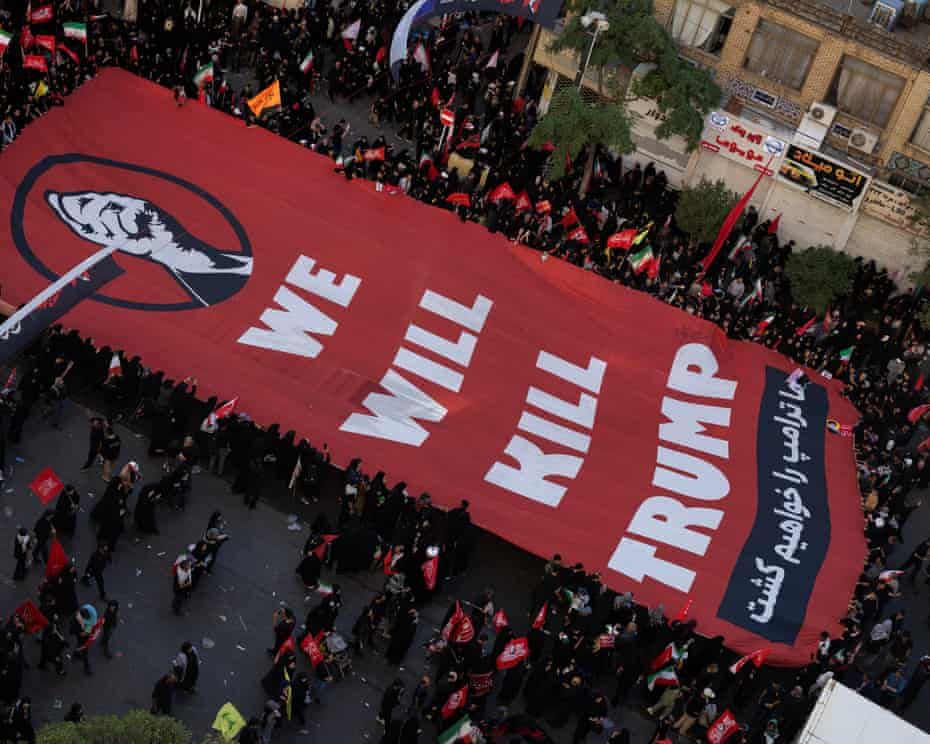
As fighting resumed, Iran buried its former supreme leader. Thousands surrounded the convoy carrying Ali Khamenei’s coffin to the Shrine of Imam Reza in Mashhad on Thursday.
A week of mourning amid war
Khamenei’s body had already been paraded through Tehran, Qom, Najaf and Karbala. In Mashhad, mourners chanted “I swear by the blood of the supreme leader, Trump, we will kill you!” and held banners reading “We Will Kill Trump.”
Khamenei was killed on 28 February in US-Israeli airstrikes that launched the war. His son and successor Mojtaba Khamenei has not appeared in public since the strike and, according to senior sources in Tehran cited by Reuters, is recovering from injuries.
Read also: Bonnie Tyler death at 75: ‘Total eclipse of the heart’ singer dies in Portugal
Crowds were sprayed with water to cope with the July heat as black-clad mourners filled roads leading to the shrine. Revolutionary slogans of “Death to America” echoed alongside Shi’ite laments.
About the Author