Ali Khamenei funeral Iran 2026 is set to become one of the largest state ceremonies in modern Iranian history. The six-day funeral begins Saturday in Tehran and ends Thursday with Khamenei burial Mashhad. Organisers expect millions to attend as the state projects unity, resilience, and resistance to the world.
Scale and Message Behind the Khamenei Six-Day Funeral
Iran’s leadership has framed the event as more than mourning. First Vice-President Mohammad Reza Aref called it “the most important event of this century” and the most attended gathering since the 1979 revolution. The scale is deliberate. Roadblocks, stalls, posters, and army vans appeared across Tehran in the early hours of Friday as preparations intensified.
The funeral is intended to relay political and religious messages of resistance. The former supreme leader’s body will also be carried through Iraq’s Shia cities of Karbala and Najaf at the request of Iraqi politicians. That route underscores Khamenei’s role as a spiritual figure for Shia communities beyond Iran.
The timing matters. The ceremonies coincide with Muharram, when Shia Muslims commemorate Husayn ibn Ali’s martyrdom. Organisers have drawn parallels between Husayn’s defiance and Khamenei’s stance against the West. In one of his last speeches on 17 February, Khamenei said: “Someone like me does not pledge allegiance to someone like Yazid. A nation with the culture of Iran does not pledge allegiance to corrupt leaders like those in America.”
Tehran Preparations and Public Displays
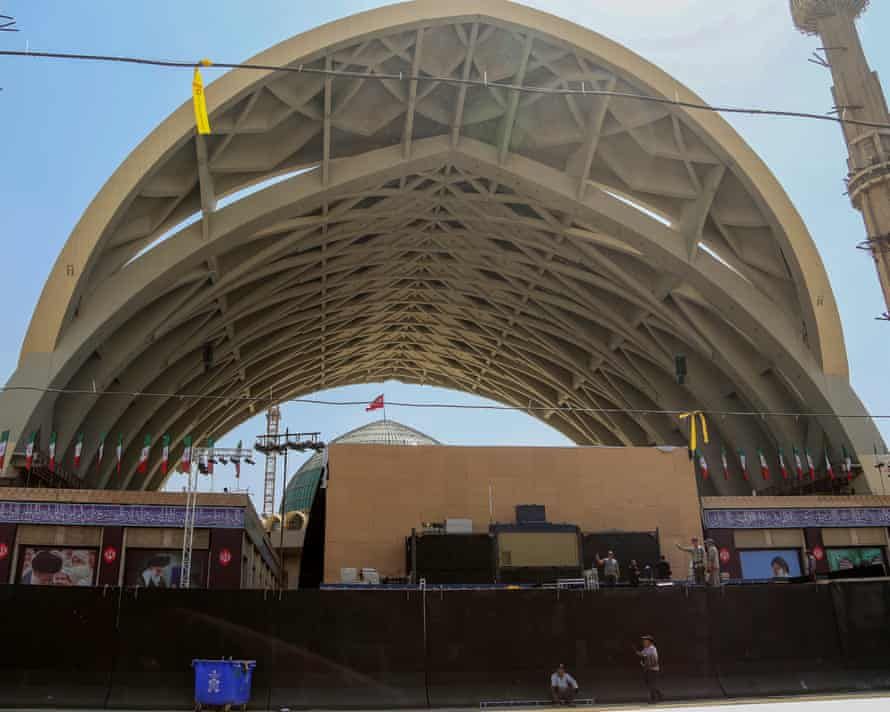
Tehran’s Grand Mosalla mosque will host the opening rites on Saturday. Khamenei’s body will lie in state there alongside relatives killed in the same strike. Workers have spent the week redecorating the complex, with a heavy police presence around it. The mosque has hosted many state religious ceremonies, but the funeral is expected to exceed them in size.
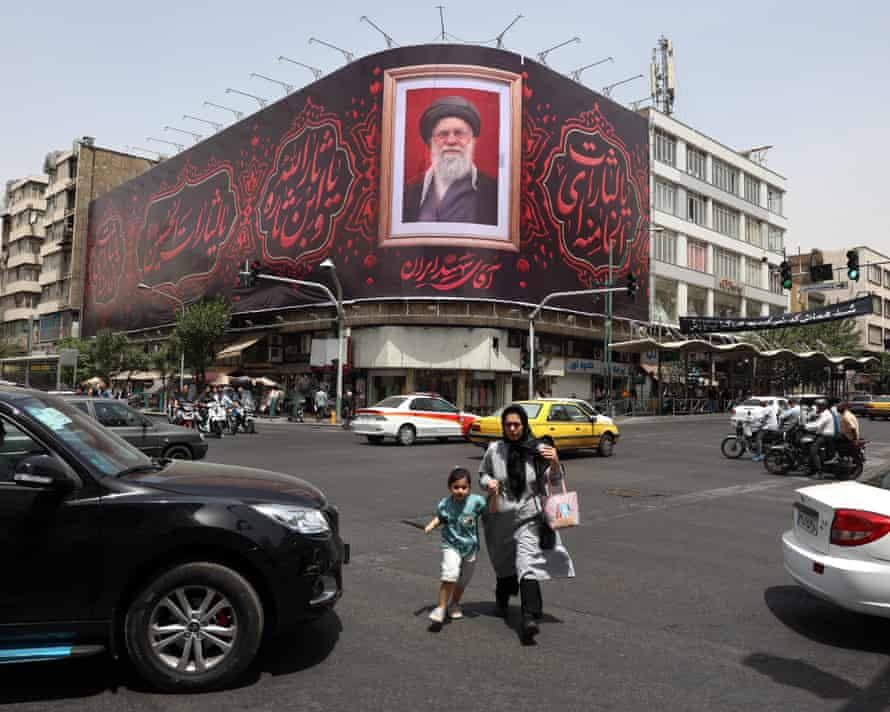
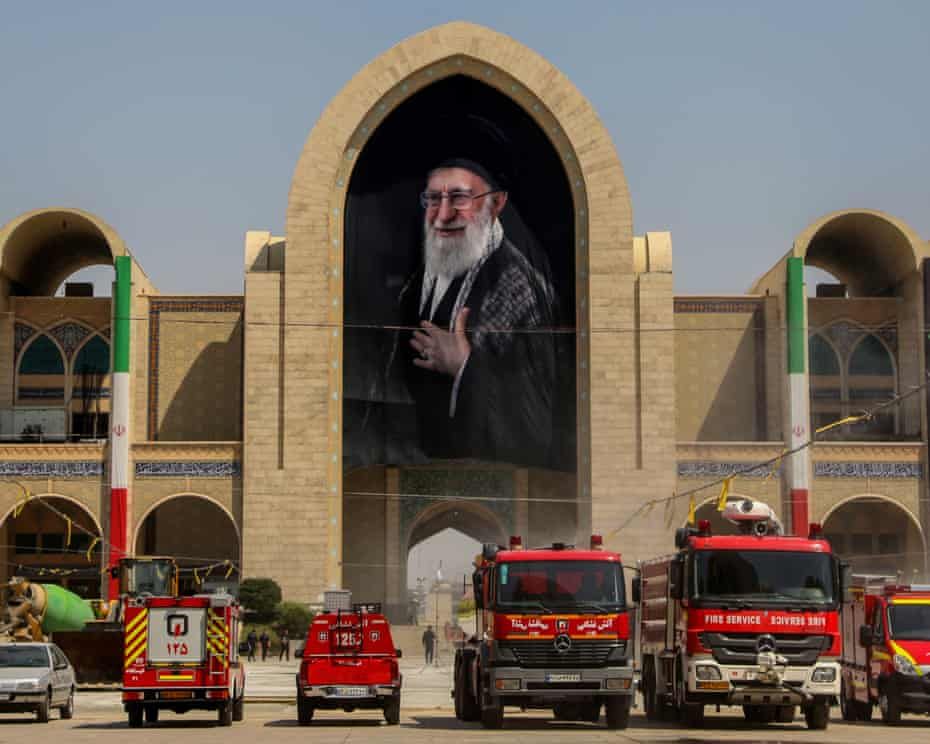
Across the city, banners and the red fist symbol appear with the slogan “We must rise”. Small groups of mourners carrying flags have begun gathering along routes lined with portraits of Khamenei. Officials are urging people to leave cars on the capital’s edge to keep roads moving. Tehran’s airspace will close on Monday, and jets will patrol for any sign of an air attack.
The Iran Funeral Procession Tehran Route
The centerpiece in the capital is a six-mile procession on Monday from Imam Hossein Square to Azadi Square, the site of the 1979 revolution. Mayor Alireza Zakani described it as “the largest gathering in the city’s history” and forecast about 20 million attendees. Roughly 60% of Iran’s 90 million people have known no other supreme leader.
To manage crowds, government and private offices in Tehran will close from Saturday to Monday. Traffic restrictions will push more people onto the metro. The city has not hosted a funeral of this scale since Ruhollah Khomeini’s burial in 1989, when chaos nearly caused the body to be lost as crowds pressed forward.
Mojtaba Khamenei Successor and the Question of Presence
Posters of Mojtaba Khamenei walking with his father have been widely displayed, projecting continuity. Yet Mojtaba is not expected at the funeral. He was severely injured in the 28 February US-Israeli strike on a government residence that killed Ali Khamenei, his daughter and her husband, Mojtaba’s wife, and their 14-month-old daughter.
The extent of his injuries is not public. So far he has issued only written statements, including one that distanced himself from ceasefire talks but allowed them to continue. Israel’s Defence Minister Israel Katz threatened to kill him this week, saying he was marked for death. Hardliners responded by calling for a re-examination of Iran’s fatwa against nuclear weapons.
The absence of a public appearance from the presumed successor creates a narrative gap that organisers are trying to fill with imagery and messaging about legacy.
Regional Leg of the Journey: Qom, Karbala, Najaf
On Tuesday, the body moves to Qom. It will travel between the shrine of Fatima Masumeh and the Jamkaran mosque, with temperatures expected near 40C. On Wednesday, it goes to Karbala and Najaf. Foreign Minister Abbas Araghchi has visited both cities to coordinate a ceremony intended to show Khamenei’s reach among Shia Muslims.
These stops are both religious and diplomatic. They signal that Iran views Khamenei’s influence as transnational, and they invite regional participation in a period of heightened tension.
Khamenei Burial Mashhad and Final Rites
The funeral concludes Thursday at the Imam Reza shrine in Mashhad, Khamenei’s birthplace. Burial there closes the Khamenei six-day funeral with a site of deep religious significance. Organisers hope the location will reinforce legitimacy and continuity for the leadership that follows.
The six-day structure also gives the state time to manage messaging. Posters carry two themes: “a bright future for Iran” and the religious call “he must rise”. Officials appear aware that economic hardship could provoke criticism if the ceremony is seen only as glorification without acknowledgment of public strain.
Security, Foreign Presence, and Political Context
Security is a priority. Past mass burials, including Khomeini in 1989 and Qassem Suleimani in 2020, saw crowd surges and disorder. Organisers have imposed car limits, office closures, and airspace controls to avoid a repeat.
A separate ceremony for foreign delegations is scheduled Friday. Ali Akbar Pourjamshidian said representatives from about 30 countries are expected, but no leaders from Europe or the US were invited. Foreign Ministry spokesperson Esmail Baghaei accused European states of being on the “wrong side of history” over the US-Israeli attacks and called their stance “truly shameful”.
The funeral unfolds during a 60-day ceasefire with the US that is meant to reopen the Strait of Hormuz and allow talks. Organisers want the event to show a united public behind a changed leadership as negotiators seek concessions.
Public Mood and Messaging Risks
The state is balancing reverence with reality. The red fist and “We must rise” speak to defiance. The “bright future” posters address domestic frustration. If the ceremonies feel disconnected from daily economic pressure, the scale could backfire. If they channel grief into cohesion, they could strengthen the leadership’s hand.
Speaker of the suspended parliament Mohammad Bagher Ghalibaf captured the official tone on the eve of the funeral: “We must rise up and convey the nation’s call for bloodshed to the world so that the world knows that the honourable and noble nation of Iran will not remain silent in the face of oppression and arrogance and will not spare the blood of its imam.”
Historical Echoes and Comparisons
The procession to Azadi Square evokes 1979. The Qom and Mashhad stops root the event in clerical tradition. The Iraq leg connects Iran to a wider Shia axis. Together, the route is a map of legitimacy: revolutionary, religious, and regional.
Organisers also face logistical echoes of 1989 and 2020. Crowd density, heat, and transport strain will test planning. The decision to close offices and limit cars suggests lessons learned from earlier funerals that turned chaotic.
What to Watch During Ali Khamenei Funeral Iran 2026
- Attendance figures: Zakani’s 20 million forecast for Monday will be a headline test. The state will use turnout as proof of cohesion.
- Mojtaba’s visibility: Any appearance, statement, or image of Mojtaba Khamenei successor will be parsed for succession signals.
- Security incidents: With airspace closed and jets patrolling, any disruption will dominate coverage.
- Foreign turnout: The presence of 30 country delegations, without Western leaders, will frame Iran’s diplomatic position.
- Economic messaging: Whether the “bright future” theme lands with mourners will indicate how well the state is reading public mood.
Timeline at a Glance
Saturday: Grand Mosalla mosque, Tehran, body lies in state with relatives.
Monday: Iran funeral procession Tehran, Imam Hossein Square to Azadi Square.
Tuesday: Qom, shrine of Fatima Masumeh to Jamkaran mosque.
Wednesday: Karbala and Najaf, Iraq.
Thursday: Khamenei burial Mashhad, Imam Reza shrine.
Read also: NCA exposes ‘truly international’ drug-facilitated rape network across dozens of countries 🚨
As The Guardian reports, “the funeral is intended to be an epic display of personal mourning, national power, resilience and social cohesion.” That intent will be measured in crowds, images, and how smoothly the six days unfold.
Ali Khamenei funeral Iran 2026 is therefore both a farewell and a signal. It mourns a 36-year leader, showcases state capacity, and seeks to project continuity through Mojtaba Khamenei successor imagery, the Iran funeral procession Tehran, and the final Khamenei burial Mashhad.
About The Author