The Iran Strait of Hormuz closure will remain in place until the United States fulfils seven conditions agreed under a June deal, Tehran has said, as Iran simultaneously warns that it is preparing longer-range missiles in case Washington resumes military action.
Iran’s top negotiator and parliament speaker, Mohammad Baqer Qalibaf, said the strategic waterway would not reopen until the United States meets its commitments under the June Islamabad agreement.
The declaration adds fresh pressure to diplomatic efforts aimed at ending the war between Iran and the United States, with the Strait of Hormuz remaining one of the most important points of disagreement between the two sides.
Iran ties Hormuz reopening to seven conditions
Tehran has repeatedly linked the reopening of the Strait of Hormuz to concessions from Washington.
The latest position means the waterway will remain closed until the seven conditions contained in the June interim agreement are fulfilled, according to Iran.
The conditions are connected to broader issues including the lifting of sanctions, the removal of the US naval blockade, an end to hostilities and guarantees concerning Iranian sovereignty and security.
Iran has previously said it wants the United States to lift sanctions and release frozen Iranian assets while also ending military pressure on the country.
In September, Tehran proposed a seven-day roadmap under which the Strait of Hormuz could be reopened after Washington fulfilled agreed steps, with broader negotiations restarting afterwards.
Tehran rejects pressure over nuclear talks
The dispute is complicated by fundamentally different priorities between Washington and Tehran.
Iranian Foreign Ministry spokesperson Esmaeil Baghaei said the nuclear issue was not included in the current seven-point proposal and had not been the focus of recent negotiations.
Tehran regards the nuclear question as a long-term issue, while it wants immediate action on what it considers more pressing matters, including the blockade, sanctions and the conflict itself.
Iran has therefore resisted attempts to make the reopening of Hormuz dependent on an immediate settlement of its nuclear programme.
That disagreement has become one of the central obstacles to diplomacy, with both sides continuing to use the strategic waterway as leverage.
Iran warns of longer-range missiles
At the same time, Tehran has signalled that it is preparing for the possibility that diplomacy could fail.
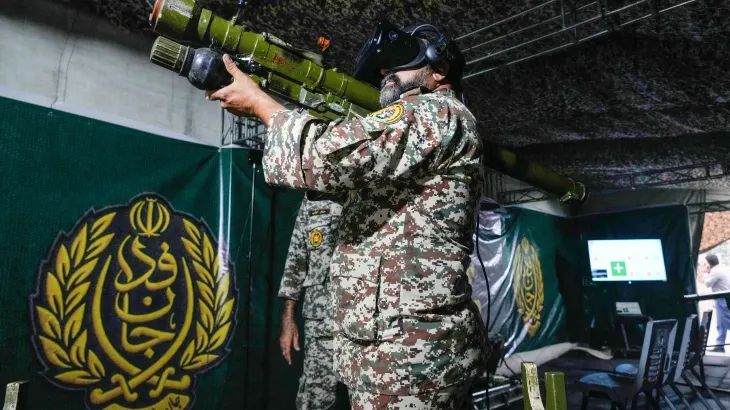
Iranian army spokesperson Mohammad Akraminia said the country would increase the range of its long-range missiles after concluding during the war that it needed greater reach.
“During this war, we concluded that we absolutely must increase the range of our missiles, and we have now moved in that direction,” he told Iran’s Fars news agency.
His comments came as US forces are reportedly positioned as far as 1,000 kilometres from the Iranian coast.
The missile warning suggests that Tehran is preparing for a possible change in the military balance, even while Iranian officials continue to say they prefer a diplomatic solution.
Foreign Minister Abbas Araghchi told foreign ambassadors and diplomats that Tehran hopes Washington will choose diplomacy but warned that Iran is prepared to respond if the United States again chooses military action.
“If they again move towards military solutions, we are more prepared than before and will take whatever action is necessary to defend ourselves,” Araghchi said.
US-Iran tensions remain unresolved
The latest statements come after weeks of attempts by mediators to bring Washington and Tehran back towards an agreement.
Qatar has played a major role in carrying messages between the two governments, while previous negotiations during the United Nations General Assembly produced an Iranian proposal aimed at restoring the June agreement.
The proposal included steps towards ending hostilities, lifting sanctions and reopening the Strait of Hormuz, but President Donald Trump rejected Iran’s seven-day roadmap, according to Al Jazeera.
Despite that rejection, diplomatic contacts have continued.
Reuters reported that Iran received a US response to its latest proposal through Qatari mediators on September 30, although the two sides remained divided over how the proposed steps should be sequenced.
The continuing negotiations underline the importance of Hormuz to both countries.
Read also: Kemi Badenoch Conservative party conference: Tories seek unity as polling and Reform UK challenge persist
For Iran, control over access through the waterway provides a major source of leverage. For the United States and other countries dependent on energy shipments, reopening the route is important for restoring more predictable maritime trade.
Hormuz remains central to the war
The Strait of Hormuz is one of the world’s most important energy routes, making its continued closure a major international economic concern.
The waterway has already contributed to disruption in global oil and gas markets, with the conflict placing additional pressure on fuel supplies and prices.
Al Jazeera analysts have described the confrontation between Washington and Tehran as a form of “cognitive warfare”, with both sides attempting to use military pressure, economic measures and public messaging to influence the other.
The situation also means that any movement towards reopening Hormuz could have consequences far beyond Iran and the United States.
Conversely, continued closure could deepen pressure on energy markets while increasing the economic costs of the wider conflict.
For now, however, Tehran is making its position clear: the Iran Strait of Hormuz closure will continue until Washington fulfils the conditions Iran says were agreed.
At the same time, the decision to increase missile range and the warning that Iran is better prepared for renewed military action show that Tehran is planning for both possibilities — a diplomatic breakthrough or another escalation.
With Washington and Tehran still divided over sanctions, military deployments, the nuclear issue and the conditions for reopening Hormuz, the strategic waterway remains at the heart of efforts to end the conflict.