The Kemi Badenoch Conservative Party conference begins with the Conservatives projecting a more confident and united image than a year ago, but the party remains under pressure from weak polling, Reform UK competition and concerns about its appeal to moderate voters.
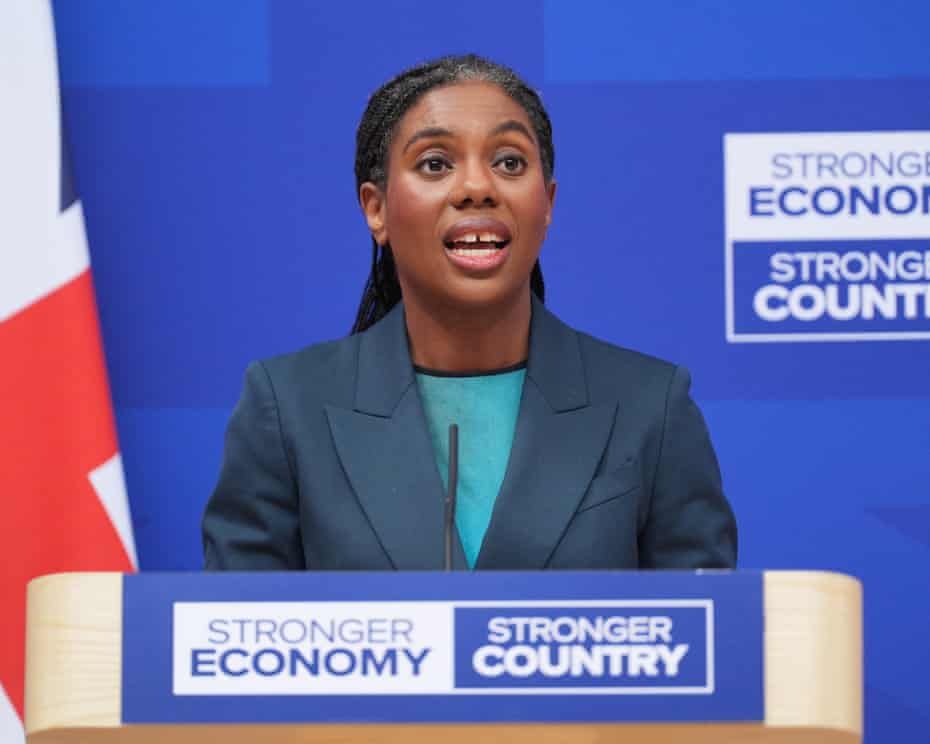
The four-day Conservative conference opens in Birmingham on Sunday, almost two years after Badenoch became party leader and following a period in which her leadership was repeatedly tested by poor electoral and polling performance.
The mood inside the party has nevertheless changed considerably, with Conservative MPs increasingly praising Badenoch’s performances and describing the party as more disciplined and united.
Yet the improvement in atmosphere has not been matched by a decisive recovery in national support.
Conservatives Still Face Polling Challenge
The Conservatives remain behind both Labour and Reform UK in several recent voting-intention surveys.
A YouGov poll conducted on September 27-28 put Reform UK on 25 per cent, Labour on 24 per cent and the Conservatives on 19 per cent, with the Liberal Democrats on 12 per cent and Greens on 11 per cent.
YouGov’s broader assessment ahead of the conference found that just 20 per cent of Britons believed the Conservatives were ready for a return to government, compared with 59 per cent who said they were not.
However, there are signs that the party’s potential support base has widened somewhat.
The proportion of Britons who said they would consider voting Conservative reached 28 per cent in September, six points higher than a year earlier and the highest level recorded by YouGov since November 2024.
That distinction is important for Badenoch. The Conservatives may have increased the number of voters who are open to supporting them without yet converting that wider pool into actual voting intention.
Badenoch Enters Conference in Stronger Position
The Guardian reports that Badenoch is entering this year’s conference in a considerably stronger position than she was last year.
In 2025, speculation surrounded her leadership after a difficult first year, while this year Conservative MPs are said to be more impressed by her performances, particularly at Prime Minister’s Questions.
One Conservative MP nevertheless warned that the improved mood should not be confused with electoral recovery.
“The mood is better but the facts are still very poor,” the MP said.
“We are still a distant third in the polls, and if there was an election tomorrow we would lose, and badly. That means the mood is overhyped.”
The assessment captures the central tension surrounding the Birmingham conference: Badenoch appears more secure internally, but the party has yet to demonstrate that this renewed confidence is translating into substantial public support.
YouGov found that Badenoch’s net favourability had improved by 20 points over the previous year to minus 15. However, 47 per cent still viewed her unfavourably, compared with 32 per cent who viewed her favourably.
Reform UK Remains a Major Threat
One of Badenoch’s biggest challenges is Reform UK and its leader Nigel Farage.
The Conservatives have increasingly concentrated on winning back voters who moved to Reform, particularly on issues such as immigration, welfare and national sovereignty.
But some Conservatives fear that an excessive focus on Reform could make the party less attractive to voters who moved to the Liberal Democrats or who occupy the political centre.
“We need to be attracting as many voters who left us for the Lib Dems as Reform, and I don’t personally think we have got the balance right,” a Conservative shadow minister told the Guardian.
“There is an economic offering, but they don’t want us to be so intolerant on social issues. The way we are going, we risk being seen as the nasty party again.”
The reference echoes former Conservative leader Theresa May’s warning about the party becoming perceived as a “nasty party”.
The concern is that policies designed to compete directly with Reform could strengthen the Conservatives among some right-leaning voters while making it harder to rebuild support in traditionally Conservative areas where voters moved to the Liberal Democrats.
Conservative Policy Moves Further Right
Recent Conservative policy announcements have intensified that debate.
The party has proposed restricting access to social housing for non-British citizens, changing rules affecting the citizenship of dual nationals convicted of serious crimes and reducing some welfare payments to what it describes as a subsistence level.
The Conservatives have also proposed reducing overseas aid to help finance 50,000 additional prison places.
The party’s wider economic programme includes £47 billion in proposed savings, including reductions in welfare spending, Civil Service numbers, overseas aid and other areas. The Conservatives say the savings would help reduce the deficit and provide room for tax cuts and growth measures.
Badenoch’s party has also committed to leaving the European Convention on Human Rights as part of its proposed approach to immigration and deportation.
The policy direction has produced relatively little open rebellion within Conservative ranks.
The Guardian reports that some MPs believe concerns over the party’s approach to welfare and social issues are outweighed by voter anxiety over public spending.
“I’ve not heard any colleagues say they were worried about the nasty party stuff,” one Conservative MP said.
“In contrast, a lot of constituents say they are very worried about welfare costs.”
Moderates Warn of Electoral Risk
The internal debate is particularly significant because the Conservatives need to rebuild support beyond their current core electorate if they are eventually to return to government.
David Gauke, a former Conservative cabinet minister and vice-chair of the centrist Prosper UK grouping, said the party needed to reconnect with moderate voters who had become “politically homeless”.
“There’s a set of the electorate that don’t feel the party has spoken to them for at least 10 years, and Conservatives need to start doing that,” Gauke said.
“There’s no route to a Conservative majority that does not involve winning back seats in Oxfordshire and Surrey and other parts of the home counties.”
His argument reflects a longstanding problem for the Conservatives: whether they can simultaneously compete with Reform on the right while recovering voters who abandoned the party for the Liberal Democrats and other centrist alternatives.
Badenoch’s Strategy Faces Questions
Political scientist Tim Bale of Queen Mary University of London said Badenoch appeared to be attempting to prevent Reform from dominating the right while waiting for circumstances to weaken Reform and Burnham’s government.
“It is a risk, but what else have they got?” Bale said.
“But I can’t see how it’s going to work for them and where the votes are going to come from.”
He also questioned the extent of Badenoch’s improvement.
“They seem to be overstating the extent to which voters think even Badenoch is a good thing,” he said.
“She’s still in negative territory.”
Bale added that the Conservatives had moved from winning 24 per cent of the vote in 2024 to polling at just over 20 per cent in some recent surveys.
“If this is what success looks like, I’d love to know what failure is,” he said.
His comments underline the gap between internal Conservative confidence and the party’s broader position among voters.
Conservative Unity Gives Badenoch Breathing Space
Despite those difficulties, the absence of a major internal leadership challenge gives Badenoch valuable political space.
The Guardian reports that Conservative MPs are now largely pulling together, with fewer visible factional disputes than during the previous conference.
A shadow minister described the change bluntly: “Everybody seems to be pulling together now.”
“It’s not quite yet the Blues Brothers on a mission from God, but there’s a real sense of purpose. There are no factions, no five families. The arguments have stopped.”
The departure of Robert Jenrick to Reform UK has also altered the internal dynamics. Jenrick had been a prominent figure on the Conservative right before leaving the party.
Another Conservative figure described the change this way: “We are very unified, and a lot of that coincided with Jenrick going. We have outsourced our toxicity to Reform.”
The same source argued that Badenoch had achieved greater political “cut-through” than she had a year earlier.
Read also: Labour poll rise after Burnham Brexit pledge as Reform UK falls behind in new opinium survey
What Badenoch Must Achieve in Birmingham
The Conservative Party conference therefore begins with a markedly different atmosphere from last year, but the party’s fundamental electoral challenge remains.
Badenoch has strengthened her position among Conservative MPs, her personal ratings have improved from their previous lows and the party has increased the proportion of voters who say they would consider voting Conservative.
However, the Conservatives are still struggling to turn those improvements into sustained voting-intention gains.
The party also faces a strategic dilemma over Reform UK.
Moving further right may help prevent additional defections to Farage’s party, but Conservative moderates fear that the same strategy could alienate voters who previously supported the Conservatives but now favour the Liberal Democrats or remain undecided.
That makes the Birmingham conference more than an opportunity for Badenoch to demonstrate party unity.
It is also a test of whether the Conservatives can turn improved internal confidence into a broader political proposition capable of competing with both Reform UK on the right and Labour under Prime Minister Andy Burnham.
For now, the evidence presents a mixed picture: Badenoch is in a stronger position than she was a year ago, but the Conservatives remain some distance from the level of public support they would need to make a convincing return to government.
The conference may therefore provide Badenoch with an opportunity to define what the Conservatives stand for beyond opposition to Labour and competition with Reform UK, while attempting to persuade voters that the party has a credible path back to power.