International Criminal Court dismisses prosecutor Khan after member states voted to remove him over serious misconduct claims. The decision marks a major shake-up at The Hague.
On Friday, 82 of the ICC’s 125 member states backed the removal. Karim Khan, 56, denies any wrongdoing and says he will challenge the decision through legal channels.
Member States Vote To Remove Khan
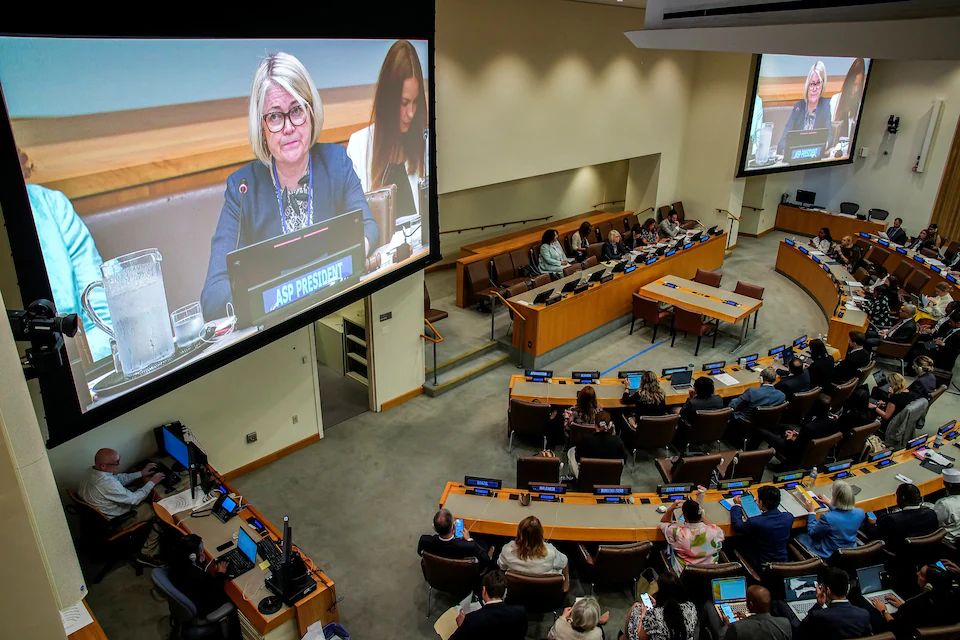
The governing body’s president, Paivi Kaukoranta, announced the result. She said the assembly found “serious misconduct and a serious breach of duty.”
The vote followed a recommendation from the court’s executive bureau last month. Diplomats cited an alleged inappropriate relationship with a junior ICC lawyer.
“The assembly decided by a majority of 82 states parties that the elected official, prosecutor, Karim Khan, committed serious misconduct,” Kaukoranta stated.
Khan’s lawyer, Tayab Ali, responded immediately. “Mr. Khan will challenge the lawfulness and fairness of the decision through all available legal mechanisms,” he said.
Allegations First Raised In Executive Report
Documents seen by Reuters said Khan had an inappropriate sexual relationship with a junior lawyer. The report recommended dismissal for serious breach of duty.
Khan has consistently denied the claim. Lawyers told Reuters he denied “any sexual relationship of any kind” with the junior lawyer.
The accuser spoke publicly for the first time last week. In an interview with CNN, she repeated allegations of a non-consensual relationship.
The ICC’s internal process found the conduct met the threshold for removal. Member states were asked to vote this week in The Hague.
Immediate Impact On ICC Operations
Khan’s dismissal triggers an election for a new prosecutor. A vote is not expected before next year, leaving the office under interim leadership.
Active ICC warrants remain in place. Only judges can withdraw warrants, so cases including those against Israeli officials are unaffected.
Leila Sadat of Washington University said the move helps credibility. “Members of the court acted swiftly and decisively to remove an embattled and discredited official,” she noted.
The court must now reassure staff and victims’ groups. Continuity in investigations across Ukraine, Palestine, Sudan and elsewhere will be closely watched.
Renewed US Pressure On The Court
The vote comes amid renewed US hostility. Secretary of State Marco Rubio, speaking in the Philippines on Thursday, criticized the ICC harshly.
“There are lunatics and crazies involved in the ICC,” Rubio said. “There is no way any US political or military officials would ever go on trial at the court.”
State Department spokesperson Tommy Pigott welcomed Khan’s removal. He called it “only one small cog in this irredeemably corrupt institution.”
The US is not an ICC member. It has sanctioned 11 judges and prosecutors, including Khan, over warrants related to Israel and a past Afghanistan probe.
Credibility Test For The Hague
Analysts say removing Khan addresses internal accountability. But external pressure remains intense, especially from major powers outside the court.
Kyra Wigard of Utrecht University warned of bigger challenges. “The bigger challenge going forward is whether the court can restore confidence internally and externally,” she said.
She added the court must maintain “the perception of independence amid intense geopolitical pressure.” That includes funding, cooperation and arrest enforcement.
The ICC relies on member states to execute warrants and share evidence. Political backing is crucial for investigations in active conflict zones.
What Comes Next For The Prosecutor’s Office
The Assembly of States Parties will now start nominations. Candidates must have experience in criminal law and international justice.
An election is expected in 2027. In the meantime, deputy prosecutors will manage ongoing cases and preliminary examinations.
The office faces a heavy docket. It is investigating war crimes in Ukraine, Gaza, Sudan, Myanmar and the Democratic Republic of Congo.
Victims’ groups urged the court to protect staff from retaliation. They also asked for transparency in the new selection process.
Khan’s Tenure And Controversies
Khan took office in 2021 as a British barrister with high-profile defence experience. He pursued arrest warrants against senior leaders in multiple conflicts.

His most controversial move was seeking warrants for Israeli Prime Minister Benjamin Netanyahu and former defence minister Yoav Gallant.
That decision prompted US sanctions. The Biden and now Trump administrations have argued the ICC overreaches its jurisdiction.
Khan defended the court’s independence. He said the law applies equally and that politics should not stop investigations.
Reactions From Member States
European states largely supported the removal, citing governance standards. African and Latin American members also voted in favor of accountability.
Some states expressed concern about timing. They worried the scandal could be used by opponents to undermine the court’s legitimacy.
A diplomat said privately: “We needed to act. The court cannot function if its chief prosecutor is under this cloud.”
Others noted the vote shows the Rome Statute system can police its own leaders. That was a key argument when the ICC was created in 1998.
Looking Ahead
The ICC enters a transition period. Restoring morale inside the prosecutor’s office will be a priority for interim leadership.
Read also:Chris Brown pleads guilty to affray after Mayfair nightclub incident
External challenges will not pause. The US campaign to “dismantle the ICC” continues, and some states may withhold cooperation.
For now, the message from The Hague is clear. No official is above scrutiny, even at the top.
International Criminal Court dismisses prosecutor Khan, but the work of pursuing war crimes continues while states choose his successor.
About The Author