

When Beijing imposed new export restrictions on key metals this year, panic spread across Washington and Brussels, exposing just how entrenched China’s rare earth dominance has become.
Decades of complacency, misjudgment, and misplaced faith in market self-correction have left Western nations dangerously dependent on a rival they once believed could never match their innovation.
Officials now scramble for answers, unveiling new policies and alliances that sound bold but do little to resolve the US supply chain struggle gripping advanced technology and defense sectors.
Commerce Secretary Gina Raimondo has warned repeatedly that rare earth reliance is “an economic and national security vulnerability,” yet the West’s fragmented industrial response remains alarmingly inadequate.
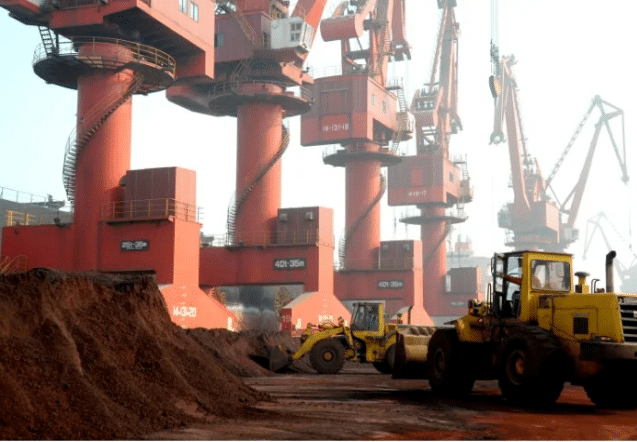
Insiders say the warnings came too late. “China didn’t just plan; it executed with discipline while we debated environmental clauses and corporate tax breaks,” a senior trade official admitted.
Across the critical minerals market, Beijing’s strategy is evident — a seamless network of mining, refining, and manufacturing, backed by state financing, industrial foresight, and geopolitical leverage unmatched by Western rivals.
Economist Joseph Stiglitz has long argued that free-market dogma blinded policymakers to the reality of industrial dependency. “We outsourced control for efficiency and now we pay for fragility,” he said.
The US supply chain struggle became painfully visible during recent chip shortages. Efforts to expand domestic production collided with bureaucratic inertia, environmental protests, and inconsistent funding cycles across successive administrations.
Even the Trump rare earth strategy, once hailed as a national revival blueprint, faltered under political theatrics. Announcements about “critical mineral independence” masked fractured coordination between agencies and private contractors.
“The plan existed only in slogans,” one former Department of Energy consultant said. “Every state wanted investment, but no one wanted the mines or refineries nearby.”
This paralysis accelerated Western dependency on China, now controlling over 90 percent of rare earth refining capacity — a dominance that turns resource trade into a strategic bargaining chip for Beijing.
China’s control of the critical minerals market isn’t limited to production. It dictates global pricing, export timing, and downstream supply chains that Western industries can neither duplicate nor decouple from.
Military analysts admit the dependency extends to defense. From fighter jets to missile guidance systems, rare earths are indispensable — and the Pentagon remains reliant on materials processed in China.
Robert Kaplan, a U.S. foreign policy scholar, described it as “a strategic chokehold achieved without a single shot fired — an economic weapon shaped by decades of Western neglect.”
Meanwhile, the Trump administration’s initiatives to revive the Trump rare earth strategy through alliances with Australia and Canada have yet to produce tangible breakthroughs beyond joint statements and feasibility studies.
Australia’s mining boom offers potential relief, but without midstream processing infrastructure, extracted ores still travel to Chinese facilities for refinement, perpetuating the Western dependency on China.
In Africa, Beijing’s influence deepens. Through the Belt and Road Initiative, Chinese firms finance mining and infrastructure projects, securing long-term contracts in exchange for developmental aid and political goodwill.
The US supply chain struggle contrasts starkly with China’s cohesion. In Washington, fragmented jurisdictions slow project approvals; in Beijing, directives flow from party leadership to industry with military precision.
A senior European Commission official, speaking anonymously, conceded, “We’re trying to outcompete an ecosystem we helped create — one that’s faster, cheaper, and ruthlessly coordinated.”
In the critical minerals market, Western ventures face rising costs and investor hesitation. Projects collapse under environmental scrutiny while Chinese refiners quietly undercut competitors through scale and state-subsidized logistics.
Joseph Stiglitz warned that Western economies confuse ownership with control. “You can mine elsewhere, but if China refines it, Beijing controls the outcome,” he told a policy forum last year.
The failure extends beyond policy — it’s cultural. For years, Western investors viewed mining as dirty, outdated, and politically unpopular, while China made it a pillar of national advancement.
This mindset, experts argue, hardened Western dependency on China, making diversification a slow, politically costly pursuit that collides with climate goals and local opposition in equal measure.
A former U.S. defense contractor summed it up grimly: “You can’t wage a green revolution using supply chains built in your rival’s backyard. That’s our current paradox.”
While China rare earth dominance continues to grow, Western nations announce new funding rounds and partnerships that rarely progress beyond paperwork and pilot plants. Beijing watches — patient, unthreatened, and prepared.
The Trump rare earth strategy may have reignited the debate, but the execution gap remains. Projects face years of regulatory gridlock and community resistance, eroding investor confidence and strategic momentum.
Europe mirrors the same crisis. The EU’s Critical Raw Materials Act promises independence but lacks financing and cross-border cooperation to match China’s centralized industrial command.
Beijing’s foresight remains unrivaled. Its universities train metallurgists and chemists while Western institutions prioritize finance and software, leaving the critical minerals market talent pipeline dangerously one-sided.
As China integrates recycling and green refinement technologies, Western firms still grapple with pilot projects too small to offset reliance on imported processed materials from Chinese suppliers.
An Asian industry insider described it succinctly: “The West talks about reducing dependency; China talks about improving efficiency. Guess who’s winning?” His voice carried quiet, confident certainty.
Analysts believe reversing China rare earth dominance could take decades, even under ideal circumstances. Supply chains are physical empires, not policy papers — rebuilding them requires endurance Western politics often lacks.
Robert Kaplan observed that rare earths have become “a mirror of geopolitical reality — Western nations dream of sovereignty while China practices it daily through industrial mastery.”
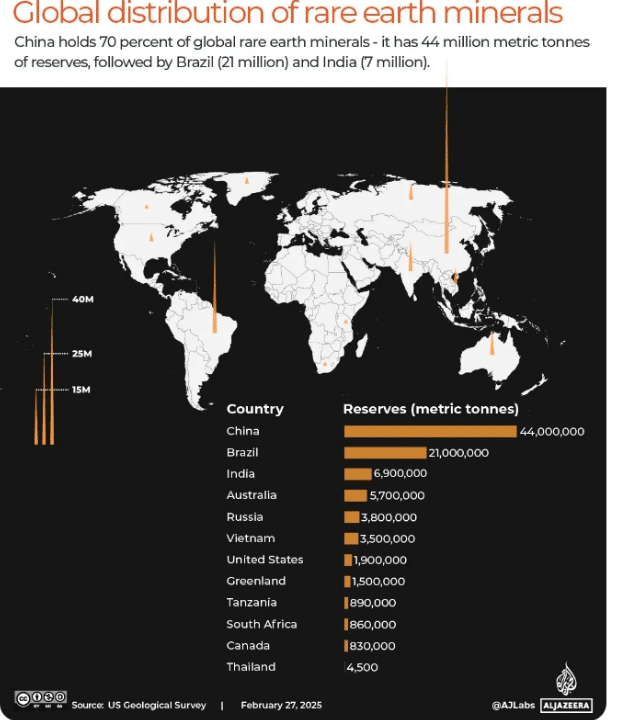
Without structural transformation, Western dependency on China will persist, embedding economic leverage deep into every Western technological ambition — from renewable energy to artificial intelligence and advanced weapons.
Each new crisis only exposes the same truth: the West’s industrial disarmament was self-inflicted, and reversing China rare earth dominance demands not rhetoric but an entire paradigm shift in strategy.
China rare earth dominance
About The Author