Poland’s recent arrests have reignited concerns about Russia’s growing influence in Europe, deepening anxiety that Poland Russian hybrid warfare operations are expanding beyond espionage into coordinated sabotage.
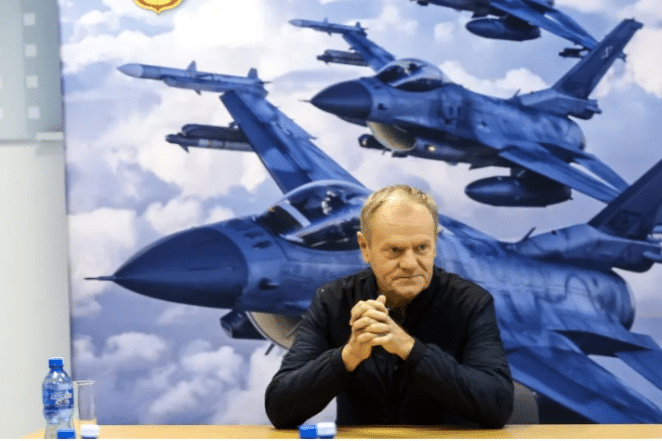
Prime Minister Donald Tusk confirmed that eight individuals were detained for espionage and sabotage plots targeting critical infrastructure. He emphasized that Poland’s intelligence community remains “vigilant and fully mobilized” against external threats.
Officials say the suspects were conducting reconnaissance of air bases and transport routes, gathering intelligence for potential attacks. Authorities believe the network was linked to the Russian espionage network operating across Eastern Europe.
According to Tomasz Siemoniak, coordinator of national security services, the detainees had prepared explosive materials for delivery through international courier networks — an alarming sign of transnational coordination.
Preliminary investigations reveal three Ukrainian nationals among the suspects, allegedly recruited to transfer explosives across Poland and Romania. Their detainment followed a joint operation involving Polish and Romanian security forces.
Romania’s national intelligence agency said it prevented planned sabotage operations coordinated by Russian handlers. Officials described the attempted attacks as “part of a wider Poland Russian hybrid warfare pattern.”
Security analysts in Warsaw note the growing overlap between traditional espionage and hybrid tactics. They warn that disinformation, sabotage, and drone incursions have become standard Russian tools of destabilization.
Jacek Dobrzynski, spokesperson for Polish intelligence operations, disclosed that over fifty-five individuals have been arrested for espionage or sabotage in the last three years, a historic national record.
“These actions show that Russia seeks to undermine Poland’s stability through indirect conflict methods,” Dobrzynski stated, adding that hybrid threats combine “psychological warfare with real acts of terror.”
Experts suggest that European security threats now evolve through fragmented, localized incidents — designed to erode public confidence and overwhelm security institutions rather than provoke a full-scale military response.
Last year, Polish authorities intercepted arson plots targeting logistics centers. Similar attacks were discovered in Lithuania and Latvia, part of an expanding European intelligence map of Russian covert actions.
British officials have also accused Moscow of orchestrating sabotage within the United Kingdom. Analysts say these efforts are symptomatic of Russia’s desire to fracture NATO’s cohesion and test European resilience.
The Kremlin routinely denies any connection to such activities, dismissing accusations as “Russophobic propaganda.” Yet, the frequency of incidents strongly suggests an orchestrated Poland Russian hybrid warfare campaign.
In September, Lithuania dismantled a spy cell planning to detonate devices at transportation hubs. Simultaneously, Germany and Denmark reported repeated drone incursions near restricted airspace, prompting temporary airport shutdowns.
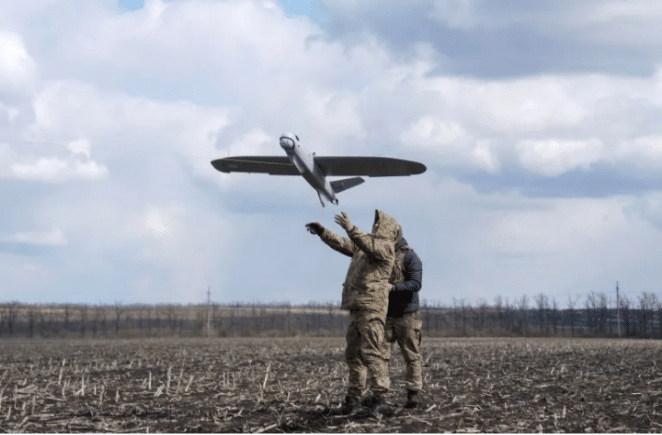
The rise of drones as surveillance and attack instruments has profoundly altered the landscape of European security threats. Low-cost aerial incursions are testing both national preparedness and regional coordination.
Danish Prime Minister Mette Frederiksen recently declared, “Europe is in the early phase of hybrid war. The pattern is visible, and it’s getting worse each month.”
Her warning mirrors Tusk’s own remarks that Poland’s air defenses require urgent reinforcement. NATO allies have echoed similar concerns, pointing to the vulnerability of Europe’s eastern flank.
The NATO eastern border defense initiative has therefore gained urgency. Member states are fast-tracking drone detection technologies and regional data-sharing to contain infiltration attempts along shared boundaries.
Brussels has floated the concept of a “drone wall” along its eastern frontier — a collaborative system linking surveillance infrastructure from Finland down to Bulgaria.
Such proposals reflect the realization that Poland Russian hybrid warfare tactics are not confined to one nation but threaten the entire European Union’s strategic environment.
Analysts argue that hybrid warfare’s strength lies in ambiguity — deniable operations that blur the line between espionage, criminality, and direct aggression. This makes deterrence a complex task for democracies.
For Warsaw, the challenge lies in distinguishing between spontaneous criminal acts and orchestrated efforts by Moscow’s intelligence apparatus. Cyberattacks, sabotage, and propaganda increasingly converge into a single offensive domain.
Public opinion in Poland has hardened. Citizens express growing frustration with Russian provocations and demand greater transparency from their government on Polish intelligence operations.
Economists warn that sustained insecurity may deter foreign investment. Energy networks, railway systems, and airports have become high-priority protection zones under Poland’s revised national security strategy.
Meanwhile, military cooperation with Romania and the Baltic states has intensified. Joint exercises now simulate sabotage responses, drone interceptions, and rapid border deployments to reinforce deterrence capabilities.
Western diplomats argue that the hybrid threat is reshaping Europe’s entire defense doctrine, compelling nations to merge military and civilian crisis management frameworks under unified command structures.
In response, the Polish government has expanded funding for cybersecurity education, advanced radar systems, and anti-drone artillery — essential investments to counter the evolving spectrum of Poland Russian hybrid warfare.
Intelligence reports suggest that Russian operatives increasingly use front companies to disguise financial transfers, enabling logistical support for sabotage without conventional military signatures.
The Russian espionage network relies heavily on local intermediaries — citizens coerced or recruited to collect information or execute minor disruptive acts — creating legal and ethical challenges for prosecution.
Poland’s Ministry of Justice confirmed that new legislation will enhance penalties for those convicted under Article 130, addressing espionage and sabotage offenses with extended sentences and asset seizures.
As Europe tightens internal security coordination, many fear the Kremlin’s response will be to intensify pressure elsewhere — through cyber operations, energy manipulation, or influence campaigns across social media.
Observers believe that the NATO eastern border defense will soon represent not just a physical frontier but also an ideological barrier against authoritarian disruption.
In Warsaw, Donald Tusk vowed that “no form of intimidation will shake Poland’s commitment to European solidarity.” He reiterated that collective defense remains Poland’s ultimate safeguard against any Poland Russian hybrid warfare escalation.
Across the continent, governments are now acknowledging that hybrid aggression is not a future threat — it is already here, woven into the daily rhythm of European politics and security.
Poland’s latest arrests serve as both warning and validation: Europe’s stability hinges on its capacity to detect, disrupt, and deter hybrid aggression before it festers into open confrontation.
The episode underscores the evolution of warfare itself — a battlefield without clear borders, where deception, drones, and digital manipulation replace tanks and missiles as instruments of power.
Ultimately, Poland’s vigilance demonstrates a continental awakening. The Poland Russian hybrid warfare dynamic has forced democracies to reinvent their defenses in an era where truth, technology, and trust are under threats.
About The Author