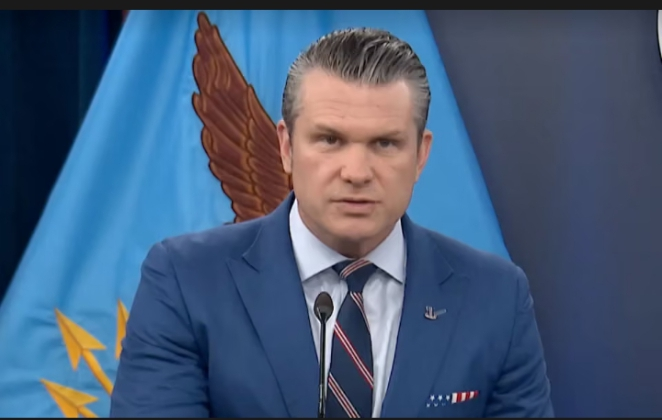
Hegseth says Iran made ‘big mistake’ attacking neighbours as the United States Department of Defense confirmed an escalation of military operations, warning that Tehran’s actions across the region have strengthened international backing for Washington’s campaign.
Hegseth says Iran made ‘big mistake’ attacking neighbours, accusing Tehran of miscalculating the regional consequences of its actions as US-led military operations intensify.
Speaking during a press briefing at the Pentagon, US Defence Secretary Pete Hegseth said Iran’s decision to launch attacks beyond its borders had escalated tensions and pushed more countries to align with Washington’s military objectives.
“Big mistake by the Iranian regime in attacking its neighbours, right away… flailing recklessly,” Hegseth said.
He added that the move demonstrated a strategic miscalculation by Tehran and had encouraged greater regional cooperation with the United States.
Military officials confirmed that American forces have expanded air and naval operations targeting missile launch systems, drone facilities and strategic naval assets considered central to Iran’s offensive capabilities.

General Dan Caine, chairman of the Joint Chiefs of Staff, said joint forces remain focused on degrading Iran’s missile networks, weakening its naval strike capacity and preventing long-term threats to regional stability and global shipping routes.
“Ballistic missile attacks continue to trend downwards,” Caine said, noting that sustained pressure on launch sites and military infrastructure was yielding results.
Regional tensions have continued to rise as neighbouring states respond to the widening conflict. Air defence systems in the United Arab Emirates intercepted multiple incoming missiles and drones, highlighting growing concerns among Gulf nations about spillover risks.
The Israel military also confirmed renewed aerial operations targeting strategic facilities in Tehran, citing efforts to disrupt Iranian command networks and weapons supply routes.
Security concerns have intensified in Lebanon, where tensions involving the Iran-backed group Hezbollah have increased fears of broader cross-border escalation.
Read also: Social media ban for under-16s rejected by MPs in Commons vote
Hegseth stressed that Washington’s strategy is focused on neutralising threats rather than prolonging conflict, emphasising precision targeting and civilian risk mitigation.
“No nation takes more precautions to ensure there is never targeting of civilians,” he said, adding that operations are designed to minimise unintended harm.
He warned that any attempt by Iran to disrupt strategic maritime corridors or threaten neighbouring countries would draw a significantly stronger military response.
US President Donald Trump indicated that diplomatic options remain possible but suggested Washington currently holds a decisive military advantage.
Iranian officials, however, remain sceptical about renewed negotiations, pointing to previous diplomatic breakdowns and continued military pressure.
Defence analysts say the conflict is entering a critical phase, with sustained operations aimed at permanently degrading Iran’s offensive capacity while deterring further regional aggression.