Gaza tent life has become a daily struggle for displaced Palestinians, who face disease outbreaks, pollution, and the collapse of water and sanitation infrastructure in Gaza City.
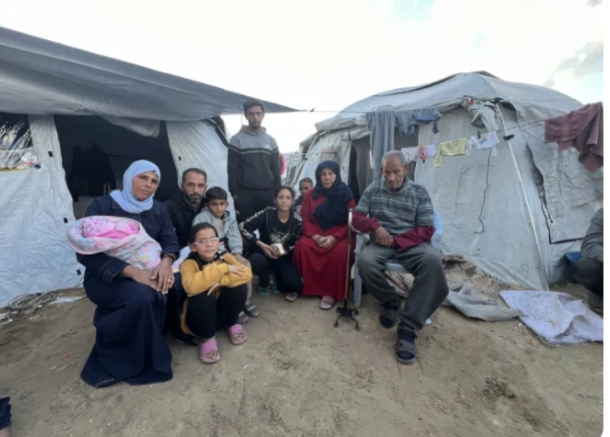
The Abu Amr family has been displaced more than 17 times since the war began. Now, they live beside a massive rubbish dump, exposing them to constant danger.
“We always say that we live in two wars in Gaza, one that kills with bombing, and one that is from rubbish,” said Saada Abu Amr, 64, who suffers asthma.
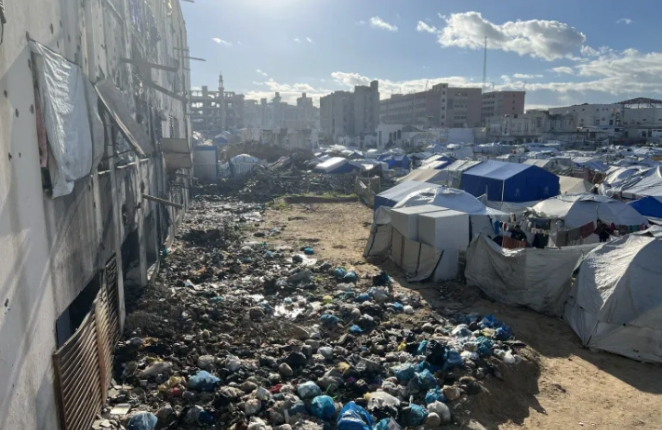
She described keeping her inhaler under her pillow at night, using it repeatedly as the smell of waste blocks her airways, making sleep and breathing nearly impossible.
Suryya Abu Amr, 35, mother of five, said maintaining hygiene is almost impossible. Cleaning materials are expensive, and water shortages make it futile near garbage areas, she explained.
“We get infected with gastroenteritis several times a month. I was almost dying once,” Suryya added, recalling a severe illness linked to poor sanitation and shared toilets.
Before the war, cleanliness was central to her life. She cleaned her house multiple times daily. “I never imagined I would live this nightmare,” Suryya said, remembering a different reality.
Salem Abu Amr, 40, explained why the family stayed near the dump: lack of options, money, and space forced them to endure unbearable conditions during winter and summer.
“My children suffer a lot. The polluted smell comes with the wind; while we eat, we feel like vomiting,” he said, describing daily exposure to environmental hazards.
Mosquitoes and insects make survival harder. Salem’s two-week-old daughter, Sabaa, suffers severe bites, while rodents contaminate water and living areas, creating further health risks for the family.
“We recently recovered from a very bad flu. My disabled father was almost dying; it might be from rodents’ urine contamination,” Salem said, drawing parallels to coronavirus symptoms.
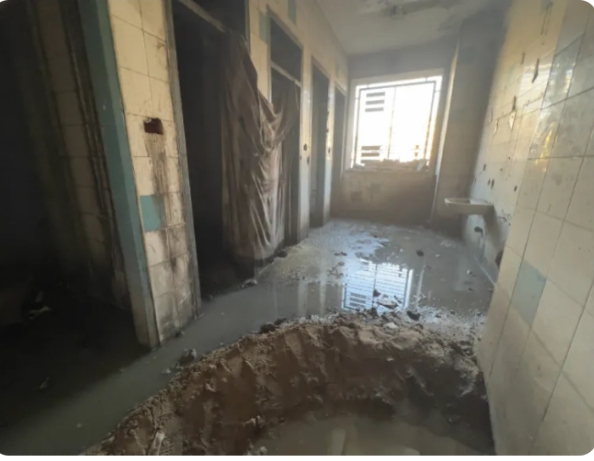
Rahaf Abu Amr, 13, suffers hair loss and skin infections due to unsanitary conditions. “I am losing my hair because of the lack of sanitation here,” she said, highlighting children’s vulnerability.
Health professionals warn that accumulated waste and sewage are driving a surge in viral and bacterial infections, putting displaced Palestinians at extreme risk of disease outbreaks.
Dr Ahmed Alrabiei, pulmonologist at al-Shifa Medical Complex, said hospitals are overwhelmed. “The public health situation in Gaza is disastrous; we see infections with severe complications.”
Conditions include Guillain-Barre syndrome, meningitis, gastroenteritis, respiratory infections, asthma, Hepatitis A, and immune system weakness, with suspected cholera fortunately absent so far.
The most affected groups are children under two, the elderly, and those with chronic or autoimmune conditions, including diabetes, lupus, kidney disease, and cancer, Dr Alrabiei added.
Hospitals operate at 150% capacity. Chest wards designed for 20 patients often hold more than 40, forcing others into corridors and increasing infection risk among displaced Palestinians.
Medication shortages and insufficient medical equipment delay diagnosis and treatment. Many patients receive care only after illnesses reach critical stages, worsening the public health crisis.
Gaza City faces severe humanitarian and environmental challenges. Water and sanitation infrastructure has largely collapsed following Israeli attacks, leaving residents without safe drinking water or functioning sewage systems.
Ahmed Driemly of Gaza Municipality said over 150,000 meters of water pipes and 85% of wells were destroyed. The main desalination plant was completely wiped out.
Solid waste accumulates rapidly. Over 700,000 tonnes of garbage pile across Gaza, including 350,000 tonnes inside Gaza City alone, creating dangerous conditions for displaced Palestinians living nearby.
Temporary landfills, like the one at Firas Market, produce environmental hazards. Insects and rodents proliferate, and wastewater leaks into groundwater tanks, particularly during rainfall, exacerbating health risks.
Municipal officials cite extreme constraints: damaged machinery, fuel shortages, security risks, and displaced workers prevent the full resumption of services, leaving emergency measures as the only solution.
“The Gaza Municipality operates according to a limited emergency plan,” said Husni Muhanna. “Interventions include opening storm drains using primitive means, with no comprehensive solution in place.”
Despite a US-backed ceasefire, reconstruction is slow. Israeli authorities continue to obstruct repair work, raising fears that water, sanitation, and habitability of entire neighborhoods could permanently collapse.
Rojan Jarad, 38, mother of four with a disabled child, described humiliating toilet access in shelters. “I decided to have our own one in the tent using a bucket. It’s humiliating.”
Families often avoid eating or drinking enough to delay toilet use, as public facilities are overcrowded and unsanitary. This causes recurring infections, particularly among women and children.
The new reality of Gaza tent life is one of constant despair. Displaced Palestinians navigate pollution, disease, and inadequate shelter while struggling to survive amid environmental hazards.
Children endure illness, parents face sleepless nights managing asthma and infections, and elderly family members confront life-threatening risks. Every day is a battle for basic survival.
Experts warn that without immediate intervention, disease outbreaks will worsen. Clean water, sanitation infrastructure, and medical supplies are urgently needed to prevent further suffering.
Read also: Frost racist attack shocks Sundance as congressman assaulted
The residents’ resilience is remarkable, yet insufficient to overcome systemic neglect. Gaza tent life exposes the human cost of conflict and the ongoing public health crisis.
For displaced Palestinians like the Abu Amr and Jarad families, survival is not just against bombs—it is against waste, illness, and despair in a city struggling to cope.
About The Author