The morning rain hammered relentlessly on the camp, forcing a Gaza couple to confront the reality of welcoming their newborn inside a flooded tent with heartbreaking uncertainty.
Samar clutched her soaked baby clothes tightly, whispering that every fabric meant for warmth had turned cold and useless after last night’s storm reshaped their fragile existence entirely.
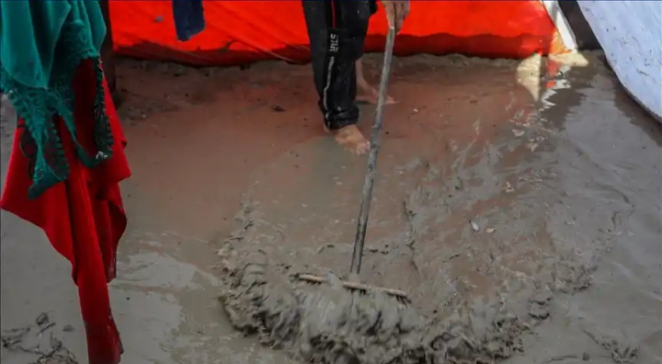
She described waking abruptly to water rushing through torn seams, rising across mats and blankets, swallowing the few belongings she had managed to safeguard for months.
Her husband Abdulrahman sprinted from a modest barbershop where he had just started work, only to find the family’s living space drowning beneath relentless winter rain.
Inside the camp, neighbours struggled to salvage drenched bedding, lifting mattresses toward faint sunlight that barely pierced the grey skies hanging mournfully over Gaza’s exhausted displacement settlements.
Samar said the chaos left her frozen with fear, especially knowing she is due for a C-section soon yet has no dry space prepared adequately.
She lamented that every item bought for the newborn vanished beneath the water, including formula, diapers, and clothing they had spent weeks gathering carefully despite soaring prices.
Abdulrahman recalled receiving her frantic call, describing how her panicked voice broke under pressure as rain surged aggressively through fabric walls that could not withstand another storm.
He dropped everything immediately, racing past others trying desperately to dig trenches, push water away, and protect children trembling from cold inside tents barely capable of standing.
When he reached the spot, his heart sank at the sight of his family huddled helplessly, surrounded by deep puddles that transformed their shelter into misery.
He said the moment felt like another blow in a long chain of losses since the war began, leaving him emotionally drained beyond understanding or expression.
Samar compared their new reality to the life they once had, recalling warm rooms and clean bedding replaced now by mud, fear, and the unpredictability of displacement.
She said her children with her, including three young boys, suffer constantly from the cold and from insects that infest the camp after storms unsettle every fragile corner.
Rainfall has turned corridors between tents into long streams of muddy water, making walking difficult and exposing families to illness that threatens vulnerable bodies already severely weakened.
Abdulrahman revealed the crushing financial burdens, explaining how diapers previously affordable have now become painfully overpriced, adding stress to a situation already defined by deprivation and uncertainty.
He said even buying a pacifier requires resources they barely possess, emphasizing how war and scarcity collide to strip parents of dignity at every heartbreaking turn.
The couple fears welcoming their daughter under such circumstances, knowing Samar will return after surgery to the same dampness, coldness, and vulnerability threatening their children today.
Samar admitted imagining returning from the hospital to a safe home, yet war has replaced every expectation with discomfort, danger, and sadness no parent should endure anywhere.
She said guilt shadows her pregnancy, not because she doubts her love, but because survival has become complicated beyond her strength, especially during these painful winter storms.
Abdulrahman said the tent remains unsafe regardless of weather, describing unbearable heat during summer and overwhelming flooding during winter, with no alternatives permitted for displaced families.
Their neighbourhood in Tal al-Hawa once promised peace and community, but now lies destroyed, pushing them into layers of displacement that never seem to end in Gaza.
Samar said they fled multiple times across different towns, each move worsened by new demolitions, leaving them without a single stable structure where children could feel secure.
Her sons cry frequently from cold nights, and mattresses rarely dry fully, leaving them exposed to sickness at a time when medical access remains desperately limited for civilians.
Abdulrahman said even during ceasefire announcements, the sky remains loud with drones, and tension grows each day, making it impossible to feel the promised sense of safety.
Samar rejected claims that conflict has eased, insisting that families still endure bombings, shortages, and fear daily, with winter pushing them into conditions harsher than many imagine.
She said the floods hitting their shelter feel like secondary violence layered over earlier destruction, drowning hope slowly as the rain keeps returning stronger each passing week.
The couple repeatedly expressed longing for dignity, saying temporary solutions like tarps or tents cannot replace the fundamental need for homes that once defined their lives before war.
Samar pleaded for caravans or stronger structures, not as luxury but as basic protection necessary for childbirth, recovery, and ensuring her children survive upcoming harsh weather.
Humanitarian agencies warn that families like theirs will endure worsening winter conditions, especially since construction restrictions prevent buildings capable of resisting heavy rains effectively.
Abdulrahman said he feels reduced to helplessness, unable to protect Samar or their children, admitting that each day chips away at hope they try hard to maintain.
He described standing ankle-deep in water while holding a broken bucket, trying to scoop mud away, yet realizing nothing could stop nature from entering through torn fabric.
Samar meanwhile struggled to warm water for bathing the children, explaining how simple acts require immense effort when everything around them is either wet or cold already.
She said washing clothes becomes pointless when rain reintroduces mud instantly, forcing repeated cleaning despite scarce soap and limited options for drying inside crowded camps.
Childhood for their sons now centres on discomfort, sickness, and anxiety, with laughter becoming rare in a setting where basic shelter collapses whenever storms revisit the camp.
Abdulrahman said neighbours support each other, yet everyone suffers similarly, leaving little room for collective relief when each family battles floods, cold, hunger, and constant exhaustion.
The storm also destroyed Samar’s mother’s tent nearby, where she had placed the newborn’s hospital bag, thinking it was safer there than inside their own fragile shelter.
Samar returned to find everything floating in muddy water, leaving her devastated and uncertain about how to rebuild preparations before labour begins within the coming days.
She said uncertainty clouds every thought now, with questions about survival and safety overshadowing the joy she had hoped to feel welcoming her awaited daughter lovingly.
Abdulrahman said the camp resembles a wasteland after storms, with people carrying drenched cushions, broken belongings, and clinging to any item that survived the relentless rainfall overnight.
He noted how lack of heating forces them to burn scarce materials, creating smoke uncomfortable for children but necessary when cold threatens their health each winter night.
Samar said even boiling water becomes difficult due to shortages of fuel and wood, leaving them uncertain how to care for the baby once she arrives.
The couple said they try to create small routine moments to protect their children emotionally, yet winter weather destroys efforts by flooding the smallest corners of comfort.
Displacement officials warn that continued rainfall may worsen conditions, making already saturated ground unstable, raising fears of more tents collapsing under pressure from muddy foundations.
Samar said fear follows her constantly now, particularly as contractions near, knowing her recovery will occur inside dampness instead of comfort usually essential for postpartum health.
She said many mothers around her gave birth recently under similar conditions, with some returning to tents where newborns sleep on mats placed over wet, unstable soil.
Abdulrahman said the situation drains morale since every improvement lasts briefly before new storms undo progress, making survival a continuous cycle of rebuilding and despair.
He added that he feels stripped of fatherly strength, unable to offer protection beyond promises he struggles to fulfil while nature and conflict reshape their lives relentlessly.
Samar believes international aid must expand urgently, as families require blankets, proper shoes, mattresses, and waterproof materials that do not dissolve under heavy storms striking frequently.
She said families cannot continue depending on plastic sheets that tear quickly, forcing them to improvise with materials inadequate for weather growing harsher every new winter.
Abdulrahman echoed her plea, saying humanitarian organizations must understand that survival inside tents is impossible when water levels rise inside shelters meant only for temporary protection.
The couple dreams of rebuilding their previous home eventually, yet understands political restrictions mean they may remain inside fragile shelters for months or possibly even years still ahead.
Samar said hope flickers weakly now, though she fights to hold it for her children, believing they deserve warmth, safety, and childhood beyond war and flooding.
Abdulrahman ended by saying they have become weary bodies struggling daily, drained emotionally by hardship, yet still praying their daughter arrives safely despite everything surrounding them painfully.
He added that survival demands resilience, but resilience weakens when families repeatedly lose belongings, comfort, and dignity beneath floods that transform tents into cold, lifeless spaces.
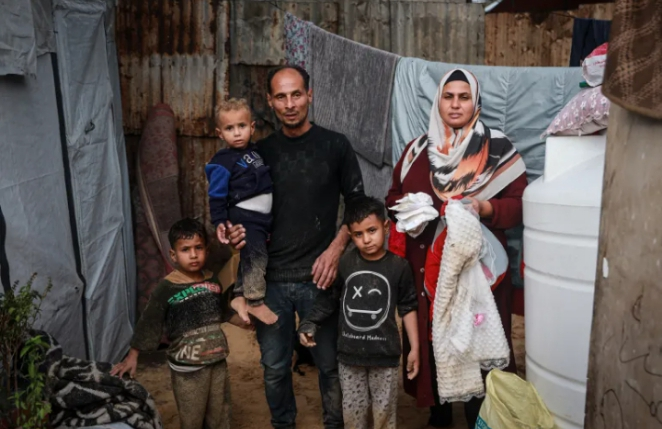
Samar said she will continue drying clothes, rearranging items, and preparing however she can, despite knowing more rain may erase her efforts repeatedly throughout the season ahead.
Their story reflects countless displaced families enduring similar tragedies, fighting winter hazards while recovering from war, with the flooded tent symbolizing a humanitarian struggle demanding urgent attention worldwide.
Across Gaza, communities brace for more storms, hoping aid will arrive before weather deepens suffering and newborns enter harsh environments lacking proper shelter, warmth, and essential protections.
The couple remains determined to welcome their daughter lovingly, praying she becomes a reminder of hope even inside a fragile shelter battered by relentless storms and conflict.
About The Author