

Israeli air raids hit Gaza, continuing destruction despite an ongoing ceasefire with Hamas. Civilians express fear, describing relentless bombardments affecting homes, schools, and hospitals across the Strip.
Witnesses told reporters, “we hear explosions daily; even with the ceasefire, the sky feels unsafe.” Families struggle to find shelter, fearing both airstrikes and unexploded ordnance littering streets.
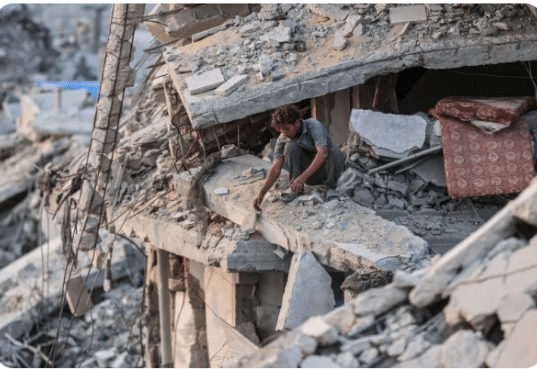
Palestinian authorities report the latest Israeli air raids hit Gaza neighborhoods near Rafah and Khan Younis, causing structural collapses and displacing hundreds of families from their homes.
A local resident said, “My house is gone, my memories destroyed. There is no respite from this constant bombing. We live in fear every night.”
Humanitarian workers report difficulties delivering aid due to ongoing Israeli air raids hit Gaza zones. Caroline Willemen stated, “Access is limited; trucks wait hours, supplies run short, children go hungry.”
Medical facilities are overwhelmed. Doctors say hospitals face shortages of medicine and blood. One doctor commented, “We are forced to prioritize who survives, while the bombing continues unabated around us.”
The United Nations has condemned the air raids, calling for immediate cessation. A UN spokesperson said, “Israeli air raids hit Gaza must stop. Civilians cannot bear this continuous suffering.”
Schools operate under dual pressure. Students return to classrooms during the day but use the same buildings as shelters at night, demonstrating resilience amid destruction and fear of renewed attacks.
Hamas authorities report the transfer of deceased captives as part of ceasefire negotiations. Yet families mourn losses, saying, “Even with handovers, the trauma persists, and Israeli air raids hit Gaza still.”
Water and sanitation remain critical. Locals report drinking contaminated water due to bombed infrastructure. Hani Mahmoud noted, “There is no choice; survival trumps safety in Gaza under constant Israeli raids.”
Israeli settlements in the West Bank have escalated attacks. Reports confirm that violence increased alongside the Gaza strikes, contributing to regional instability and heightening tensions between communities.
An observer noted, “Even if the international community intervenes, the local situation remains dire. Israeli air raids hit Gaza continue to exacerbate daily hardships.”
UN relief agencies describe slow distribution of essential supplies. Delays in fuel, food, and medicine worsen the humanitarian crisis, while families shelter amid the debris of bombed buildings.
International reactions vary. Some countries call for accountability. Turkiye has issued arrest warrants against Israeli leaders for alleged crimes, stating, “Such actions perpetuate suffering and violate international law.”
The Red Cross continues managing casualties. An official stated, “We are handling bodies from both sides, but the challenge grows as Israeli air raids hit Gaza without warning.”
Palestinians report airstrikes destroying homes, leaving rubble in streets. Locals are forced to navigate dangerous areas. One resident said, “Even walking to buy bread is a risk under constant bombardment.”
Negotiations for trapped Hamas fighters are ongoing. Officials hope for peaceful handovers. Yet, locals remain skeptical: “Promises of safety feel hollow when Israeli air raids hit Gaza daily.”
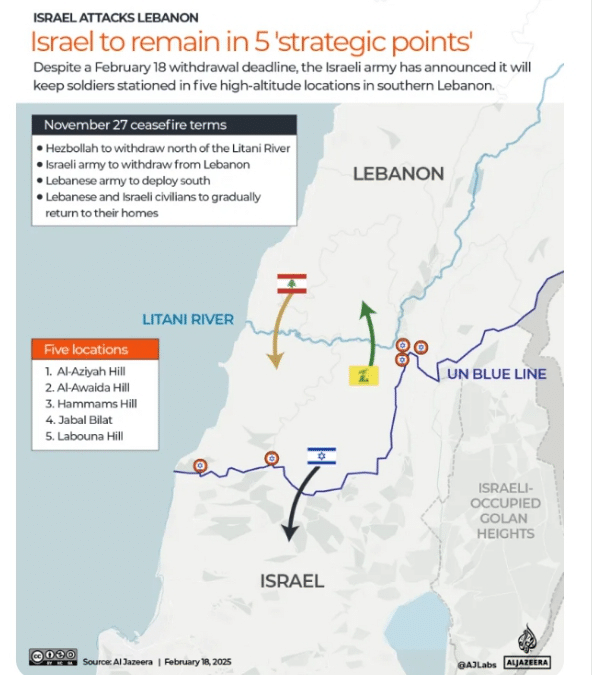
Lebanese authorities report drone-fired missile attacks from Israel targeting suspected Hezbollah positions. These events raise fears of regional escalation beyond Gaza, as neighboring countries monitor developments closely.
In southern Gaza, demolitions accompany air raids. Bulldozers flatten residential structures, intensifying the humanitarian crisis. A displaced family said, “We have nowhere to go; Israeli air raids hit Gaza destroy everything.”
Aid workers continue to emphasize bureaucracy as a major obstacle. Willemen added, “Even with intent, delivering aid is almost impossible while Israeli air raids hit Gaza intermittently.”
Palestinians describe living in constant psychological trauma. Children exhibit stress and fear. One teacher explained, “They know safety is fleeting. Israeli air raids hit Gaza make every day a nightmare.”
International organizations urge de-escalation. Statements emphasize that continuous bombing violates humanitarian law. A UN envoy said, “Israeli air raids hit Gaza put civilians at extreme risk, with long-term consequences.”
Despite global concern, Israel maintains airstrikes as a security measure. Officials argue preemptive attacks are necessary, but residents argue, “Our homes and lives are collateral damage.”
Families recount nights spent in basements, listening to explosions. A mother stated, “Israeli air raids hit Gaza force us to hide in fear. Sleep is impossible; survival is uncertain.”
UNICEF reports children face dire shortages of food and clean water. A field officer commented, “Israeli air raids hit Gaza exacerbate malnutrition and illness among vulnerable populations.”
Infrastructure damage is extensive. Electricity is intermittent, roads are blocked by rubble, and sewage systems fail. Locals claim, “Life is unbearable as Israeli air raids hit Gaza and destroy basic services.”
Health officials warn of disease outbreaks. Contaminated water and blocked sanitation raise alarm. One nurse said, “We are on the edge of an epidemic as Israeli air raids hit Gaza persist.”
The international community debates intervention strategies. Diplomatic pressure intensifies, yet airstrikes continue. Observers note, “Without urgent measures, Israeli air raids hit Gaza will worsen humanitarian suffering.”
Residents continue reporting personal losses. Homes, schools, and livelihoods vanish. One displaced man lamented, “Israeli air raids hit Gaza have erased our past and threaten our future.”
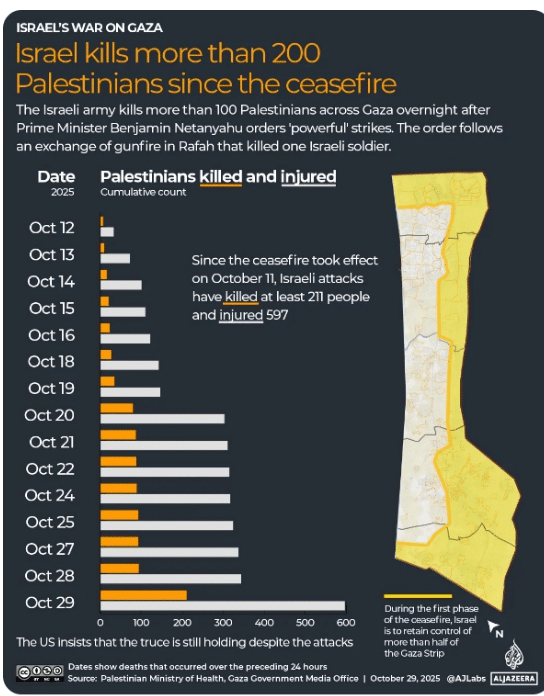
Despite ceasefire agreements, sporadic strikes undermine stability. Civilians face daily risk, questioning whether peace can ever be sustainable. One local activist said, “air raids hit Gaza shatter hope.”
Aid agencies appeal for safe corridors. UN officials insist on unimpeded access, highlighting that Israeli air raids hit Gaza hinder assistance to thousands in need.
Families cling to survival strategies. Community networks provide food and shelter, though insecurity remains. A resident remarked, “Even with help, Israeli air raids hit Gaza prevent normal life from resuming.”
Journalists in Gaza face restricted movement. Reporting is challenging amid conflict. One correspondent explained, “Israeli air raids hit Gaza limit our ability to cover the reality civilians face.”
Negotiations between Hamas and Israel continue cautiously. Yet, local sentiment is mistrustful. “Promises are meaningless when air raids hit Gaza persistently target our neighborhoods,” a resident said.
Children remain traumatized by explosions and destruction. Psychologists warn of long-term mental health crises. “Israeli air raids hit Gaza scar the youngest generation irreparably,” a counselor reported.
Relief organizations call for immediate ceasefires and reconstruction plans. Officials assert that without cessation, recovery remains impossible. “Israeli raids hit Gaza stall every attempt at rebuilding lives,” they said.
The humanitarian toll is immense. Deaths, injuries, and displacement mount daily. Families express despair: “Israeli raids hit Gaza take away not just homes, but hope itself.”
As Gaza endures ongoing strikes, international bodies monitor violations of international law. Experts warn, “Israeli raids hit Gaza represent a persistent threat to civilians and regional stability.”
About The Author


