The G7 to Discuss Release of Emergency Oil Reserves is now at the forefront of global economic discussions after oil prices surged past $100 a barrel.
According to sources, the US, along with other G7 members, is actively considering the release of strategic petroleum reserves to stabilize the market amid escalating tensions in the Middle East. Financial analysts warn that any delay could exacerbate the energy crisis, impacting consumers worldwide.
Reports indicate that the emergency oil reserve meeting will be coordinated by the International Energy Agency (IEA), involving ministers from 32 member countries.
“The goal is to mitigate the economic fallout from the US-Israel war on Iran,” an unnamed official told the Financial Times.
The release could involve 300 to 400 million barrels, equivalent to roughly a third of global emergency reserves, providing temporary relief to global supply chains.
Markets responded immediately to the news. Brent crude rose sharply to $119.50 per barrel in early Monday trading before settling around $106.73. Stock markets across Europe, the US, and Asia saw declines as investor anxiety intensified.
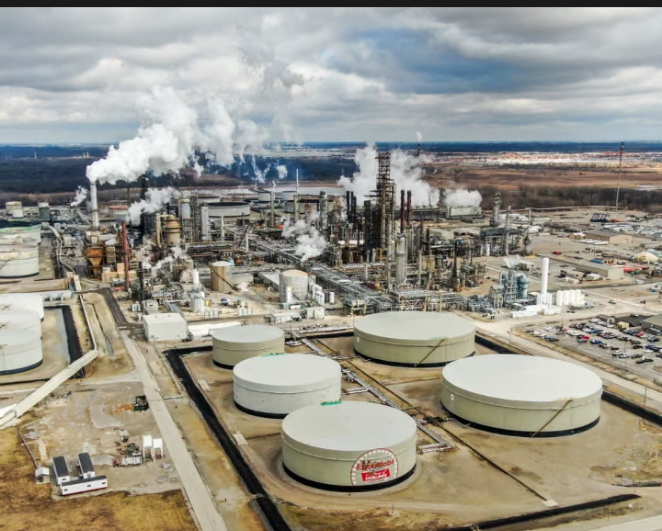
The FTSE 100 fell 1.9%, Germany’s Dax dropped almost 1%, and France’s Cac 40 lost 0.7%, reflecting fears that the Middle East conflict could trigger long-term supply disruptions.
Energy prices are being further affected by direct attacks on infrastructure. At least five energy sites near Tehran were targeted, while Kuwait’s national oil company preemptively cut production amid retaliatory actions.
The closure of the Strait of Hormuz for nearly a week has intensified fears, as this vital waterway normally handles around 20% of global oil shipments.
Analysts say that while the emergency release could stabilize prices temporarily, sustained geopolitical tensions may continue to push costs upward. US officials, including former President Donald Trump, have argued that higher energy prices are a short-term consequence worth tolerating to ensure “World, Safety and Peace.”
Meanwhile, the Iranian Revolutionary Guard warned, “If you can tolerate oil at more than $200 per barrel, continue this game,” highlighting the high stakes of the ongoing conflict.
EU supply coordination groups are also monitoring the situation closely. Countries in the bloc must maintain 90 days of oil consumption in reserves, a measure intended to cushion shocks.
The meeting of EU oil and gas authorities on Thursday is expected to align European responses with the broader G7 strategy.
Experts emphasize that coordinated action is critical to avoid severe market instability that could ripple into global inflation, energy shortages, and transportation costs.
This marks the sixth coordinated emergency release by the IEA since its founding in 1974. Past interventions, including responses to the Arab oil embargo and the Ukraine war, demonstrate the capacity of strategic reserves to provide temporary relief. However, experts caution that the reserves are finite, and repeated reliance could strain global energy security in the medium term.
The G7’s move is being closely watched by financial markets, energy traders, and policymakers worldwide. “Immediate release of the reserves is necessary to prevent panic and stabilize oil prices,” said an energy strategist in London.
With the US and Europe backing the proposal, the discussion sets a precedent for international cooperation in responding to geopolitical crises that threaten global energy supplies.
Investors and consumers alike are bracing for continued volatility. The combination of military conflict, supply disruptions, and high prices underscores the vulnerability of global energy markets.
Analysts warn that without decisive action, oil could surpass $120 a barrel, with cascading effects on fuel, electricity, and food costs worldwide.
As G7 ministers prepare for the emergency session, attention will remain on how quickly coordinated action can mitigate the crisis.
Read more here: Oil prices surge as Gulf conflict deepens and Mojtaba Khamenei named Iran Supreme Leader
The world watches as governments weigh the economic and strategic consequences of their decisions, balancing immediate relief against long-term energy security in an era of heightened geopolitical uncertainty.