A Gaza City building collapse has killed at least 20 people, including children, after a war-damaged structure housing displaced Palestinian families gave way in Gaza City, leaving dozens feared trapped beneath the rubble.
The multi-storey building had previously been damaged by Israeli strikes during the war and was reportedly being used by displaced families who had few alternatives for shelter. When it collapsed, the structure fell onto tents erected beside it, where other displaced Palestinians were staying.
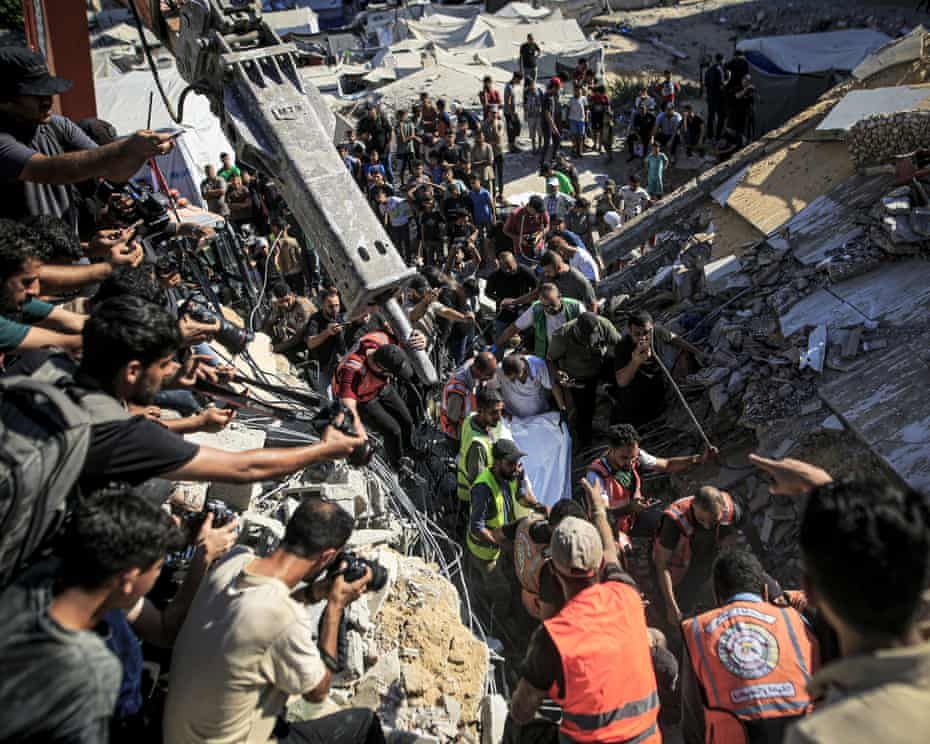
Rescue workers continued searching the wreckage on Wednesday as relatives and residents gathered around the site, hoping that people trapped beneath the concrete could still be rescued.
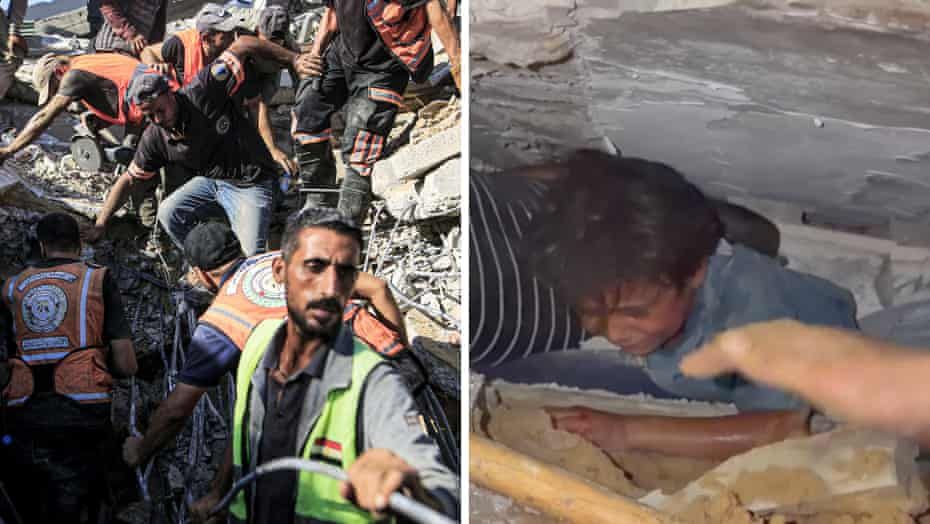
Gaza City Building Collapse Traps Families Under Rubble
Gaza’s civil defence teams said the rescue operation was being carried out under extremely difficult conditions because of shortages of heavy machinery and other equipment needed to remove large sections of concrete.
At least five children were among the victims reported by Gaza civil defence, while injured people were taken to hospitals for treatment. Rescue workers also said they could hear voices beneath the rubble, raising hopes that some survivors could still be reached.
Mohammed Abu Dan, a supervisor with the civil defence team, said more than 10 families had been living in the damaged building because displaced people had nowhere else to go.
“Search and rescue operations are being carried out under extremely difficult conditions due to a lack of the necessary equipment and resources,” Abu Dan said.
Raed al-Dahshan, director of Gaza City’s civil defence service, also described the continuing search as a race against time.
“We are still hearing voices from under the rubble, so there is still hope to find people,” he said.
The Guardian reported that rescue workers, UN agencies and Egypt’s relief agency were involved in efforts to reach those trapped beneath the collapsed structure.
Rescue Workers Dig With Limited Equipment
Alessandro Mrakic, head of the UN Development Programme’s Gaza office, said the rescue effort was exceptionally difficult because appropriate machinery was not available.
“There are actually people that are digging with their bare hands. We need to prepare [for more deaths],” Mrakic said.
The shortage of heavy equipment has become a major obstacle in Gaza, where extensive destruction has left large numbers of buildings unstable and dangerous.
Palestinian and UN officials have attributed the shortage partly to Israeli restrictions on equipment entering Gaza. Israel says restrictions are intended to prevent machinery and other materials from reaching militant groups.
Reuters also reported that the collapsed building was among roughly 2,000 structures already damaged by Israeli airstrikes and that dozens of people remained trapped as rescue teams worked through the debris.
Thousands Face Risk From Damaged Buildings
The Gaza building collapse has highlighted a wider danger facing displaced Palestinians who have returned to damaged homes or moved into abandoned structures because safer accommodation is unavailable.
Many buildings across Gaza have suffered damage to roofs, walls and supporting columns. Such structures can become unstable without warning, particularly during further bombardment or severe weather.
Some displaced Palestinians have cleared small areas among the rubble and occupied partially destroyed buildings despite the obvious risks.
The shortage of accommodation has also pushed rents and land prices higher, making alternative shelter increasingly difficult for families who have already been displaced by the war.
People living near damaged structures told the Guardian that they remained frightened for themselves and their children but had few alternatives.
“Yes, we are afraid, but where can we go? This is better than staying out on the street,” residents said.
Displacement Leaves Families With Few Choices
The collapse comes against the backdrop of continued displacement across Gaza, with hundreds of thousands of Palestinians unable to return to areas near the so-called yellow line.
The humanitarian situation has been further complicated by continuing military activity despite the ceasefire that took effect in October 2025.
According to figures cited by the Guardian from Gaza’s health ministry, 1,369 Palestinians had been killed and 4,627 wounded since the ceasefire began. The ministry says the overall Palestinian death toll since the war began in 2023 has reached at least 73,783, with 174,738 people wounded.
The figures are issued by Gaza’s health ministry and are not independently verified by the Guardian.
Israeli Strikes Continue Despite Ceasefire
The building collapse occurred as Israeli strikes in Gaza continued despite the ceasefire.
A separate incident in Gaza City’s Sheikh Radwan neighbourhood reportedly killed Mohammed al-Zinati, 15, and wounded others. The teenager had reportedly been attempting to recover the body of a man killed in an earlier strike.
Israel has continued military operations in Gaza while accusing Hamas of maintaining militant activity. Hamas and Israel have also accused each other of violating the ceasefire.
Israeli Defence Minister Israel Katz said on Wednesday that a return to full-scale war remained possible and said the Israel Defense Forces were prepared “to finish the job”.
Katz also referred to a plan involving the movement of Palestinians from Gaza, saying the military was prepared to implement what he called the “migration plan”.
His remarks came amid continuing political debate in Israel over the future of the Gaza Strip and the fate of its Palestinian population.
Damaged Homes Become Shelters
For displaced Palestinians, however, the immediate concern remains finding somewhere safe to sleep.
Read also: Sahel violence set to reach record levels as jihadist groups expand across Africa
The Gaza City building collapse demonstrates the dangers confronting families who occupy structures already weakened by war. With limited shelter available, some residents have little choice but to remain inside buildings whose structural condition is uncertain.
The problem extends beyond a single collapsed building. Rescue and humanitarian workers face thousands of damaged structures across the territory, while heavy machinery needed to inspect, demolish or safely clear unstable buildings remains limited.
The collapse therefore adds another layer of danger to an already devastated civilian environment, where displacement, destroyed housing and restricted resources continue to shape daily life.
As rescue workers searched through the rubble, the possibility that survivors remained trapped beneath the concrete kept attention focused on the site.
For families living among Gaza’s damaged buildings, the incident has also served as another warning of the risks created when homes damaged during the war become the only available shelter.