The US visa restrictions on South Africans announced by the Trump administration will target foreign nationals Washington says are responsible for or complicit in race-based discrimination, incitement of violence and land seizures without compensation in South Africa.
The announcement, made by US Secretary of State Marco Rubio, did not identify specific individuals who would be barred from entering the United States. The policy is directed at foreign nationals whom Washington says have enacted or enabled policies that violate its stated concerns.
The move marks another escalation in tensions between Washington and Pretoria under President Donald Trump, whose administration has repeatedly criticised South Africa’s approach to racial redress, affirmative action and land reform.
US Visa Restrictions Target South African Officials
Rubio said the new policy would target foreign nationals involved in what the US government describes as race-based discrimination and policies affecting minority groups in South Africa.
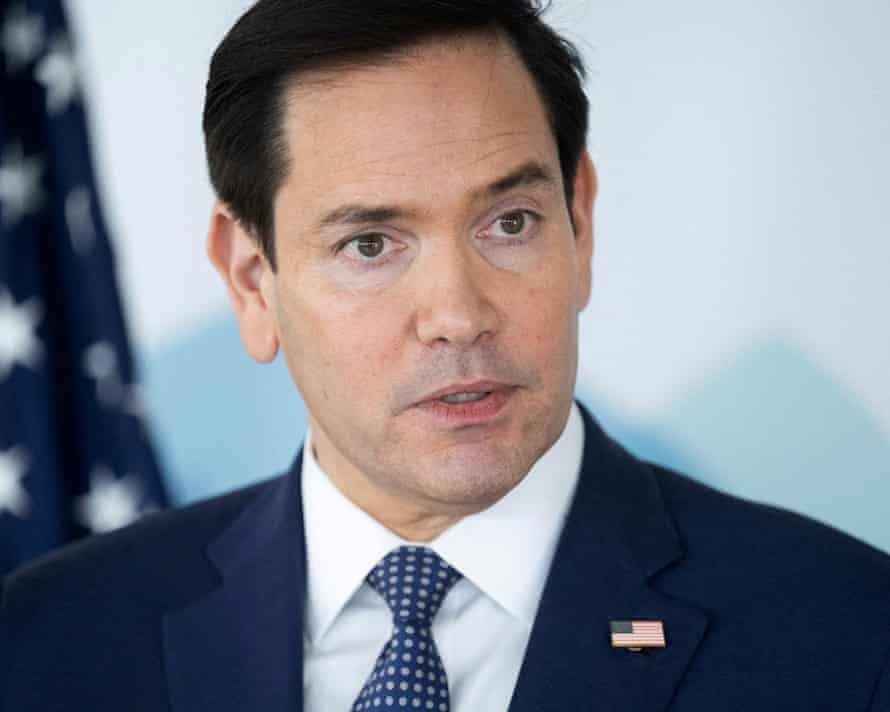
“The South African people are being failed by a government that is destroying its economy through an obsessive pursuit of racial grievance against the Afrikaner minority,” Rubio said in a post on X.
He also accused the South African government of failing to adequately address what Washington considers concerns over rural crime, violent rhetoric and policies affecting Afrikaners and other minority populations.
Rubio said the US visa restrictions on South Africans would target “foreign nationals who enact or enable policies that promote race-based discrimination, incite violence, or enable land confiscation without compensation in South Africa”.
The US Department of State has separately described its broader visa system as part of strengthened screening and vetting procedures under the Trump administration.
Washington Signals Further Measures
The US ambassador to South Africa, Leo Brent Bozell III, indicated that Washington could take additional steps against Pretoria.
“As has been made absolutely clear, the time for endless ‘dialogue’ has run its course … This visa restriction policy is only the first step in a series of escalatory measures that will show America’s firm resolve in this matter,” Bozell said.
The comments suggest that the visa policy is being presented by Washington as part of a broader dispute over South Africa’s domestic policies rather than as an isolated immigration measure.
The US administration has already taken other steps affecting relations with South Africa, including changes to aid, diplomatic engagement and programmes involving Afrikaners seeking to relocate to the United States.
South Africa Rejects US Characterisation
South Africa’s government rejected Washington’s description of its domestic policies, saying the US administration was misrepresenting measures designed to address the legacy of racial inequality.
Foreign ministry spokesperson Chrispin Phiri said the announcement aligned with what he described as a mischaracterisation of South Africa’s domestic policies by groups claiming to represent minorities and Afrikaners.
“The South African government has consistently failed to adequately address rural crime, violent and dehumanising rhetoric, and race-based discriminatory policies against Afrikaners and other minority populations,” Rubio said in announcing the US position.
Phiri, however, defended South Africa’s right to introduce laws aimed at addressing the effects of historical racial injustice.
“It is our sovereign right to put in place laws that address the nation’s concern over centuries of racial injustice … South Africa respects that the United States may hold different views regarding particular measures and their implementation,” he said.
Reuters reported on Wednesday that South Africa’s foreign ministry had expressed concern about the new US visa restrictions and said Pretoria’s policies were being misrepresented.
Pretoria Defends Racial Redress Policies
The disagreement centres partly on South Africa’s attempts to address economic and racial inequalities created during decades of apartheid rule.
Afrikaners, largely descended from Dutch and French settlers, were part of the white minority that held political power during apartheid, when South Africa’s Black majority was subjected to extensive racial discrimination and restrictions.
Following Nelson Mandela’s election as South Africa’s first Black president in 1994, successive governments introduced policies intended to address racial inequality and increase economic opportunities for historically disadvantaged South Africans.
Those measures have included Black economic empowerment programmes and land redistribution policies.
South African officials argue that such measures should be understood in the context of the country’s apartheid history rather than characterised simply as discrimination against white South Africans.
Dispute Over South Africa’s Land Policy
Land reform has become one of the most contentious issues in the disagreement between Washington and Pretoria.
Rubio’s announcement specifically referred to land confiscation without compensation. South Africa adopted legislation allowing the state to expropriate land without compensation in certain circumstances, including where land is abandoned or held purely for speculative purposes.
South African authorities maintain that the legislation provides a legal framework for land reform and does not amount to a programme of large-scale uncompensated seizure of privately owned land.
The issue has nevertheless become central to claims by some white South Africans and US conservatives that Afrikaners face racial discrimination.
The US government has repeatedly highlighted those claims as part of its criticism of South Africa.
Trump’s ‘White Genocide’ Claims
President Trump has also repeatedly promoted claims that white South Africans, particularly Afrikaners, face a form of “white genocide”.
South African officials and other critics have rejected the characterisation, while some Afrikaners themselves have disputed the portrayal of conditions in the country.
The Trump administration’s position has contributed to a significant shift in US-South Africa relations, including Washington’s decision to establish a refugee programme for Afrikaners and other South African racial minorities.
South Africa’s government has previously said white South Africans remain welcome in the country regardless of their political views.
A South African government statement said officials had noted allegations involving white South Africans who moved to the United States based on claims of a “white genocide” and reiterated that South Africans had a home in their country.
Dispute Over ‘Kill the Boer’ Chant
Another issue cited by some white South Africans involves the repeated use by opposition politician Julius Malema of the apartheid-era chant “Kill the Boer”, referring to Afrikaners.
Malema’s use of the phrase has been a recurring source of controversy in South Africa and has been cited by critics as evidence of hostility towards Afrikaners.
The African National Congress, South Africa’s governing party, has disavowed the chant.
South African courts have ruled that the expression, in the circumstances considered by the courts, was not intended literally and therefore did not constitute hate speech.
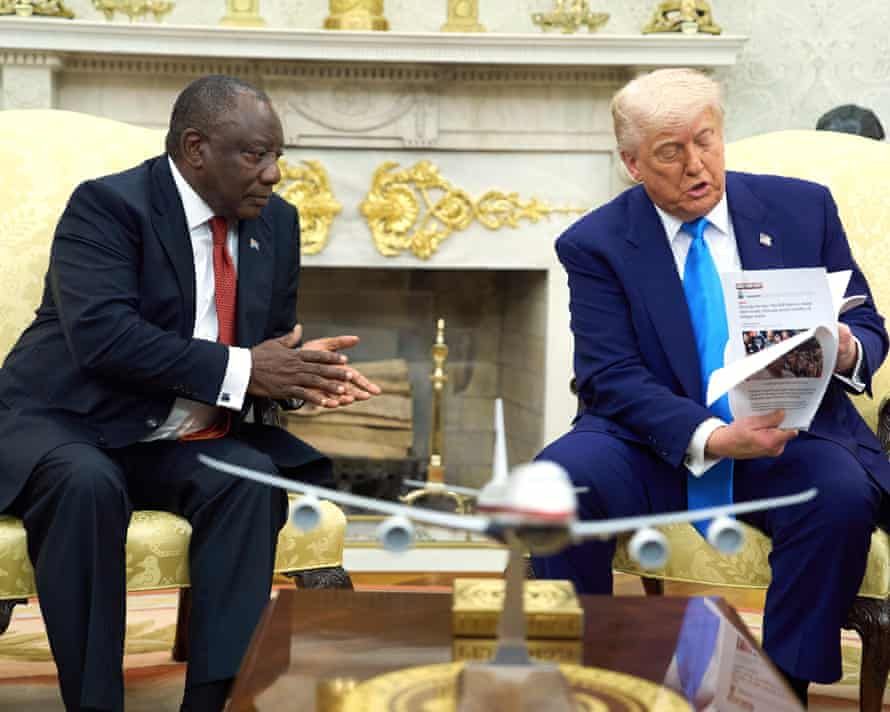
Trump previously played a video featuring the chant during a meeting with South African President Cyril Ramaphosa at the White House, highlighting how the issue has entered diplomatic relations between the two countries.
What the Visa Policy Means
The announcement does not amount to a blanket visa ban on all South Africans.
Read also: Dan Thomas steps down as Reform UK Welsh leader after arrest
Instead, the stated policy focuses on foreign nationals whom the US government determines to be responsible for or complicit in particular policies or conduct. The announcement did not publicly name the people who would initially be affected.
The distinction is important because South African nationals continue to have access to ordinary US visa categories subject to US immigration law and individual eligibility requirements. The US State Department’s current South Africa visa information continues to list ordinary visa classifications and validity arrangements.
The policy therefore represents a targeted restriction rather than a general prohibition on South Africans travelling to the United States.
For Pretoria, however, the announcement represents another diplomatic challenge as the two governments continue to disagree over racial policy, land reform, minority rights and the interpretation of South Africa’s post-apartheid transformation.
For Washington, the visa restrictions form part of the Trump administration’s broader stated approach of using immigration and foreign-policy tools to respond to governments whose policies it considers inconsistent with US interests.
The dispute is likely to keep questions over race, land ownership and South Africa’s efforts at racial redress at the centre of relations between Washington and Pretoria.