The French government has intensified its campaign against Russia‘s sanctions-busting maritime network after confirming the detention of a vessel allegedly linked to Moscow’s controversial shadow fleet in the Atlantic Ocean.
French President Emmanuel Macron announced that naval forces intercepted and boarded the tanker, known as the Tagor, during a major operation conducted with support from the United Kingdom and other international partners. The dramatic seizure highlights growing Western efforts to disrupt vessels suspected of helping Russia bypass international sanctions imposed following the war in Ukraine.
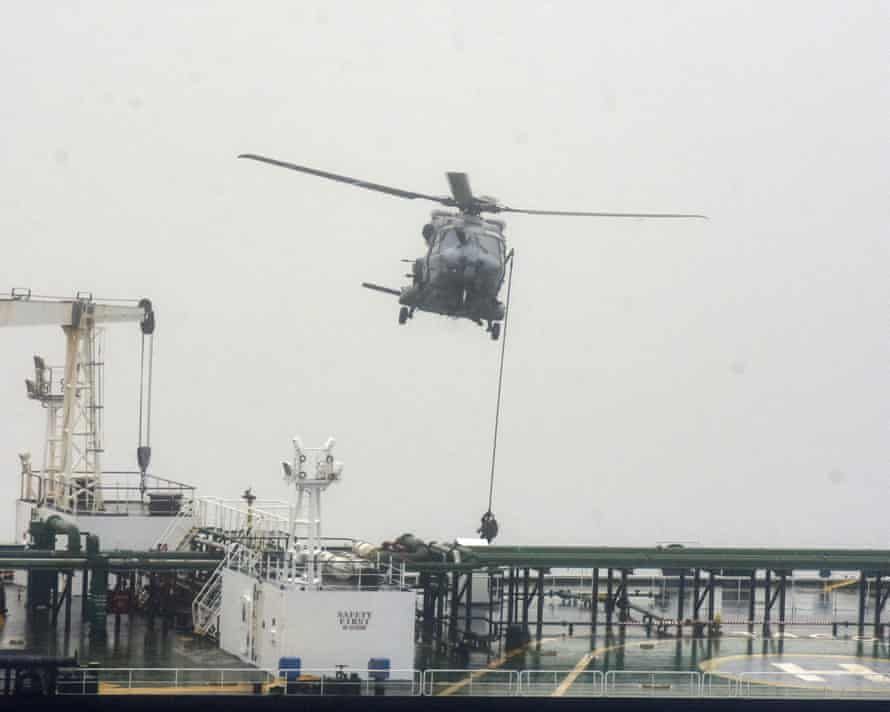
The operation took place more than 400 nautical miles west of Brittany in international waters, where French commandos descended from helicopters onto the vessel before conducting a detailed inspection.
According to French authorities, the ship was sailing from Murmansk in northwestern Russia and was allegedly operating under suspicious registration arrangements.

French Navy Seizes Russian Shadow Fleet Tanker During Atlantic Operation
The seizure marks one of the most significant maritime enforcement actions undertaken by France this year.
President Macron confirmed that the vessel was believed to be subject to international sanctions and accused it of attempting to circumvent maritime regulations.
Sharing footage of the operation, Macron stated:
“It is unacceptable for ships to circumvent international sanctions, violate the law of the sea, and finance the war that Russia has been waging against Ukraine for more than four years.”
The French leader emphasized that the operation was conducted in full compliance with international maritime law and with assistance from several allied nations.
French authorities said the mission focused on verifying the vessel’s nationality and registration after intelligence suggested irregularities in its documentation.
Why the Tanker Was Targeted
Investigators suspected that the vessel was operating under a false flag.
French maritime officials later confirmed that the tanker had been displaying a Cameroonian flag that authorities believed was invalid.
Following an inspection of onboard documents, officials concluded that the vessel’s registration status required further investigation.
A spokesperson for France’s Atlantic maritime prefecture explained:
“This operation was aimed at checking the nationality of a vessel suspected of flying a false flag.”
Authorities subsequently ordered the tanker to be diverted for additional checks.
Understanding Russia’s Shadow Fleet
The term “shadow fleet” refers to hundreds of vessels believed to be helping Russia transport oil and other commodities while avoiding Western sanctions.
These ships frequently engage in practices such as changing flags, altering ownership records and using complex corporate structures to obscure their activities.
Western governments argue that the network allows Russia to continue generating substantial revenues despite economic restrictions imposed after the invasion of Ukraine.
According to European officials, nearly 600 vessels connected to the shadow fleet are currently subject to sanctions.
How Shadow Fleet Ships Operate
Many of the vessels regularly switch national registrations, a practice known as “flag hopping.”
Others operate with incomplete documentation or under questionable ownership structures.
These tactics make it difficult for authorities to monitor shipping routes and enforce sanctions effectively.
Experts say the strategy has become one of Moscow’s most important tools for maintaining oil exports despite growing international pressure.
The detention of the Tagor demonstrates that Western governments are increasing surveillance and enforcement activities against these operations.
Russia Condemns the Seizure
The Kremlin reacted swiftly to France’s announcement.
Russian presidential spokesman Dmitry Peskov described the operation as unlawful and accused Western nations of overstepping international norms.
“We consider these acts as illegal. They border on international piracy,” Peskov said.
He also stated that Russia was taking measures to protect its cargo and maritime interests.
The strong response underscores the growing tensions between Moscow and European governments over sanctions enforcement.
Russia has consistently argued that many restrictions imposed by Western nations violate international trade principles and unfairly target its economy.
Russian Embassy Requests Clarification
Russia’s embassy in Paris confirmed that it had requested information from French authorities regarding any Russian citizens onboard the vessel.
Preliminary reports suggested that the ship’s captain may be a Russian national.
French officials stated that all 23 crew members remained safe during the operation.
No injuries were reported.
UK Support Highlights Growing Allied Cooperation
French officials revealed that the operation received support from the United Kingdom and other international partners.
Read also: US Strikes Iran Radar Sites as Kuwait Reports Missile Attack and Ceasefire Tensions Rise
The joint effort reflects increasing cooperation among Western allies in monitoring maritime activity linked to Russia.
Earlier this year, British Prime Minister Keir Starmer authorized UK armed forces to board vessels suspected of belonging to the shadow fleet.
That decision signaled a significant escalation in sanctions enforcement efforts.
A Coordinated Strategy Against Sanctions Evasion
Britain and France have emerged as leading advocates for stronger maritime enforcement measures.
Officials from both countries argue that sanctions can only remain effective if authorities actively prevent circumvention efforts.
Shipping data indicates that dozens of sanctioned vessels continue to operate in European waters despite restrictions.
As a result, governments have expanded surveillance, intelligence sharing and naval patrols.
The seizure of the Tagor may serve as a warning to other operators attempting to exploit legal loopholes.
France Expands Pressure on Sanctioned Vessels
The latest detention is not an isolated case.
French authorities have increasingly targeted ships suspected of links to Russia’s shadow fleet.
Since September, France has boarded several vessels believed to be operating under questionable registrations.
Some ships were released after paying fines, while others faced extended investigations.
In April, the French government announced plans to strengthen penalties against vessels that fail to display valid registration documents or refuse inspections.
Previous Maritime Operations
Among the most notable cases was the boarding of the Boracay, a tanker claiming registration in Benin.
French courts later issued legal actions against the vessel’s captain.
Authorities also detained the Grinch and Deyna tankers earlier this year as part of broader enforcement efforts.
These actions demonstrate a consistent strategy aimed at increasing pressure on operators linked to sanctions evasion.
Impact on Russia and the Global Oil Market
The crackdown on shadow fleet vessels could have broader economic implications.
Russia relies heavily on energy exports to generate government revenue.
Any disruption to shipping operations has the potential to affect export volumes and transportation costs.
Analysts believe intensified enforcement could make it more difficult for sanctioned vessels to access ports, insurance services and financial networks.
At the same time, energy markets continue to monitor developments closely.
Although the immediate impact on oil prices appears limited, sustained disruptions could affect global supply chains if enforcement actions become more widespread.
What Happens Next?
French authorities are expected to continue examining the vessel’s registration records and ownership structure.
Investigators will seek to determine whether the tanker violated international maritime regulations or sanctions requirements.
The outcome of the investigation could influence future enforcement actions across Europe.

The detention of the Tagor represents another major step in Western efforts to combat Russia’s shadow fleet and strengthen sanctions enforcement.
By intercepting a vessel suspected of operating under a false flag, France has sent a clear signal that governments are prepared to take increasingly aggressive measures against sanctions evasion.
As tensions between Russia and Western nations continue, maritime enforcement is likely to remain a crucial front in the broader economic and geopolitical struggle surrounding the Ukraine conflict.
Whether the operation results in additional legal action remains to be seen, but it has already become one of the most significant sanctions-related maritime incidents of 2026.
About The Author