

Nigeria’s push to reduce its long-standing dependence on crude oil earnings gathered fresh momentum as the Federal Government earmarked N881.13 million for capital projects of the Nigerian Export Promotion Council (NEPC) in the 2026 Appropriation Bill.
The allocation follows Nigeria’s strongest non-oil export performance in nearly five decades, with export receipts hitting $6.1 billion in 2025, according to official data compiled from pre-shipment inspection agencies.
The figure represents an 11.5 per cent increase from the $5.4bn recorded in 2024 and the highest level since the establishment of the NEPC almost 50 years ago.
Budget documents submitted to the National Assembly show that the new funding is designed to consolidate recent gains while expanding export infrastructure, certification, skills development, and market access across the country’s six geopolitical zones.
The intervention also aligns with the Federal Government’s broader economic strategy to diversify foreign exchange inflows, strengthen non-oil revenue streams, and improve Nigeria’s balance of trade amid persistent volatility in global oil markets.
FG allocates N881m to boost non-oil exports through targeted capital projects
A breakdown of the NEPC’s capital allocation reveals a deliberate focus on export-enabling infrastructure and institutional capacity.
The largest single allocation—N143.99 million—was earmarked for the establishment of export clusters, aggregation centres, and hubs across the six geopolitical zones.
These facilities are expected to help small and medium-scale exporters pool resources, standardise quality, and improve access to both regional and global markets.
Another N133 million was set aside for common facility centres and export skills acquisition hubs in four geopolitical zones, targeting high-potential regional products.
These centres are expected to provide shared processing equipment, packaging support, and technical training, particularly for agro-processing and light manufacturing exporters.
To strengthen internal efficiency, the Federal Government allocated N84 million for institutional strengthening within the NEPC, aimed at improving operational effectiveness, monitoring, and project delivery.
Export certification also received significant attention, with N77 million provided for the implementation of the NEPC’s “Go Global, Go Certification” initiative.
The programme seeks to help Nigerian exporters and SMEs meet international quality, safety, and traceability standards—one of the biggest barriers to accessing premium export markets.
AfCFTA, digital trade and women-led exports prioritised
In recognition of emerging trade opportunities, the budget includes N70 million each for the implementation of the African Continental Free Trade Area (AfCFTA), participation in international trade fairs and missions, and the development of Nigeria’s services export sector.
Another N70 million was earmarked for expanding SME exporters’ market access through e-commerce and digital trade platforms, reflecting growing global demand for digitally enabled cross-border commerce.
Sector-specific interventions were also included, such as N63 million for a standard trade development facility focused on sesame seed and cowpea, two agricultural commodities with strong export demand.
Additionally, N42 million was allocated to initiatives aimed at formalising informal cross-border trade and expanding exports led by women and youth-owned businesses, which officials say remain under-represented in formal trade statistics.
Smaller allocations included N49 million for the operationalisation and licensing of domestic export warehouses and N37.14 million for innovations in accounting and financial disclosure systems.
The lowest allocations—N21 million each—were provided for asset verification at NEPC headquarters and digital outdoor advertising to promote non-oil exports.
Speaking on the export figures, the Executive Director and Chief Executive Officer of the NEPC, Nonye Ayeni, described the 2025 performance as a landmark achievement for Nigeria’s non-oil sector.
She said the $6.1bn figure reflected documented formal trade and cut across agricultural commodities, processed and semi-processed goods, industrial inputs, services, and solid minerals.
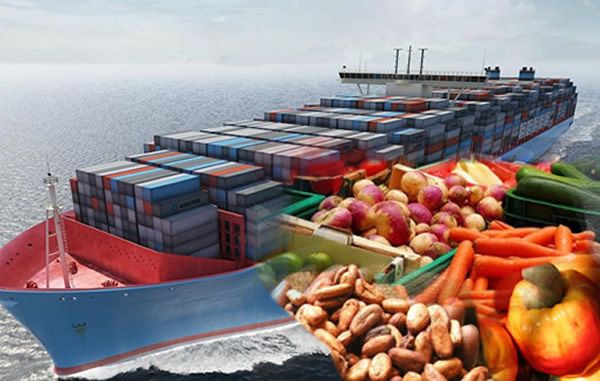
“This marks the highest non-oil export value achieved since the inception of the council nearly 50 years ago,” Ayeni said, adding that Nigeria exported 281 distinct non-oil products in 2025—an indication of gradual progress in value addition and integration into global value chains.
However, she cautioned that a significant volume of trade still occurs informally across land borders, suggesting that official figures may not fully capture Nigeria’s export potential.
Stakeholders call for deeper value addition
Industry stakeholders welcomed the N881m allocation but stressed that sustained growth will depend on value addition rather than volume expansion alone.
The Director-General of the Manufacturers Association of Nigeria, Segun Ajayi-Kadir, described the funding as encouraging but called for better data disaggregation to distinguish between raw, semi-processed, and manufactured exports.
“What is critical is whether these non-oil exports reflect real value addition,” he said, noting that processed exports create more jobs and are less vulnerable to global price shocks
Ajayi-Kadir also linked the issue to the proposed 30 per cent value-addition bill before the National Assembly, arguing that policy consistency would be key to long-term success.
Similarly, the National Vice President of the National Association of Small-Scale Industrialists, Segun Kuti-George, praised the NEPC’s role in training MSMEs and exposing them to international markets.
He noted that NEPC-supported trade missions and exhibitions across Africa had helped small businesses understand export requirements and access new buyers, describing the budgetary support as a step in the right direction.
Outlook: diversification with execution risks
While the FG allocation to boost non-oil exports signals growing policy seriousness, analysts note that effective implementation, transparency, and private-sector coordination will determine whether the funding translates into lasting economic gains.
With oil revenues still under pressure and foreign exchange demand rising, the success of Nigeria’s non-oil export strategy may prove critical to macroeconomic stability in the years ahead.
About The Author


