Danny Murphy urges Liverpool not to re-sign Trent Alexander-Arnold from Real Madrid as debate continues over whether the England international could one day return to Anfield following his high-profile departure.
The former Liverpool midfielder has strongly advised against any such move, arguing that elite clubs must focus on progression rather than revisiting the past.
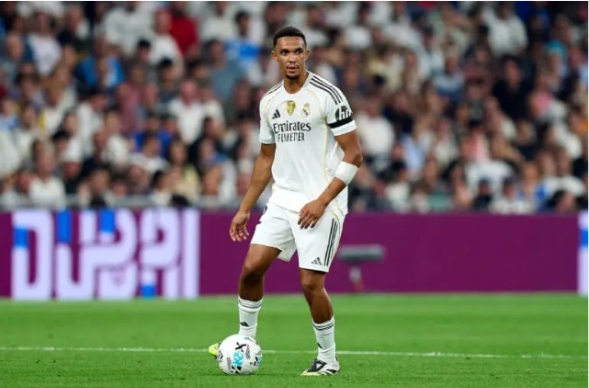
The Trent Alexander-Arnold return discussion has intensified since the defender completed his move to Real Madrid in June 2025, just weeks before his Liverpool contract expired.
His exit marked the end of a long and influential spell at the club, during which he developed from a local academy graduate into one of the most recognisable and tactically unique players in modern football.
Alexander-Arnold’s departure was met with mixed emotions among supporters. While many understood his desire for a new challenge after winning major honours in England and Europe, others viewed his exit as a significant loss to Liverpool’s identity, given his deep ties to the club and his role in shaping its tactical evolution.
Since moving to Spain, speculation around a potential Trent Alexander-Arnold return has surfaced intermittently, fuelled by Liverpool’s ongoing transition and the difficulty of replacing his creative influence from the right side of defence.
Murphy, however, believes such thinking is misplaced and risks undermining the club’s long-term planning.
Speaking to BestBettingSites, Murphy was unequivocal when asked whether Liverpool should consider bringing Alexander-Arnold back in the future.
He stressed that fan sentiment cannot outweigh football reality, particularly at a club operating at the highest level.
“No. I think that would be a difficult one to sell to the fans,” Murphy said. “Also, not many players go back to a former club and succeed.”
Murphy’s stance reflects a broader concern about nostalgia-driven decision-making in modern football.
According to the former England midfielder, clubs often underestimate how much circumstances change after a player departs, making reunions far more complicated than supporters might expect.
“The succession plan has to be about moving forward and evolving the team,” he added. “So no, I don’t think that would work.”
Alexander-Arnold’s role at Liverpool was highly specialised. Over several seasons, he redefined the full-back position by operating as a primary playmaker, frequently drifting into midfield zones to dictate tempo and create chances.
His passing range, vision, and set-piece delivery made him a central figure in Liverpool’s attacking structure.
Following his departure, Liverpool were forced into a tactical rethink. Rather than attempting to replace Alexander-Arnold like-for-like, the club opted for a more collective approach, redistributing creative responsibility across the team.
Murphy believes this shift is essential for long-term growth and should not be compromised by reopening the door to former players.
The former midfielder also highlighted the psychological burden often placed on players who return to previous clubs. In such scenarios, supporters and media tend to compare performances against memories of peak seasons, creating unrealistic expectations that are difficult to meet.
Murphy argued that even world-class players can struggle under those conditions, particularly when the club’s structure, leadership, and playing style have evolved in their absence.
He suggested that Liverpool, now operating under different circumstances than during Alexander-Arnold’s peak years, would not offer the same environment that previously allowed him to thrive.
The Trent Alexander-Arnold return debate also raises questions about identity and ambition. By choosing to join Real Madrid, Alexander-Arnold signalled his desire to test himself in a new league and culture after achieving success in England.
Murphy believes that decision should be viewed as a definitive step forward rather than a temporary detour.
From Liverpool’s perspective, Murphy insists the focus must remain on building a squad capable of sustained success rather than chasing familiarity.
He warned that looking backwards can slow progress, especially during periods of transition when clarity of direction is crucial.
Liverpool’s recruitment strategy in recent seasons has increasingly emphasised adaptability, youth development, and tactical flexibility.
Murphy sees this as evidence of a club preparing for the future, and he believes reopening discussions around former players risks sending mixed signals internally.
Alexander-Arnold’s legacy at Liverpool, Murphy stressed, should remain intact and respected without the need for a reunion.
The former midfielder argued that not every great player needs to return to validate their impact, particularly when their departure was driven by ambition rather than decline.
Read also: Manchester United denied Ruben Neves swoop with Al-Hilal set to secure new deal
He also suggested that fans should embrace the idea that Liverpool’s next era will be defined by new leaders and new systems, rather than attempts to recreate the past.
According to Murphy, progress depends on accepting change, even when it involves letting go of iconic figures.
As Alexander-Arnold continues his career in Spain and Liverpool press forward with their evolving project, Murphy’s message is clear. The club’s future success will depend not on revisiting former solutions but on fully committing to the next phase of development.
About The Author