Oyo State achieves record-breaking ₦103 billion IGR through AI, technology, and data-driven governance, showing innovation transforms public service and journalism.
Oyo State has recorded a historic milestone in governance, generating ₦103 billion in Internally Generated Revenue (IGR) in 2025, surpassing the total revenue of the previous two administrations combined.
The state government attributes this exceptional performance to strategic deployment of Artificial Intelligence in governance, data analytics, and modern technology, which have streamlined operations and enhanced accountability across ministries and agencies.
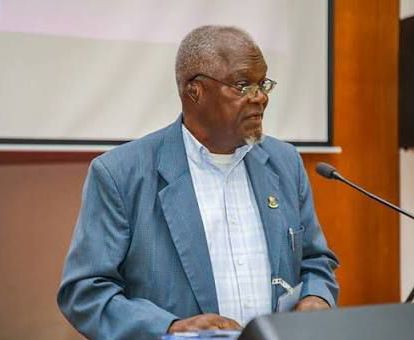
Prince Dotun Oyelade, the Oyo State Commissioner for Information, emphasized the significance of these reforms while addressing journalists at a two-day Artificial Intelligence training organized by the Nigeria Union of Journalists (NUJ).
The event, held at the American Open University, Global Campus, Ibadan, was designed to equip media professionals with modern tools for responsible reporting in an era of rapid technological advancement.
“The Seyi Makinde-led administration has achieved this historic revenue milestone without increasing taxes, relying instead on digitization and technology-driven processes,” Prince Oyelade explained.
He highlighted the Ministry of Lands, Housing, and Urban Development as a model agency where AI-powered systems have blocked financial leakages, reduced fraud, and broadened the state’s economic base.
Such initiatives, he added, demonstrate that transparency and innovation are central to sustainable governance.
Read also: Ilẹra Bọ̀kú: 7.5% deduction imposed on Oyo State civil servants for health insurance
According to Prince Oyelade, the state’s success is a testament to the opportunities presented by technology.
He urged journalists to embrace Artificial Intelligence in journalism, adopting similar strategic approaches to enhance accuracy, credibility, and efficiency in news reporting.
Describing the training program as epochal, the Commissioner emphasized its timeliness, especially in a global media landscape challenged by corruption, misgovernance, and undemocratic tendencies.
He noted that AI offers a powerful tool to strengthen investigative reporting, verify information rapidly, and restore public trust in media institutions.
“Studies show that Artificial Intelligence is not just a futuristic tool, it is already essential to modern journalism,” Prince Oyelade added.
“By responsibly leveraging AI, journalists can expand the scope of their reporting while maintaining ethical standards and public confidence.”
Delivering a keynote lecture titled “Empowering Journalists with Artificial Intelligence for Ethical, Innovative, and Future-Ready Journalism,” the Vice Chancellor of the American Open University, Prof. Seyi Akanbi, described AI as a strategic necessity for contemporary media professionals.
He explained that Artificial Intelligence is redefining how news is gathered, verified, and disseminated.
At the same time, it presents challenges such as deepfakes, algorithmic bias, and automated misinformation that journalists must learn to detect and manage.
Prof. Akanbi stressed that mastering AI tools will allow journalists to enhance investigative reporting, provide real-time analysis, and improve audience engagement.
“Artificial Intelligence is transforming the newsroom from a reactive environment to a proactive, analytical hub where information is accurate, timely, and impactful,” he said.
Echoing this sentiment, Comrade Akeem Abbas, Chairman of the NUJ Oyo State Council, described AI as an urgent and indispensable tool for journalists.
He urged media practitioners to embrace technology fully to maintain relevance and effectiveness in their constitutional watchdog role.
According to Abbas, integrating AI into journalism will not only improve reporting but also strengthen democratic governance by enabling citizens to access credible information.
The event also highlighted the link between Oyo State’s governance achievements and opportunities for journalists.
The administration’s adoption of AI in public service illustrates how strategic innovation can enhance efficiency, reduce corruption, and increase transparency.
By leveraging technology, the state has created a model for other governments to emulate, demonstrating that modern governance and economic growth are achievable without overburdening citizens with taxes.
Prince Oyelade further emphasized that AI and data-driven approaches are transforming governance beyond revenue collection.
“Artificial Intelligence allows ministries to monitor resources, track development projects, and detect inefficiencies, ensuring that public funds are deployed effectively for the benefit of all citizens,” he said.
This model of innovation, he noted, positions Oyo State as a leader in technology-driven governance in Nigeria.
Oyo State’s ₦103 billion IGR achievement is not merely a financial milestone—it is proof that Artificial Intelligence in governance can revolutionize public administration.
Similarly, the AI training for journalists underscores the potential of technology to strengthen media integrity and professionalism.
As Oyo State demonstrates, innovation, digitization, and ethical technology use are key to sustainable development, transparent governance, and credible journalism in the modern era.
Ireport247news
About The Author