

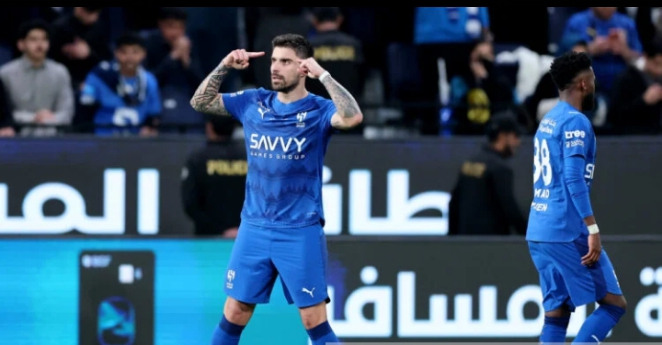
Manchester United have seen potential January plans disrupted, with Man Utd denied Ruben Neves swoop after Al-Hilal took decisive steps to secure the Portugal international on an improved long-term contract.
The development effectively ends any prospect of a mid-season move and underlines the growing difficulty Premier League clubs face when targeting established players based in Saudi Arabia.
The January transfer window is now entering its closing stages, and Manchester United remain without a senior addition despite ongoing internal discussions.
While recruitment staff have explored several options across midfield and attack, negotiations at this point in the season remain complex, particularly when clubs are reluctant to weaken key positions during active campaigns.
United have previous experience of operating successfully in the winter market. Last season saw the arrivals of Ayden Heaven and Patrick Dorgu, both of whom went on to contribute positively after being integrated into the first-team setup.
Those deals demonstrated that January signings can still deliver value when carefully targeted, though similar opportunities have been harder to identify this time around.
The club’s focus this month has been on reinforcing the midfield. United explored a January approach for Carlos Baleba before missing out on Antoine Semenyo, reinforcing the view that central areas are the priority.
Improving ball retention, defensive stability and progression from deep positions has been identified as essential as the fixture schedule intensifies.
Ruben Neves emerged as a player who fit that profile. His experience in English football, combined with his leadership qualities and technical reliability, made him an appealing option.
Familiarity with the Premier League’s pace and physical demands was seen as a significant advantage compared to other overseas-based targets.
However, Al-Hilal’s position remained firm throughout. The Saudi club have consistently viewed Neves as integral to their sporting project and were unwilling to engage in negotiations.
That stance was reinforced by swift contractual action, with discussions over an improved deal concluded before external interest could develop further.
The new agreement reflects Neves’ importance to Al-Hilal’s long-term ambitions. Enhanced financial terms and extended security were offered as part of a broader strategy focused on continuity rather than player turnover.
The club is keen to maintain stability in key areas as it pursues further domestic success and continental competitiveness.
Neves has been a consistent presence since his arrival, becoming a central figure in midfield operations.
His passing accuracy, positional discipline and composure under pressure have allowed Al-Hilal to control matches, while his ability to strike from distance continues to add a threat from deep areas.
Performance data highlights his influence. Neves regularly ranks among the team’s leaders for completed passes, interceptions and chances created from central zones. His tactical awareness has also provided balance, enabling more advanced players to operate with greater freedom.
There has been no indication of dissatisfaction from the player’s side. Those close to the situation suggest Neves remains settled and fully committed.
His public comments since the move have emphasised ambition and adaptation, aligning with Al-Hilal’s vision of sustained growth rather than short-term visibility.
For Manchester United, the setback illustrates the evolving realities of the global transfer market. Saudi Pro League clubs are no longer temporary destinations but increasingly stable environments capable of retaining high-profile players.
Competitive wages, long-term planning and on-field ambition have reshaped traditional transfer hierarchies.
United decision-makers are now reassessing their January strategy.
While midfield remains a priority, there is an understanding that any late move must align with both immediate needs and long-term objectives. Short-term loans and versatile squad additions remain under consideration, though options are narrowing as the deadline approaches.
Attention has also been given to the attacking department. While Bryan Mbeumo, Matheus Cunha and Benjamin Sesko have provided attacking output, additional depth is being evaluated to manage rotation demands and injury risk.
However, resources are being carefully allocated, with midfield reinforcement still seen as the more pressing concern.
The club’s approach has been measured rather than reactive.
There is an awareness that rushed decisions in January can create longer-term complications. Maintaining squad balance, wage structure discipline and transfer flexibility ahead of the summer window remains a central consideration.
Supporter response has reflected that balance. While some disappointment exists over missing out on a player of Neves’ calibre, there is also recognition that securing such a deal mid-season was always unlikely. The emphasis among many observers has shifted toward longer-term planning and strategic recruitment.
From Al-Hilal’s perspective, retaining Neves sends a clear signal. The club is intent on building continuity and leadership within the squad, resisting external pressure to sell key players.
This approach is increasingly common among leading Saudi clubs seeking sustained success rather than short-term impact.
As the January window draws closer to its conclusion, Manchester United face familiar decisions. Whether to pursue a late opportunity, hold firm and wait for summer, or rely on internal solutions will define the final days of the window.
Read also: Liverpool transfer news: Jeremy Jacquet, Adam Wharton, Qarabag preview
What remains clear is that Man Utd denied Ruben Neves swoop is not an isolated incident. It reflects broader changes in football’s transfer landscape, where competition for elite midfielders is intensifying and traditional market assumptions are being challenged.
For United, adaptability will be crucial. Recruitment strategies must evolve alongside global market shifts, ensuring that squad development continues without compromising long-term stability.
As attention turns toward the final days of the window, the focus will remain on whether United can translate intent into action. While the door has closed on Neves, the search for midfield solutions continues, shaped by patience, pragmatism and the realities of a rapidly changing transfer environment.
About The Author


