Progress in the Gaza ceasefire negotiations has faltered amid escalating disputes over Hamas disarmament, with Israeli officials warning that failure to comply could trigger a return to full-scale war.
The second phase of the US-brokered truce, which began in January, was designed to centre on Hamas disarmament, the withdrawal of Israeli forces, and the installation of a Palestinian interim administration supported by an international stabilisation force.
The 20-point framework, overseen by US President Donald Trump’s newly formed Board of Peace, remains unclear on sequencing.
Israeli leaders insist that Hamas must surrender its weapons before any further political or military steps are taken, while Hamas and regional mediators argue that disarmament must be part of a phased and reciprocal process.
Far-right Israeli finance minister Bezalel Smotrich has said Hamas would soon face an ultimatum to fully demilitarise Gaza. According to him, the demand would be backed by Washington and include a strict timeline. If rejected, he suggested the Israel Defense Forces would resume operations with international backing.
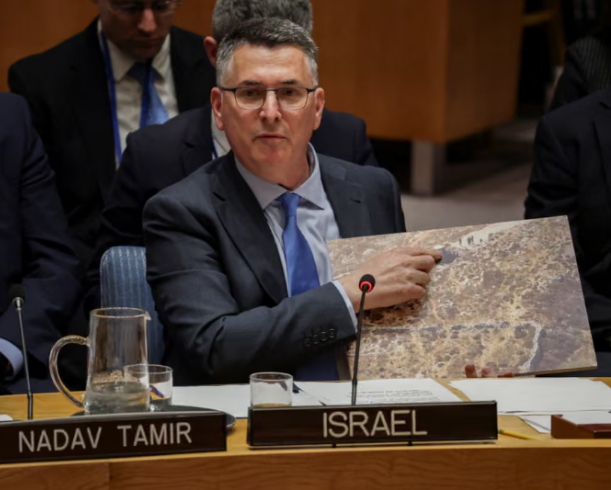
Israeli foreign minister Gideon Saar reportedly told security officials that Trump would soon formalise the ultimatum.
However, the US president did not publicly reference the issue in his recent State of the Union address, focusing instead on hostage recoveries and broader diplomatic efforts.
At the heart of the deadlock is disagreement over how Hamas disarmament should unfold. Israeli officials have been briefing local media that a 60-day deadline may be imposed.
Reports suggest Hamas would be required to submit an inventory of heavy weapons and maps of its tunnel networks before gradually surrendering arms over several months.
However, experts question whether the Palestinian technocratic body tasked with administering post-war Gaza is prepared to manage such a transition.
The National Committee for the Administration of Gaza, currently based in Cairo, has yet to establish operational authority inside the territory. Funding delays, recruitment vetting, and security arrangements remain unresolved.
Military analysts argue that without a credible enforcement mechanism or clear guarantees of Israeli withdrawal, Hamas is unlikely to relinquish what it sees as its primary leverage.
Michael Milshtein of Tel Aviv University has described some of the reported proposals as “wishful thinking,” suggesting the plan may underestimate the political and security complexities on the ground.
Regional Divisions on Disarmament Model
Regional actors are also divided. Egypt and Saudi Arabia are said to favour a phased decommissioning model inspired by Northern Ireland’s peace process, involving oversight by an independent commission and parallel disarmament of all armed factions.
Conversely, the United Arab Emirates reportedly supports Israel’s insistence on complete Hamas disarmament before other steps proceed.
Muhammad Shehada of the European Council on Foreign Relations believes Hamas might consider freezing or decommissioning offensive weapons such as rockets while retaining limited light arms under strict supervision. Such a compromise, he argues, could prevent internal instability during a fragile political transition.
Read also: Myanmar military air strike in Rakhine kills 17 civilians at village market
Yet Israel’s leadership appears sceptical of partial measures. Smotrich has previously stated that if disarmament fails, Israel could ultimately occupy Gaza and establish settlements there, signalling the potential collapse of the peace initiative.
The Board of Peace held its first working session in Washington last week, but it did not clarify the disarmament roadmap. Meanwhile, preparations continue for an international stabilisation force, with several countries offering troops.
However, contributing nations reportedly resist any mandate requiring them to forcibly confiscate Hamas weapons.
Hamas officials, according to Israeli media reports, believe Israel intends to resume military operations regardless of concessions, reinforcing their reluctance to disarm unconditionally.
Analysts warn that without mutual guarantees and careful sequencing, the current impasse over Hamas disarmament could derail the broader Gaza peace plan.
HA Hellyer of the Royal United Services Institute has argued that making the entire political process contingent on immediate disarmament risks collapsing phase two of the agreement.
If the standoff continues, the ceasefire that began in January may give way once again to renewed violence.
With humanitarian conditions in Gaza still dire and reconstruction barely underway, the stakes surrounding Hamas disarmament extend far beyond military calculations.
Whether negotiators can reconcile sequencing disputes and rebuild trust will likely determine whether the fragile truce evolves into a sustainable peace or dissolves back into conflict.

About The Author