Nigeria’s Dangote Refinery has assured that the ongoing strike by fuel tanker drivers will not disrupt the supply of petrol nationwide, dismissing fears of an imminent fuel shortage.
Speaking to journalists on Tuesday, the refinery’s spokesman, Anthony Chiejina, said operations at the refinery remain unaffected, with supply to retail outlets continuing as planned.
“There is no fuel shortage, everything is going on,” Chiejina said, stressing that negotiations are ongoing between the union, the federal government, and the company.
The strike, which began on Monday, was declared by the Nigeria Union of Petroleum and Natural Gas Workers (NUPENG), one of the country’s most powerful oil and gas unions.

The action has since drawn backing from the Nigeria Labour Congress (NLC) and international groups, including the global union IndustriALL in Switzerland and the International Lawyers Assisting Workers Network in Washington, D.C.
NUPENG accused the refinery of employing drivers on the condition that they would not join the union, a claim Dangote has strongly denied.
According to NUPENG president Williams Akporeha, the company’s approach was designed to weaken organized labour in the oil and gas transport sector.
“What Dangote has shown over time is that he’s not prepared to have workers that will have a say in his employment,” Akporeha said in an interview with Arise News.
In response, Dangote described the allegation as “cheap blackmail,” maintaining that the company had not barred any employee from joining unions.
“It’s not true. Nobody has done that, and nobody ever has,” Chiejina insisted.
Commissioned in 2023, the 650,000 barrels per day Dangote Refinery is the largest in Africa and a game-changer for Nigeria’s downstream oil sector.
Before its launch, Nigeria—despite being a top oil producer—relied heavily on imported petrol due to years of neglect and underperformance of state-owned refineries.
The refinery has since reduced petrol prices for consumers, disrupted long-standing oil import monopolies, and positioned Nigeria as a potential exporter of refined products.
However, its dominance has also raised concerns about monopoly power, given the scale of its operations and its backing by Africa’s richest man, Aliko Dangote.
In a bid to modernize fuel distribution, Dangote Refinery recently announced plans to deploy thousands of compressed natural gas (CNG)-powered trucks nationwide.
The initiative is expected to lower transportation costs, reduce environmental pollution, and cut Nigeria’s dependence on imported diesel-powered tankers.
However, the rollout has faced logistical delays, sparking unease among existing operators.
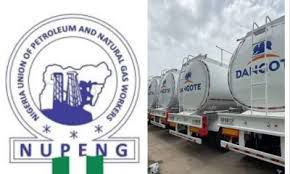
For decades, more than 20,000 diesel-powered tankers have dominated fuel haulage in Nigeria, creating vested interests that feel threatened by Dangote’s disruptive model.
Industry observers note that the refinery’s move into direct distribution could reshape the entire supply chain, potentially phasing out older fleets while boosting the use of alternative fuels.
While Dangote insists the strike will not disrupt supplies, energy experts warn that prolonged labour disputes in Nigeria’s fuel distribution chain have historically triggered scarcity, panic buying, and black-market price hikes.
According to Dr. Samaila Bello, an oil and gas policy analyst based in Abuja, the situation must be carefully managed:
“Even if Dangote has capacity, strikes of this nature send signals that can unsettle the market. Government must broker a fair settlement to ensure both labour rights and energy security.”
The federal government has so far maintained a cautious stance, calling for dialogue between the parties. Nigerians, weary of past episodes of fuel scarcity, are closely watching developments.
For many consumers, the refinery’s assurances are welcome, but skepticism remains. In Lagos, a civil servant, Mrs. Chinyere Okeke, expressed mixed feelings:
“It’s good that Dangote says there will be no scarcity, but Nigerians have suffered too many fuel crises in the past. We need action, not just promises.”
Industry experts believe the strike highlights the tension between traditional fuel unions and new private-sector giants like Dangote.

If not carefully resolved, the dispute could escalate into a wider confrontation with organized labour, potentially threatening the refinery’s ambitious distribution plans.
Still, Dangote Refinery remains optimistic, emphasizing its commitment to ensuring stable fuel supply across the country while expanding modern infrastructure for energy delivery.
As Nigeria pushes to diversify its energy mix and strengthen fuel security, the refinery’s ability to navigate union resistance and logistical challenges will be crucial in shaping the future of the country’s oil and gas sector.
About The Author