Kathmandu, Nepal– In a dramatic turn of events, Nepal’s Prime Minister Khadga Prasad Sharma Oli has resigned, a day after deadly protests over alleged government corruption and social media censorship claimed 19 lives.
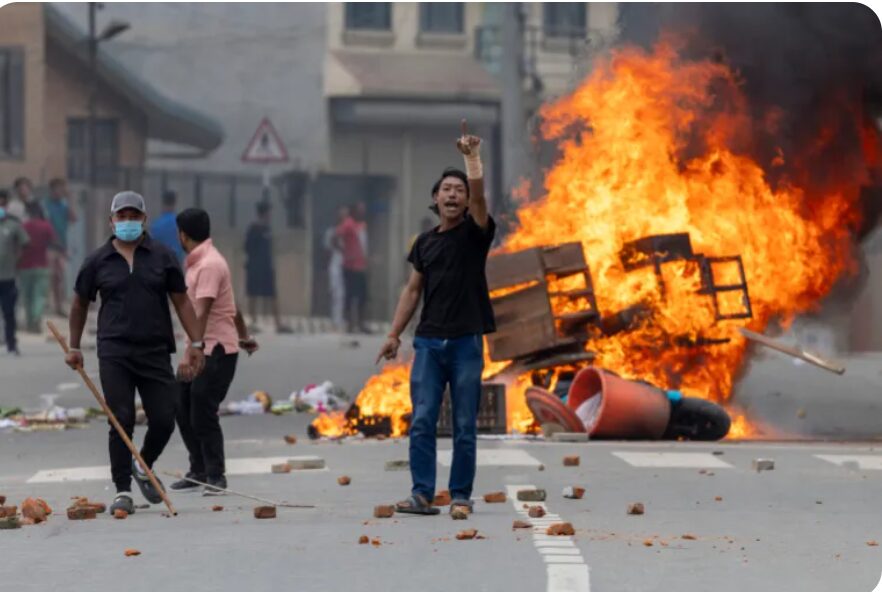
The protests, led by Gen Z demonstrators, saw widespread unrest across the country, with protesters defying a curfew and clashing with security forces.
The situation escalated when protesters broke into the parliament building and set it on fire, prompting the government to close the Kathmandu International Airport.
The government’s decision to ban 26 social media platforms, citing non-compliance with regulatory requirements, sparked the protests. However, the protesters saw this as an attempt to stifle dissent and curtail freedom of speech.
“We need to topple this government, we demand mass resignation, and we want them out. This is our country,” said Anil Baniya, one of the protest organizers.
The protesters are not just demanding the lifting of the social media ban but also calling for broader change, including accountability for corruption and police violence.
Yugant Ghimire, a 27-year-old AI engineer who participated in the protest, said, “we are tired of the same old faces. The government is on a power trip, there is rampant corruption, no one is accountable.”
Home Minister Ramesh Lekhak had resigned on Monday, citing moral responsibility for the deaths during the protests.

The government has since lifted the social media ban, with Minister for Information and Communication Technology Prithvi Subba Gurung saying, “it has been decided to open the social networks as there is an agitation using this as an excuse.” However, the protesters remain resolute, with many calling for the government to dissolve.
Despite PM Oli’s resignation, it is unclear whether the protesters will stop demonstrating. Many are calling for more significant changes, including the dissolution of the government.
Kathmandu Mayor Balendra Shah has called for restraint from the protesters, saying, “Your murderer has resigned.” However, the protesters remain determined to bring about change.
Ramyata Limbu, a Nepali journalist in Kathmandu, described the situation as “a bit disturbing, a bit concerning, and for now, there seems to be no one in charge.” The heads of six security organizations have released a statement in an attempt to calm the situation, but the unrest continues.
As the situation unfolds, the international community is watching closely. Air India has cancelled its flights to Kathmandu, citing safety concerns.
The United Nations Office of the High Commissioner for Human Rights and Amnesty International have condemned the killings and called for transparent investigations into the events.

With Nepal having experienced 13 governments since 2008, the current unrest raises questions about the country’s stability and future.
About The Author