Nigeria’s state-owned oil company, Nigerian National Petroleum Company Limited, is considering a deal that could hand Chinese investors majority stakes in the Port Harcourt and Warri refineries, marking a potentially historic shift in the ownership and management of Nigeria’s downstream oil sector.
The proposed arrangement follows the signing of a memorandum of understanding between NNPC and Chinese firms Sanjiang Chemical Company Limited and Xinganchen (Fuzhou) Industrial Park Operation and Management Co., Ltd. during a meeting in Jiaxing City, China, on April 30.
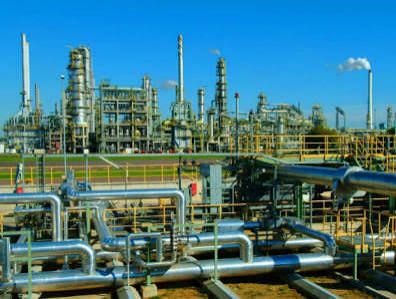
The agreement was signed by NNPC Group Chief Executive Officer Bayo Ojulari alongside executives from both Chinese companies.
But beyond the signing ceremony itself, the real significance lies in the structure now being discussed behind closed doors.
According to sources familiar with the negotiations, the partnership is being designed around an “NLNG-style” model that could allow the Chinese firms to hold up to 51% equity stakes in the Port Harcourt and Warri refineries while participating directly in operations, governance and long-term commercial management.
If finalised, the deal would represent a dramatic shift away from Nigeria’s traditional refinery rehabilitation model, where foreign firms acted mainly as contractors, toward a structure that gives external investors direct ownership and operational control over strategic refining assets.
The possibility of foreign investors holding majority stakes in strategic refining assets is also likely to trigger political and public debate in Africa’s largest oil producer, where refinery ownership has long been tied to national energy sovereignty and economic independence.
The move also reflects mounting pressure on the Nigerian government to finally solve a refinery crisis that has persisted for decades despite billions of dollars spent on repairs, turnaround maintenance and rehabilitation programmes.
For Nigeria, the discussions reflect a broader economic contradiction: despite being Africa’s largest crude oil producer, the country still relies heavily on imported refined petroleum products.
For many analysts, the discussions amount to an implicit acknowledgement that previous state-led refinery management efforts have failed to deliver commercially viable results.
Why the Chinese stake in Port Harcourt and Warri refineries matters
Nigeria remains Africa’s largest crude oil producer, yet the country has struggled for years to refine enough petroleum products locally.
Despite owning multiple state refineries, Nigeria has continued importing large volumes of refined fuel due to chronic operational failures, poor maintenance, underinvestment and governance issues affecting the downstream sector.
The Port Harcourt and Warri refineries have repeatedly undergone rehabilitation efforts without achieving sustainable production levels.
Nigeria has spent billions of dollars over the past decade attempting to revive its state-owned refineries, which together have installed refining capacity exceeding 400,000 barrels per day.
The Port Harcourt refinery alone underwent a $1.5 billion rehabilitation programme approved in 2021, while separate rehabilitation work was also initiated at the Warri and Kaduna refineries.
Despite those investments, Nigeria continued importing large volumes of petrol and other refined products, placing sustained pressure on foreign exchange reserves and exposing the economy to global fuel price volatility.
Successive governments approved billions of dollars for refinery repairs, but the facilities continued operating far below installed capacity or remained inactive for extended periods.
That long-running crisis has had serious economic consequences.
Nigeria spends huge amounts of foreign exchange importing refined petroleum products while simultaneously exporting crude oil — a contradiction that has weakened the naira, increased subsidy pressures and exposed the country to international fuel price shocks.
Fuel imports have remained one of Nigeria’s largest sources of foreign exchange demand for years, contributing to pressure on the naira during periods of high global oil prices and supply disruptions.
The proposed Chinese partnership is therefore being viewed not merely as another rehabilitation project, but as a potential restructuring of how Nigeria manages strategic energy infrastructure.
Under the emerging framework, the Chinese firms are expected to participate in completing outstanding engineering and rehabilitation work at both refineries while also helping improve operational efficiency, refinery reliability and fuel production standards.
The broader plan reportedly includes petrochemical integration, industrial expansion and gas-based projects around the refinery complexes.
Industry insiders say the model closely mirrors the structure of Nigeria LNG Limited, where foreign investors maintain majority ownership and participate actively in governance and operations.
That structure has long been viewed as one of Nigeria’s more successful energy-sector business models because it insulated operations from many of the political and bureaucratic inefficiencies that affected state-run enterprises.
Shift from contractor model to equity ownership
One of the most important aspects of the discussions is the transition from a conventional engineering contractor arrangement to a long-term equity partnership.
In previous refinery rehabilitation efforts, foreign companies were typically hired to repair facilities and complete engineering work before handing operations back to NNPC.
The new model changes those incentives entirely.
By taking ownership stakes, the Chinese investors would have a direct financial interest in ensuring the refineries remain commercially viable, efficient and profitable over the long term.
Energy analysts say that distinction could significantly alter operational accountability.
Executive Secretary of the Major Energies Marketers Association of Nigeria, Clement Isong, said the equity structure could improve sustainability because investors would now be motivated by long-term returns rather than short-term project completion.
“The key difference is that the investors become part-owners of the refinery and therefore have a direct commercial interest in ensuring the facilities work efficiently,” Isong said.
Supporters of the model argue that Nigeria’s refinery problems were never purely technical.
Instead, they say the deeper challenge has always been governance, operational discipline and the absence of commercial incentives within state-controlled systems.
The proposed arrangement seeks to address that by introducing external technical and financial partners with direct equity exposure.
Growing Chinese influence in Nigeria’s energy sector
The discussions also highlight China’s expanding footprint across Nigeria’s energy and infrastructure sectors.
Chinese firms already play major roles in Nigerian rail, power and industrial projects through financing agreements, engineering contracts and infrastructure partnerships.
A successful refinery agreement would deepen that presence within Nigeria’s downstream petroleum industry at a strategically sensitive moment for the country.
The timing is particularly significant because Nigeria is attempting to reposition its refining sector following the emergence of the Dangote Refinery, which has already altered conversations around fuel supply, import dependence and domestic refining capacity.
The Dangote refinery’s entry into the market intensified pressure on NNPC to demonstrate that state-owned refining assets can remain commercially relevant in a changing downstream environment.
Some analysts believe the proposed Chinese partnership reflects broader recognition within government circles that Nigeria can no longer sustain endless refinery rehabilitation cycles without achieving measurable operational results.
Concerns over ownership and strategic control
Despite potential economic benefits, the possibility of foreign investors holding majority stakes in national refining assets is likely to trigger political and public debate.
Critics may view the arrangement as a form of indirect privatisation or a surrender of strategic national infrastructure to foreign interests.
Others are expected to question whether Nigeria risks losing influence over critical energy assets if operational control shifts substantially to external partners.
Those concerns could become more politically sensitive given Nigeria’s history of public resistance to privatisation debates involving key national assets.
However, supporters of the deal argue that ownership percentages matter less than operational outcomes.
From that perspective, functioning refineries that reduce fuel imports, improve domestic supply and lower economic pressure would ultimately provide greater national value than state-owned facilities that remain inefficient or inactive.
For the government, the political challenge may now lie in balancing national ownership concerns with urgent economic realities.
How the refinery partnership could affect fuel imports, forex and energy security
If implemented successfully, the partnership could carry major implications for Nigeria’s economy.
Improved domestic refining capacity could reduce pressure on foreign exchange reserves by cutting fuel import costs.
It could also strengthen energy security, improve supply stability and support industrial activity linked to petrochemicals and gas processing.
Additional refining output may help stabilise local fuel markets while creating jobs across logistics, engineering, manufacturing and industrial services connected to refinery operations.
The development of co-located petrochemical and gas-based industrial hubs could also generate new investment opportunities beyond fuel production itself.
But much depends on execution.
Nigeria’s refinery sector has seen multiple reform announcements over the years without delivering lasting operational transformation.
Investors, industry stakeholders and financial markets will therefore closely watch whether the current discussions progress beyond memorandums and preliminary agreements into binding commercial arrangements backed by measurable implementation timelines.
For now, the proposed Chinese partnership signals a growing willingness within NNPC to explore commercially driven alternatives after years of refinery underperformance.
People familiar with the discussions said the memorandum of understanding remains non-binding at this stage, with technical, financial, operational and legal due diligence expected before definitive agreements are signed.
Any final transaction would also require regulatory approvals and could take months of negotiations before implementation begins.

Whether the proposed partnership ultimately succeeds may depend less on the signing of agreements and more on whether Nigeria can finally break a decades-long cycle of refinery rehabilitation failures, policy reversals and operational inefficiencies that have left Africa’s largest oil producer dependent on imported fuel.
For investors, policymakers and consumers alike, the stakes extend beyond refinery ownership. The outcome could influence Nigeria’s energy security, foreign exchange stability and industrial competitiveness for years to come.
Read more @ireport247news
About The Author