

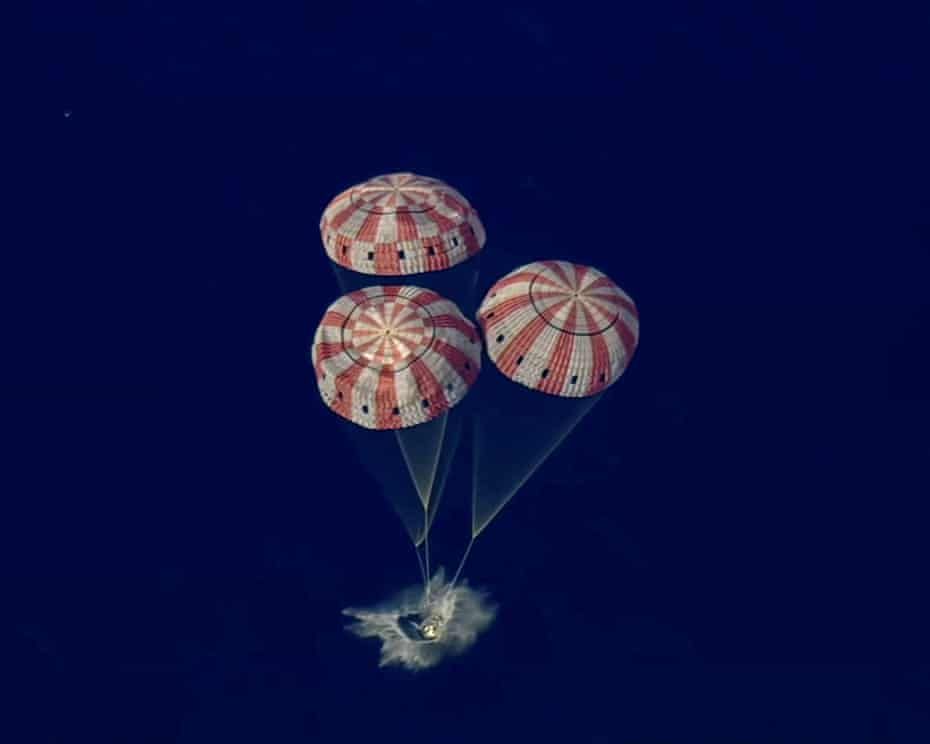
Artemis II astronauts return safely to earth-The Artemis II astronauts return has marked a defining moment in modern space exploration, as NASA successfully brought humans back from deep space travel beyond Earth orbit for the first time in more than half a century.
The crew aboard NASA’s Orion spacecraft splashed down safely in the Pacific Ocean near San Diego after completing a lunar flyby mission designed to test human and spacecraft performance in deep space conditions. Recovery teams later transported the astronauts to Houston for medical checks and post-mission analysis.
For many watching around the world, the return was more than a technical success—it was a reminder that humanity is once again capable of venturing far beyond its home planet and returning safely.
A moment that feels bigger than a mission
At its core, Artemis II is not just about reaching space—it is about re-establishing human confidence in deep space travel.
NASA confirmed that all major mission objectives were achieved, including spacecraft navigation, life-support stability, radiation exposure monitoring, and crew safety during extended space travel.
A NASA mission official described it simply: “This mission proves we are ready to move beyond Earth orbit again.”
That statement carries weight because it signals a shift from experimental spaceflight to repeatable deep space capability.
Global space competition quietly intensifies
While Artemis II is a scientific milestone, it also sits within a broader global context of renewed space competition.
The United States continues to lead the Artemis program, while other space powers advance parallel lunar exploration efforts aimed at long-term presence and technological positioning beyond Earth.
However, unlike the Cold War space race, today’s competition is less about symbolic firsts and more about infrastructure, sustainability, and long-term capability in space.
Africa and the Global South: the overlooked dimension
One of the most underreported aspects of Artemis II is its indirect relevance to Africa and other developing regions.
Although African nations are not currently involved in crewed lunar missions, they are deeply connected to space systems through satellite communication, climate monitoring, agriculture data, and navigation infrastructure.
A space policy analyst noted: “Space is no longer separate from development. It directly affects how countries access information, communicate, and grow economically.”
This means Artemis II is not only a space milestone—it is part of a global system that increasingly shapes digital access and technological inequality.
The economic ripple effect of space missions
Beyond exploration, Artemis II reflects a growing economic reality: space missions now drive technological innovation on Earth.
Advances developed for deep space travel—such as radiation shielding, autonomous systems, energy efficiency, and environmental control—often transfer into industries like aviation, healthcare, telecommunications, and clean energy.
A technology economist explained: “Space programs are no longer isolated scientific efforts. They are innovation engines for entire economies.”
Data as a new strategic resource
One of the most important outcomes of Artemis II is the data it generated.
This includes:
- Human performance in deep space
- Radiation exposure effects
- Spacecraft system reliability
- Navigation and communication accuracy beyond Earth orbit
This data will directly influence future lunar missions and eventual Mars exploration planning.
In modern space strategy, information is becoming as valuable as physical resources.
A shift from exploration to permanence
Artemis II represents a transition point in human space history.
Unlike Apollo missions, which were short-term achievements, Artemis is designed for continuity—repeatable missions, long-term systems, and eventually sustained lunar presence.
A space historian summarized it clearly: “We are moving from visiting the Moon to learning how to live there.”
That shift changes everything about how space programs are designed, funded, and understood.
Public reaction and global attention
The mission has generated strong global interest, reflecting renewed fascination with human space exploration.
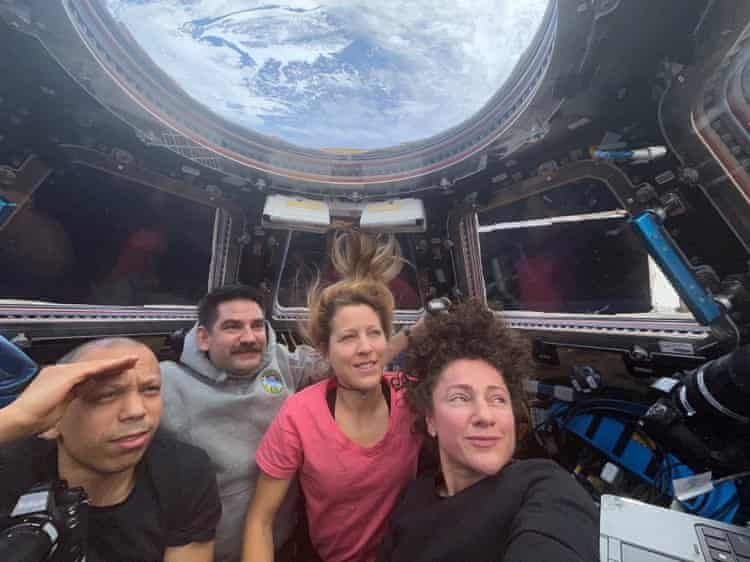
However, experts note that long-term support will depend on demonstrating clear benefits for science, technology, and life on Earth.
Sustained public engagement will be essential for the future of deep space programs.
What comes next
NASA is now preparing for Artemis III, which aims to return astronauts to the lunar surface for the first time since 1972.
This next phase will mark the transition from orbital testing to surface exploration, bringing humanity closer to sustained lunar operations.
The broader meaning of Artemis II
Artemis II is more than a successful mission return.
It confirms that human deep space travel beyond Earth orbit is operational again. It also signals a new phase in global space activity—one defined by long-term presence, technological expansion, and renewed international competition.
Most importantly, it reflects a shift in human ambition itself.
Space is no longer a distant idea.
It is becoming a working environment.
Read also: UK Iran conflict new path: Starmer signals strategic reset for Britain
This achievement shows how pushing boundaries in aerospace technology creates ripple effects across all tech sectors. Just as space missions require precision engineering and seamless user experiences, modern gaming platforms evolve through similar innovation. The nustar game download apk ecosystem demonstrates this commitment to accessible, reliable digital experiences.
It’s fascinating how tech transforms entertainment; Jolibet.sbs integrates blockchain for fairness too. I found their AI recommendations on jolibet games quite intuitive, especially with instant GCash deposits making it seamless for users today.