

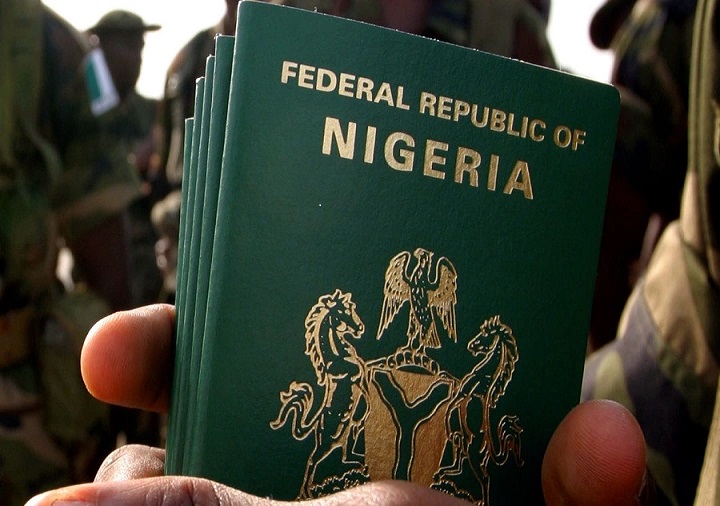
Nigeria is moving to strengthen citizenship verification by aligning passport records with national identity systems.
Nigeria has taken a decisive step to tighten control over its national identity system, as the administration of Bola Ahmed Tinubu moves to enforce stricter measures on individuals who have formally given up their nationality.
At the centre of this development is a new directive mandating the immediate withdrawal and deactivation of any Nigerian passport held by former citizens.
The policy was announced by the Minister of Interior, Olubunmi Tunji-Ojo, who instructed the Nigeria Immigration Service to act without delay.
According to a statement released on Saturday by the minister’s Special Adviser on Media, Alao Babatunde, the directive applies exclusively to individuals whose citizenship renunciation has been duly processed, verified, and formally approved at the highest level of government.
“(1) Any citizen of Nigeria of full age who wishes to renounce his Nigerian citizenship shall make a declaration in the prescribed manner for the renunciation.
“(2) The President shall cause the declaration made under subsection (1) of this section to be registered and upon such registration, the person who made the declaration shall cease to be a citizen of Nigeria.”
This move signals a shift toward stricter enforcement of existing laws rather than the introduction of entirely new regulations.

Authorities say the aim is to correct long-standing lapses that allowed some individuals to retain and use a Nigerian passport even after legally relinquishing their citizenship status.
The legal basis for the directive is rooted in the provisions of 1999 Constitution of Nigeria, specifically Section 29.
Under this framework, any Nigerian of full age has the right to initiate citizenship renunciation by making a formal declaration.
However, the process is only complete when the declaration is officially registered by the President. At that point, the individual ceases to be recognized as a Nigerian citizen under the law.
Government officials emphasize that once this transition is finalized, the former citizen loses all rights tied to nationality, including eligibility to hold a Nigerian passport.
ALSO READ: Visa fee hike reshapes UK immigration costs for Nigerians applicants
ICE detains US soldier wife days after marriage amid immigration crackdown
Retaining such a document beyond that point is considered inconsistent with the law and potentially open to abuse.
Speaking on the broader implications, Tunji-Ojo explained that the directive is part of an ongoing reform agenda aimed at strengthening identity management systems across the country.
He noted that loopholes in the past created opportunities for misuse, including cases where individuals maintained dual advantages—renouncing citizenship for personal or legal benefits while still using Nigerian travel documents.
By enforcing the withdrawal of every Nigerian passport linked to completed renunciation cases, authorities intend to ensure that official records accurately reflect current citizenship status.
This, in turn, supports more reliable data systems and improves coordination with international travel and security frameworks.
The directive also aligns with modernization efforts within the Nigeria Immigration Service. These reforms include digitizing records, improving verification processes, and enhancing border control mechanisms.
Officials believe that ensuring each Nigerian passport is tied to a valid and current legal identity is essential for maintaining credibility on the global stage.
From a diplomatic perspective, the integrity of travel documents plays a critical role in how countries interact.
When inconsistencies arise, they can undermine trust between nations and complicate visa processes or border entry protocols.
By closing enforcement gaps, Nigeria aims to present a more reliable identity system to its international partners.
Security considerations are equally important. Authorities argue that allowing former citizens to retain valid travel documents creates vulnerabilities that could be exploited for identity fraud or unauthorized movement.
Strengthening compliance around citizenship renunciation is therefore seen as a preventive measure as much as a corrective one.
In addition, the Ministry of Interior has indicated that monitoring mechanisms will be strengthened to ensure full compliance.
Individuals found attempting to use or retain a Nigerian passport after renouncing their citizenship may face legal consequences, reinforcing the seriousness of the directive.