

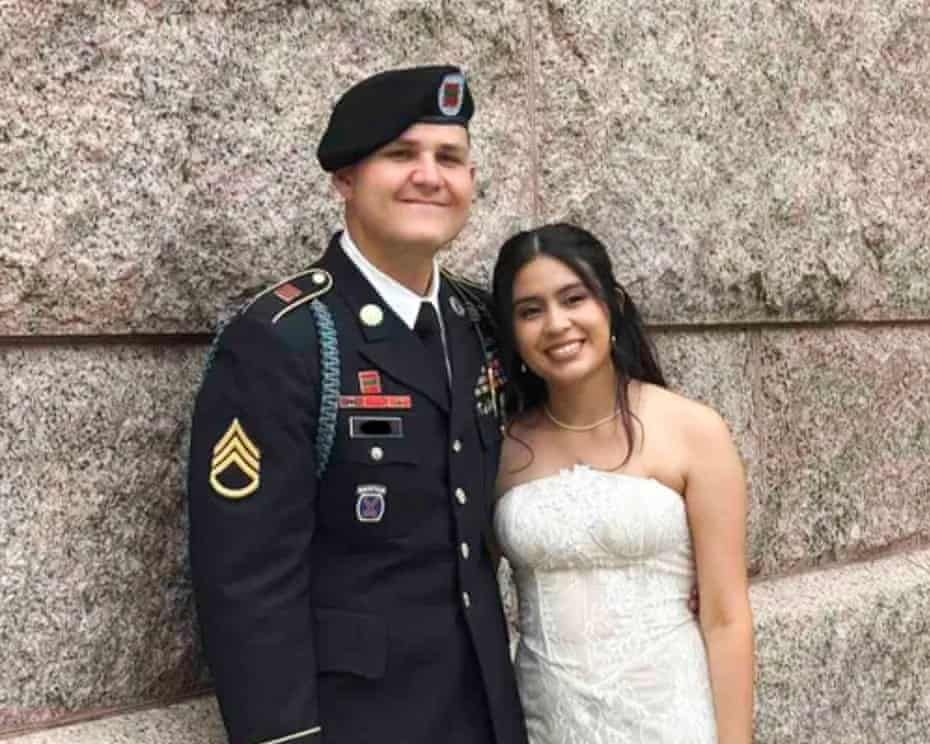
A case in which ICE detains US soldier wife just days after marriage has sparked outrage, raising fresh concerns about immigration enforcement policies affecting military families in the United States.
Immigration authorities in the United States have detained the wife of a serving soldier shortly after their wedding, drawing national attention and debate over enforcement priorities.
The incident involves U.S. Immigration and Customs Enforcement (ICE), which took custody of 22-year-old Annie Ramos in Louisiana last week.
Ramos had recently married Matthew Blank, a US army staff sergeant who has served for over five years and was preparing for deployment when she was detained.
Reports indicate the couple had been actively working to regularize her immigration status, including hiring a lawyer and preparing documentation for legal residency.
The arrest occurred at Fort Polk in Louisiana during a visit to obtain identification and activate military spouse benefits.
Officials reportedly questioned Ramos about her immigration status, triggering a series of internal communications that led to ICE agents being called.
Despite assurances that legal paperwork was already in progress, Ramos was detained on the spot and taken into custody.
Blank described the experience as devastating, saying his wife was taken away just as they were beginning their married life.
Ramos’s immigration issues date back to infancy, when a deportation order was issued after her family missed a court hearing.
She has lived most of her life in the United States, with no criminal record, and had been studying biochemistry while also involved in community activities.
In 2020, Ramos applied for Deferred Action for Childhood Arrivals, a program offering deportation protection to undocumented immigrants brought into the US as children.
Her application was never processed after policy changes during Donald Trump’s administration halted new approvals.
The couple believed marriage would offer a pathway to legal residency, a common route for undocumented immigrants seeking to regularize their status.
They had gathered all necessary documents and were preparing to begin the process before the detention occurred.
Instead, the situation escalated quickly, with military personnel involving investigative authorities before ICE agents intervened.
Family members said the agents appeared apologetic but insisted they were following orders.
Ramos was transferred to a detention facility in Basile, Louisiana, where she remains while her case proceeds.
Her family has faced restrictions in providing documents, complicating efforts to advance her immigration case.
Blank expressed frustration, stating they had followed the proper legal steps yet still faced this outcome.
The case has raised questions about enforcement priorities, particularly claims that authorities focus on individuals with criminal backgrounds.
Critics argue that detaining military spouses undermines morale and raises ethical concerns.
Supporters of strict enforcement say laws must be applied consistently, regardless of personal circumstances.
The situation highlights how past administrative issues can create long-term legal consequences.
Experts note that deportation orders issued in absentia are difficult to reverse, even for long-term residents.
Advocacy groups say the case reflects broader challenges faced by undocumented individuals seeking legal status.
The involvement of a military family has intensified public attention and debate.
Officials have not provided detailed public comments, but the issue continues to generate political discussion.
The Department of Homeland Security, ICE’s parent agency, faces growing scrutiny over enforcement practices.
Similar cases involving military families have reportedly occurred in recent years.
Blank now faces uncertainty as he prepares for deployment while dealing with his wife’s detention.
Ramos has expressed distress, saying the United States is the only home she has ever known.
Her case highlights the human impact of immigration policies on families.
Legal proceedings will determine whether her deportation order can be revisited.
Advocates are calling for greater discretion in cases involving military families.
Read also: Israel strikes South Pars petrochemical plant as regional tensions escalate
Others argue that broader immigration reform is needed to address such situations.
The outcome of this case could influence future handling of similar incidents.
For now, the couple remains separated as legal efforts continue.
The case has become a focal point in discussions about immigration enforcement and fairness.
As developments unfold, it continues to raise questions about policy, humanity, and legal responsibility.
About The Author
