

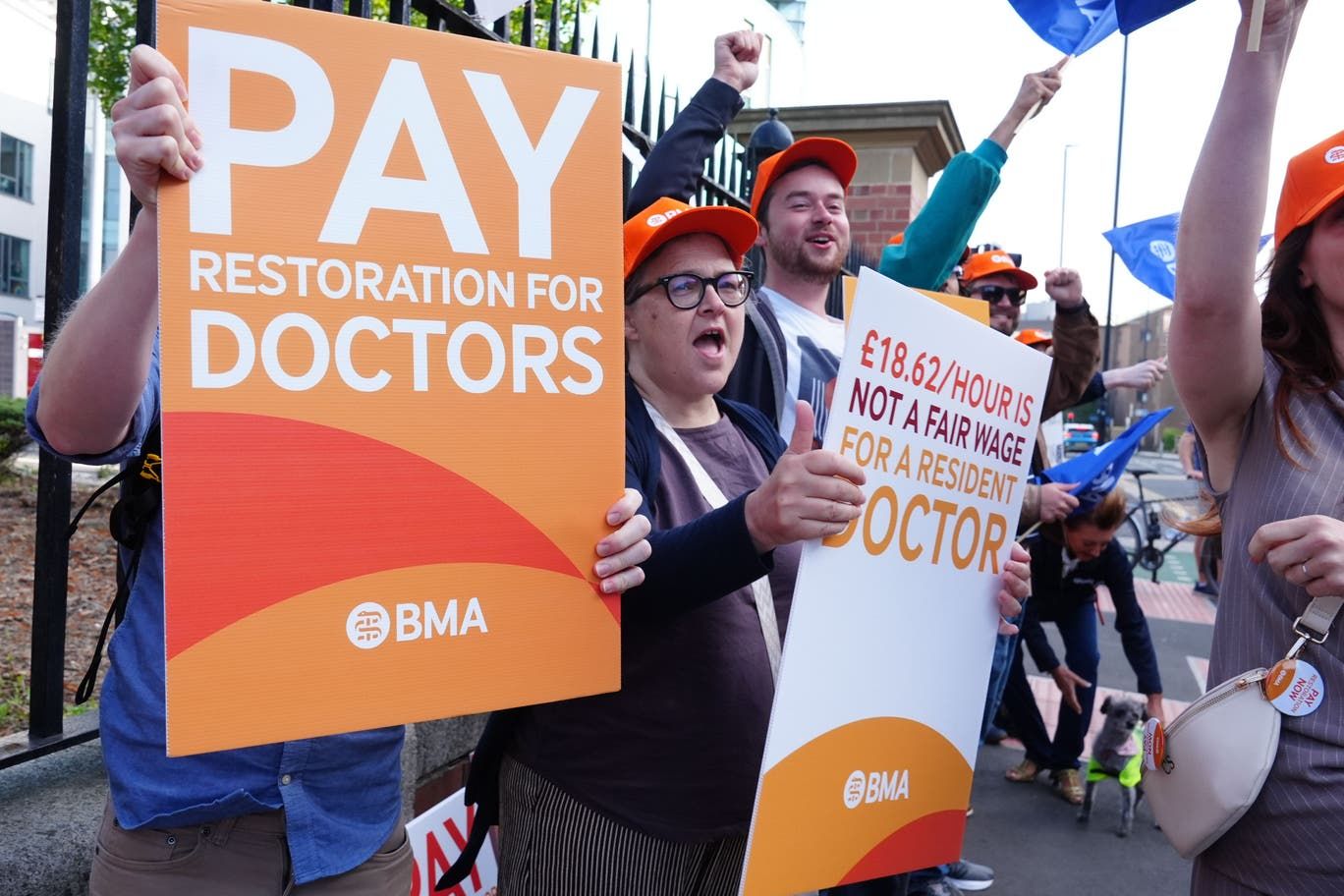
The resident doctors strike NHS has begun with warnings that patients will be left waiting in pain longer than necessary, as the UK government clashes with medics over pay and working conditions.
Tens of thousands of resident doctors walked out at 7am on Tuesday, marking the latest escalation in a long-running dispute between healthcare workers and ministers.
The six-day strike is the 15th round of industrial action, following a breakdown in negotiations over a proposed pay deal.
Health secretary Wes Streeting said while most planned care would continue, disruptions would still affect patients awaiting treatment.

He warned that delays to operations, tests, and procedures would leave many patients experiencing prolonged pain or anxiety.
Streeting stated that about 95 per cent of planned care would still go ahead, including scans, surgeries, and routine procedures.
However, he acknowledged that cancellations would be difficult for patients who had already waited extended periods for treatment.
The strike began immediately after the bank holiday weekend, increasing pressure on the National Health Service during an already challenging period.
Emergency and urgent care services are expected to continue operating, with officials urging patients to attend appointments unless told otherwise.
Health leaders have warned the walkout will be particularly difficult due to short notice and its timing during the Easter holiday period.
Many NHS staff had already scheduled time off, further complicating efforts to maintain services.
The dispute intensified after the British Medical Association rejected the government’s latest offer.
The proposal included a 4.9 per cent increase in average basic pay between 2026 and 2027.
Streeting argued that the offer would have left resident doctors more than 35 per cent better off compared to four years ago.
The deal also included 1,000 additional training places, aimed at improving career progression opportunities.
However, the government later withdrew the training offer, citing financial and operational constraints.
Streeting defended the decision, saying it would be unreasonable to provide benefits after the deal had been rejected.
He suggested the public would question the government’s judgment if it continued to offer concessions following strike action.
The health secretary accused the BMA of expecting advantages without accepting the terms of the agreement.
In response, Dr Jack Fletcher, chair of the BMA’s resident doctors committee, criticised the government’s approach.
He claimed the offer had been quietly weakened and failed to meet the expectations of doctors.
Fletcher said doctors were willing to reach an agreement but needed a fair and consistent proposal.
He argued that last-minute changes had undermined trust between the government and healthcare workers.
The BMA has maintained that the strike is necessary to secure better pay and working conditions.
Meanwhile, additional industrial action by BMA staff has further complicated the situation.
Streeting also criticised the union’s handling of its own staff pay, highlighting perceived inconsistencies.
He questioned how the BMA could reject a 4.9 per cent offer while offering lower increases internally.
As tensions continue, NHS leadership is exploring alternative approaches to reduce reliance on striking staff.
Jim Mackey, head of NHS England, indicated that new clinical models may be considered.
He said the goal is to ensure reliability in patient care despite ongoing industrial disputes.

Streeting emphasised that he values doctors but acknowledged the need for contingency planning.
He stressed that his role is to fund and support the NHS while holding leadership accountable for performance.
The government has faced criticism for failing to resolve the dispute earlier.
At the same time, ministers argue that financial limits restrict how much they can offer.
The strike has reignited broader debates about NHS funding and workforce conditions.
Patients are once again caught in the middle, facing uncertainty over appointments and treatments.
For many, the disruption adds to existing frustrations with long waiting times.
Healthcare leaders continue to balance maintaining services with managing staff shortages.
The outcome of the dispute could have long-term implications for the NHS workforce.
Read also:Trump threatens journalist over missing airman leak amid Iran tensions
It may also influence future negotiations between the government and healthcare unions.
As the strike continues, pressure is mounting on both sides to reach a resolution.
Until then, patients across the UK are likely to experience continued disruption.
About The Author
