

Nigeria’s fuel pricing crisis has escalated sharply after new market comparisons showed imported petrol is about 12% cheaper than supply from the Dangote Refinery, intensifying debate over pricing, import restrictions, and Nigeria’s energy policy direction.
The development has placed the World Bank at the centre of renewed controversy after it defended its position on fuel import liberalisation, a stance now clashing with Nigeria’s push to prioritise the Dangote Refinery as the anchor of domestic fuel supply.
At the heart of the dispute is a growing contradiction: Nigeria is expanding local refining capacity, yet imported fuel continues to appear cheaper under several landing-cost scenarios.
World Bank Stands Firm on Fuel Import Liberalisation
The World Bank maintains that its recommendation is based on market efficiency and inflation control, not opposition to domestic refining.
It argues that restricting imports in a partially deregulated market reduces competition and creates room for avoidable price increases.
According to the institution, available data suggests imported petrol can still land cheaper due to global supply efficiency, flexible sourcing, and competitive procurement structures.
An energy economist linked to the institution stated:
“Competition remains the strongest safeguard against pricing distortions that ultimately affect consumers.”
The position comes as Nigeria continues to struggle with persistent transport and food inflation pressures driven by fuel costs.
Dangote Refinery Pricing Under Pressure
The Dangote Refinery—a key symbol of Nigeria’s industrial ambition—is now facing renewed scrutiny as price comparisons with imported petrol intensify.
Market data indicates that ex-depot pricing from the refinery has, in some cases, approached import parity levels depending on crude sourcing costs, foreign exchange exposure, and logistics factors.
Downstream operators say expectations of immediate price reduction have not yet fully materialised.
A Lagos-based fuel distributor said:
“The refinery has improved supply security, but pricing is still adjusting to global realities.”
Another analyst added:
“Local refining reduces dependence, but not import parity pressure.”
Why Imported Fuel Still Competes Strongly
Imported petrol remains competitive due to structural advantages in global energy markets.
Large international suppliers benefit from economies of scale, diversified sourcing, and hedging strategies that reduce exposure to price volatility.
Foreign exchange dynamics also play a major role. Even locally refined fuel is indirectly tied to dollar-priced crude benchmarks, limiting insulation from global market swings.
The result is a persistent pricing reality: domestic refining improves supply stability, but does not automatically guarantee cheaper pump prices.
Policy Clash Over Import Restrictions Deepens
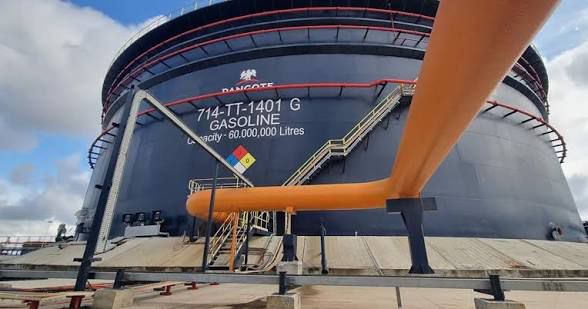
Nigeria’s policy direction has increasingly leaned toward protecting local refining through tighter fuel import controls.
Government officials argue this is necessary to safeguard multi-billion-dollar investments and strengthen long-term energy independence.
However, critics warn that excessive restrictions could weaken competition and sustain higher prices in a partially stabilised market.
A policy expert warned:
“Remove import pressure too early, and pricing discipline weakens significantly.”
The World Bank’s intervention has therefore intensified a long-standing divide between industrial protection and market liberalisation.
Stakeholders Remain Deeply Divided
Downstream stakeholders are split.
Import-dependent marketers argue that open competition is essential to prevent pricing rigidity.
Pro-refining groups insist import restrictions are necessary to protect domestic capacity and long-term investment.
Related: How Naira-for-Crude Deal Is Shielding Nigeria From Global Fuel Shortages
Read Also: Melania Trump Jeffrey Epstein denial sparks political, media fallout
Consumer advocates, however, argue that policy debates must prioritise affordability, as fuel costs directly affect transport, food prices, and household spending.
For most Nigerians, the issue is not policy theory — but rising cost of living.
Inflation Pressure Keeps Debate Highly Sensitive
Fuel remains one of the strongest drivers of inflation in Nigeria.
Every adjustment in petrol pricing quickly feeds into transport fares, logistics costs, and food distribution networks.
Economists warn that sustained price gaps between imported and locally refined fuel could prolong inflationary pressure, especially in urban areas.
At the same time, policymakers face pressure to protect domestic refining as a strategic national asset.
This dual pressure continues to shape one of Nigeria’s most sensitive economic debates.
A Market Still Finding Balance
The clash between global economic advice and domestic industrial policy highlights the complexity of Nigeria’s energy transition.
While the Dangote Refinery represents a historic milestone in local refining capacity, pricing dynamics show the market is still in transition rather than equilibrium.
The World Bank’s position has sharpened a central question: how Nigeria can balance competition, industrial protection, and consumer affordability without destabilising its fuel market.
For now, the fuel pricing debate remains unresolved — driven by economics, policy tension, and persistent inflation pressure.