

Artemis II lunar flyby key moments highlight a groundbreaking journey as astronauts travel farther than any humans before, capturing stunning lunar views while reliving history and pushing space exploration forward.
The Artemis II lunar flyby key moments unfolded during a six-hour mission segment, where astronauts aboard the Orion spacecraft documented the moon’s far side while surpassing a decades-old distance record.
The crew broke a record previously set during the Apollo 13 mission, reaching a distance of over 400,000 kilometers from Earth, marking the farthest humans have ever traveled into space.

Despite the achievement, astronaut Jeremy Hansen challenged future explorers, saying the milestone should not stand for long, urging: “This generation and the next” must go even further.
The mission followed a free-return trajectory, a path that uses gravitational forces from Earth and the moon to guide the spacecraft safely back home with minimal fuel consumption.
Astronauts spent hours observing the lunar surface directly, offering a rare human perspective beyond robotic imagery that has dominated space exploration in recent decades.
Commander Reid Wiseman described the experience emotionally, while capturing images that scientists say could provide valuable insight into lunar geography and future landing sites.
Victor Glover noted the brightness of lunar peaks, saying some appeared “as if they were covered in snow,” reflecting the unique lighting conditions experienced during the flyby.
Christina Koch compared lunar craters to a “lampshade with tiny pinprick holes,” offering a vivid description of how sunlight filtered across the moon’s rugged terrain.
The astronauts used advanced cameras alongside everyday smartphones, blending high-tech imaging with spontaneous documentation to capture thousands of images for analysis back on Earth.
A key moment occurred when the spacecraft passed behind the moon, triggering a communications blackout that lasted approximately 40 minutes during the mission.
Before losing contact, Glover calmly stated: “We will see you on the other side,” echoing sentiments from earlier Apollo missions that experienced similar communication gaps.
During the blackout, the spacecraft reached its closest point to the moon and its maximum distance from Earth, marking a critical and tense phase of the mission.
Experts described the moment as both thrilling and nerve-wracking, recalling how mission control historically “held their breath” during similar Apollo-era blackouts.
Communication was eventually restored, with Koch delivering a heartfelt message: “We will always choose Earth, we will always choose each other,” capturing the mission’s emotional depth.
Another powerful moment came from a recorded message by Apollo 13 commander Jim Lovell, played to the crew as they approached the lunar flyby.
“Welcome to my old neighbourhood,” Lovell said, adding: “Don’t forget to enjoy the view,” bridging generations of space exploration in a symbolic gesture.
The astronauts also carried a historic Apollo 8 mission patch, reinforcing the continuity between past achievements and the new era of lunar exploration.
The emotional weight of the mission was evident when the crew proposed naming newly observed lunar craters during their journey.
They suggested “Integrity,” after their spacecraft, and “Carroll,” in honor of Wiseman’s late wife, a tribute that brought visible emotion to the crew.
As Hansen made the request, Wiseman became overwhelmed, and the astronauts embraced, marking one of the most human moments of the mission.
“It’s a bright spot on the moon,” Hansen said, underscoring the personal significance of the naming request during an otherwise technical mission.
The proposed names will be reviewed by the International Astronomical Union, the organization responsible for officially naming celestial features.
Beyond emotional milestones, the mission also provided critical data for future lunar landings, particularly in the moon’s south polar region.
Scientists believe these areas may contain water ice, making them prime targets for sustained human presence and long-term exploration initiatives.
The Artemis II mission represents a crucial step toward returning humans to the moon, with plans for future missions to include actual lunar landings.
NASA officials have emphasized that human observation adds a unique dimension to scientific understanding, complementing robotic exploration with real-time interpretation.
The mission has reignited global interest in space exploration, drawing comparisons to the excitement of the Apollo era in the late 20th century.
It also demonstrates advancements in technology, safety, and international collaboration that define modern space exploration efforts.
Public engagement has surged, with millions following updates and images shared by the crew, highlighting the enduring fascination with space travel.
The Artemis program aims to establish a sustainable human presence on the moon, serving as a stepping stone for future missions to Mars.
Each milestone achieved during the flyby contributes to broader goals of deep space exploration and scientific discovery.
The success of this mission segment strengthens confidence in upcoming phases, including more complex operations involving lunar orbit and surface activities.
Astronauts have repeatedly emphasized the importance of teamwork and trust, both within the crew and with mission control on Earth.
The mission also serves as a reminder of the risks involved, with every milestone achieved through careful planning and precise execution.
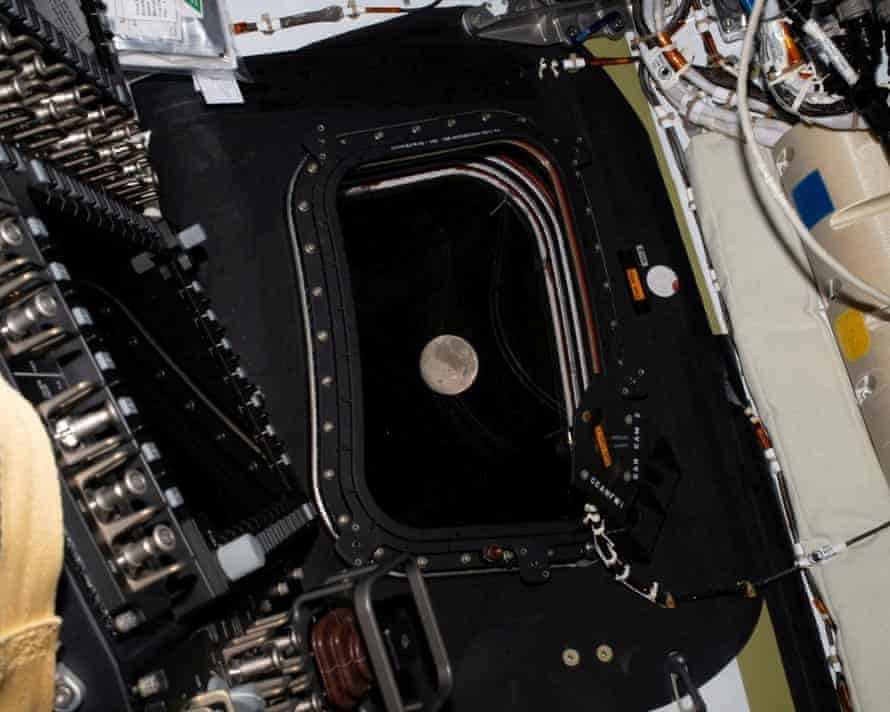
As the spacecraft continues its journey back to Earth, attention turns to the analysis of data and images collected during the flyby.
These findings are expected to inform future missions and refine strategies for landing and sustaining human life on the lunar surface.
Ultimately, the Artemis II mission represents both a technological achievement and a deeply human story of exploration, resilience, and ambition.
The journey underscores humanity’s enduring desire to explore beyond our planet and understand our place in the universe.
Read also: Iran ceasefire plan: Iran says it has received ceasefire plan but questions US readiness for peace
As new records are set and boundaries pushed, the Artemis II lunar flyby key moments will be remembered as a defining chapter in modern space history.
About The Author





