Ancient stepwells in Hyderabad are being brought back to life to provide clean drinking water after decades of neglect. The Bansilalpet stepwell, a 17th-century marvel, had become a dumping ground for rubbish but now stands as a symbol of hope for a city facing severe water scarcity.
Residents gathered to witness the first trickle of water after an 18-month restoration effort that removed 3,000 tonnes of waste and repaired the stone walls.
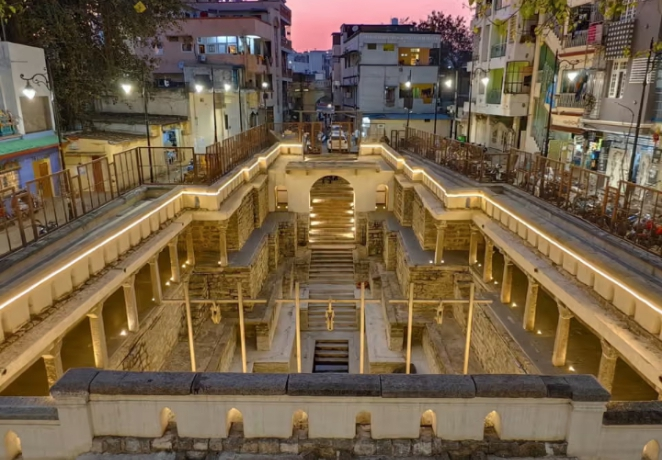
“It was such a joyous moment to see water collecting into the stepwell after clearing 40 years of garbage,” says Hajira Adeeb, a local resident. “I visit almost every day. The area is clean and lit up in the evenings. I enjoy sitting there.”
India’s ancient stepwells, multi-storey structures designed to provide access to groundwater, date back to between the 11th and 18th centuries. These wells were strategically built near natural aquifers to collect rainwater and maintain a steady supply during dry months.
Over centuries, thousands of stepwells were constructed across the subcontinent, serving as both a communal water source and a cultural landmark. However, during British colonial rule, stepwells were largely abandoned, considered unhygienic, and gradually fell into disrepair.
Today, more than 3,000 stepwells are documented in the Stepwell Atlas, a collaborative project by researchers and organizations including the Indian National Trust for Art and Cultural Heritage (Intach).
Telangana alone houses approximately 100 stepwells, nearly half of which are in Hyderabad. Many of these wells had become unusable due to pollution, debris, and urban encroachment.
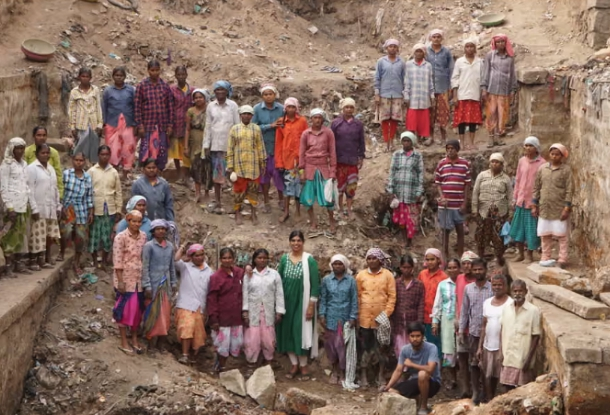
Restoration projects have begun to reclaim these structures not only as heritage sites but also as functional water sources for communities facing Hyderabad’s water crisis.
Among India’s most famous stepwells are Chand Baori in Rajasthan, Rani-ki Vav in Gujarat, and Agrasen-ki Baoli in Delhi. While these sites attract tourists and filmmakers, they do not supply potable water.
The Bansilalpet stepwell, restored in December 2022, is the first in Telangana to provide a consistent water supply for domestic use.
Its water depth remains at nine metres (28ft) even during summer months, thanks to careful planning, rainwater harvesting, and groundwater recharge techniques implemented under the guidance of architect Kalpana Ramesh.
Ramesh, who co-founded the social enterprise Rainwater Project, has spent over 15 years developing methods to collect rainwater for domestic use. Her restoration of 25 stepwells in Telangana has created a model for sustainable urban water management.
“I was sure that the system of harvesting rain to recharge groundwater would work on a larger scale, even today when built-up areas have left very little natural ground for rainwater to seep in,” she explains. Her approach combines traditional stepwell design with modern filtration systems to ensure water is safe for drinking, washing, and gardening.
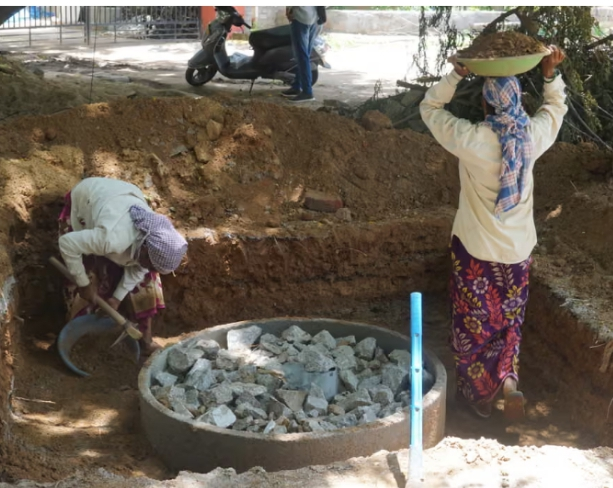
Stepwells are particularly effective in replenishing shallow aquifers. Rainwater is directed through layered filters of sand, gravel, and boulders into recharging pits, which then replenish underground water reserves.
In urban settings where concrete and asphalt prevent natural seepage, these systems are crucial. In addition to restoring wells, Ramesh encourages local communities to maintain nearby ponds, lakes, and rivers, ensuring that rainwater does not flow into drains but instead feeds into aquifers, providing free, clean water even during droughts.
Telangana’s government has complemented these efforts with a multipronged strategy addressing the state’s water scarcity crisis.
This includes implementing over 500,000 rainwater harvesting projects, supplying grey water to data centers, rejuvenating the Musi River, and desilting the Sriram Sagar reservoir to restore its capacity to 3,172 million cubic metres.
Read also:Cuba kills armed exiles in speedboat clash
The state also imposes hefty fines for wasting drinking water, highlighting the urgency of conservation in a region facing rapid population growth and urbanization.
India, home to more than 1.4 billion people, has only 4% of the world’s fresh-water resources. More than 600 million citizens already experience high-to-extreme water stress, and projections indicate that water demand will double by 2030.
Erratic monsoon patterns, inadequate infrastructure, and the expansion of water-intensive crops exacerbate this crisis, making sustainable groundwater management imperative.
Stepwells, once central to community survival, are being rediscovered as a practical solution in the face of “day zero” scenarios where cities may temporarily run out of water.
Pandith Mandure, former director of Telangana’s ground water department, emphasizes the measurable impact of stepwell restoration.
“In two years, from 2021 to 2023, there was a noticeable rise of six to seven metres in the level of groundwater in Hyderabad due to measures like clearing lakes, drains, recharge shafts, and restoring stepwells,” he notes.
These results underline the potential of combining ancient architectural wisdom with modern sustainability techniques to counter urban water scarcity.
Restoring stepwells also strengthens community engagement. Residents take pride in maintaining the restored wells, ensuring cleanliness and monitoring water quality.
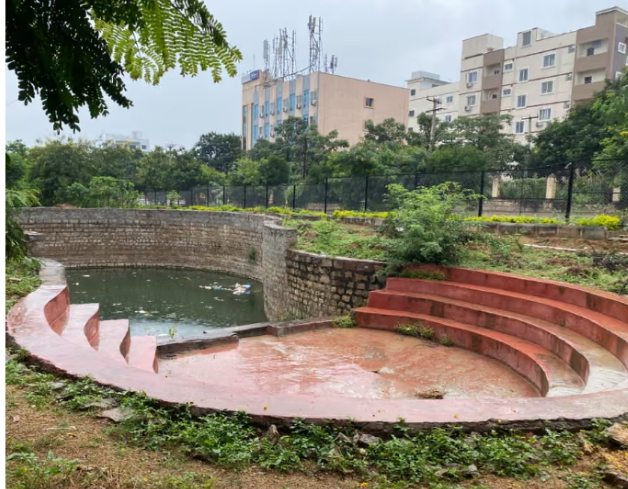
Local volunteers, women’s groups, and school programs have been mobilized to educate communities about water conservation, rainwater harvesting, and the cultural significance of these historic structures.
This integration of heritage preservation and practical utility has inspired similar initiatives in other drought-prone Indian states.
As climate change continues to threaten water security, stepwells offer a resilient and cost-effective approach. Unlike large-scale desalination or pipeline projects, which require significant energy and capital, stepwells utilize local rainfall and gravity-fed systems to provide water.
By combining these ancient systems with contemporary filtration, urban centers can mitigate the risk of water shortages while preserving cultural heritage.
The Bansilalpet restoration serves as a template for other cities facing critical water shortages. By equipping additional stepwells with filtration systems, Telangana aims to expand potable water access while preserving historical architecture.
Community-driven maintenance ensures the long-term viability of these structures, demonstrating that water security and cultural preservation can coexist.
Hydraulic engineers, urban planners, and policymakers are closely watching Telangana’s model.
The combination of stepwell restoration, aquifer recharge, and community engagement is increasingly recognized as a scalable solution for other parts of India and regions worldwide facing similar “day zero” crises.
Experts advocate for integrating stepwell restoration into broader urban planning, particularly in cities with limited freshwater supplies and rapid population growth.
The revival of ancient stepwells is not just about water—it is a symbolic reconnection with India’s historical ingenuity. These structures reflect a deep understanding of environmental cycles, social cooperation, and sustainable resource management.
As Hyderabad residents fill their jars from Bansilalpet, the stepwell stands as a reminder that solutions to modern crises can sometimes be found in centuries-old wisdom.

For Telangana, and potentially the rest of India, stepwells offer more than emergency relief—they provide a sustainable blueprint for living in harmony with natural water systems, balancing the demands of urban life with the need to preserve essential natural resources.
Through the careful blending of tradition and technology, ancient stepwells are proving to be a lifeline in a country racing against the clock to prevent “day zero.”
About The Author