

AGF, CSOs clash over human rights defenders protection bill at N’Assembly hearing
The proposed Human Rights Defenders Protection Bill has triggered sharp disagreements between the Federal Government and civil society organisations, following a heated public hearing at the National Assembly in Abuja.
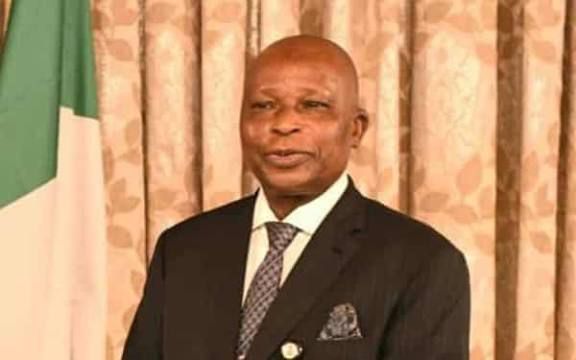
At the centre of the debate is the Attorney General of the Federation and Minister of Justice, Lateef Fagbemi, who formally opposed the Human Rights Defenders Protection Bill during proceedings organised by the House of Representatives Committee on Human Rights.
Represented by the Chief of State Counsel, Reuben Imarha, the AGF argued that Nigeria already possesses adequate constitutional and statutory safeguards for fundamental rights, warning that passing the Human Rights Defenders Protection Bill could create overlapping mandates and institutional friction.
Government Warns Against Regulatory Duplication
According to the Justice Ministry, the enactment of the Human Rights Defenders Protection Bill would duplicate existing responsibilities assigned to agencies such as the National Human Rights Commission.
The AGF maintained that while enforcement challenges persist, the solution lies in strengthening current frameworks rather than introducing fresh legislation.
He noted that Nigeria’s legal architecture, including Chapter IV of the Constitution and various judicial precedents, already provides mechanisms for protecting civil liberties.
Creating another layer of regulation, he argued, may complicate compliance and blur accountability lines among institutions tasked with human rights oversight.
The minister urged lawmakers to prioritise improved implementation strategies and budgetary support for existing agencies instead of passing the Human Rights Defenders Protection Bill in its current form.
Lawmakers Consider Broader NHRC Reforms
Beyond the Human Rights Defenders Protection Bill, the hearing also examined proposals to repeal the existing NHRC Act and introduce a new legal framework aimed at strengthening the commission’s operational independence and funding structure.
The draft legislation seeks to align the commission’s mandate with international best practices, particularly the Paris Principles governing national human rights institutions.
Proposed reforms include enhanced investigative authority, administrative autonomy and sustainable financing models.
However, the AGF raised concerns about specific clauses in the proposed NHRC legislation. One contentious provision would require businesses to obtain an annual human rights compliance certificate.
While acknowledging that corporate human rights violations are not uncommon, the minister cautioned that mandatory certification could undermine the Federal Government’s ease-of-doing-business agenda.
Another debated clause empowers the commission to borrow funds to prosecute human rights cases.
The AGF recommended that any borrowing arrangement should require oversight or approval from appropriate authorities to prevent financial mismanagement.
Funding Model Sparks Debate
Perhaps the most controversial proposal involves compelling multinational companies and firms operating in the financial and oil sectors to contribute 0.3 per cent of annual profits to support human rights litigation.
The Justice Ministry described the measure as a quasi-tax that may conflict with ongoing fiscal reforms. According to the AGF, integrating such a levy without harmonising it with broader tax policies could create regulatory inconsistencies.
Supporters of the Human Rights Defenders Protection Bill, however, argue that sustainable funding remains critical to safeguarding civic actors who often face harassment, intimidation and legal threats.
Civil Society Pushes Back
Civil society groups strongly defended the Human Rights Defenders Protection Bill, describing it as a landmark initiative essential for democratic consolidation.
Jude Ohanele of Development Dynamics told lawmakers that the legislation would send a powerful signal of Nigeria’s commitment to accountability, transparency and rule of law.
He stressed that the Human Rights Defenders Protection Bill is designed not merely to duplicate existing protections but to close operational gaps that leave activists vulnerable.
Similarly, the Executive Secretary of the NHRC, Tony Ojukwu, underscored the need for businesses to mainstream human rights considerations in their operations.
He lamented that the Human Rights Fund established more than a decade ago remains largely unfunded, limiting the commission’s ability to prosecute complex cases.
Clement Nwankwo of the Policy and Legal Advocacy Centre also urged lawmakers to strengthen statutory protections for vulnerable populations, insisting that the Human Rights Defenders Protection Bill would reinforce civic participation and democratic accountability.
The House Committee on Human Rights is expected to compile submissions from stakeholders before presenting its report to the full chamber. Lawmakers must now weigh concerns about regulatory overlap against growing calls for explicit statutory safeguards for activists and rights advocates.
The unfolding debate reflects a broader tension between administrative efficiency and expanded legal guarantees. While the executive branch favours reinforcing existing mechanisms, civil society actors insist that the Human Rights Defenders Protection Bill remains necessary to address persistent enforcement gaps.
As deliberations continue, the future of the Human Rights Defenders Protection Bill will likely shape Nigeria’s human rights landscape, particularly regarding institutional independence, corporate accountability and the protection of civic space.


